






Spotlights
Construction Painter, Commercial Painter, Residential Painter, Industrial Painter, Spray Painter, Painting Contractor, Maintenance Painter, Paperhanger, Coatings Applicator, Drywall Finisher and Painter, Union Painter, Wall Covering Installer
A fresh coat of paint can transform a run-down room into a welcoming home, protect a bridge from decades of rust, or give a hospital the clean, calm look patients need to feel at ease. Painters do far more than make things look nice; their work protects buildings, bridges, and equipment from weather, corrosion, and wear, often adding years to the life of whatever they coat. It is one of the most visible trades in construction, and also one of the most technical, since the right coating applied the wrong way can fail within months.
Construction and maintenance Painters prepare and coat the interior and exterior surfaces of buildings, bridges, factories, and other structures using paint, stain, varnish, and specialized industrial coatings. Long before any color goes on, painters scrape, sand, patch, prime, and mask surfaces, because proper preparation is what makes a paint job last. On a job site they work alongside general contractors, drywall finishers, and property owners, and on industrial jobs they coordinate with engineers and safety officers when working with specialty coatings that protect against rust, chemicals, or fire. This is a real skilled trade, not fine art; precision, material knowledge, and physical stamina matter far more than artistic flair.
Using tools like brushes, rollers, airless sprayers, sanders, and pressure washers, along with an understanding of primers, epoxies, and specialty coatings, Painters combine careful surface preparation with efficient, even application. Their work protects surfaces from moisture and corrosion, meets safety codes for things like fire-retardant coatings, and shapes how people feel the moment they walk into a space. A painter who works high on scaffolding or a swing stage, or handles industrial coatings in a refinery, does physically demanding, safety-critical work that keeps entire structures standing longer.
- Seeing an immediate, visible transformation from a single day's work
- Protecting buildings and structures from weather and decay for years to come
- Flexible entry point into skilled trades with fast-growing income potential
- Variety of work environments, from cozy homes to massive industrial sites
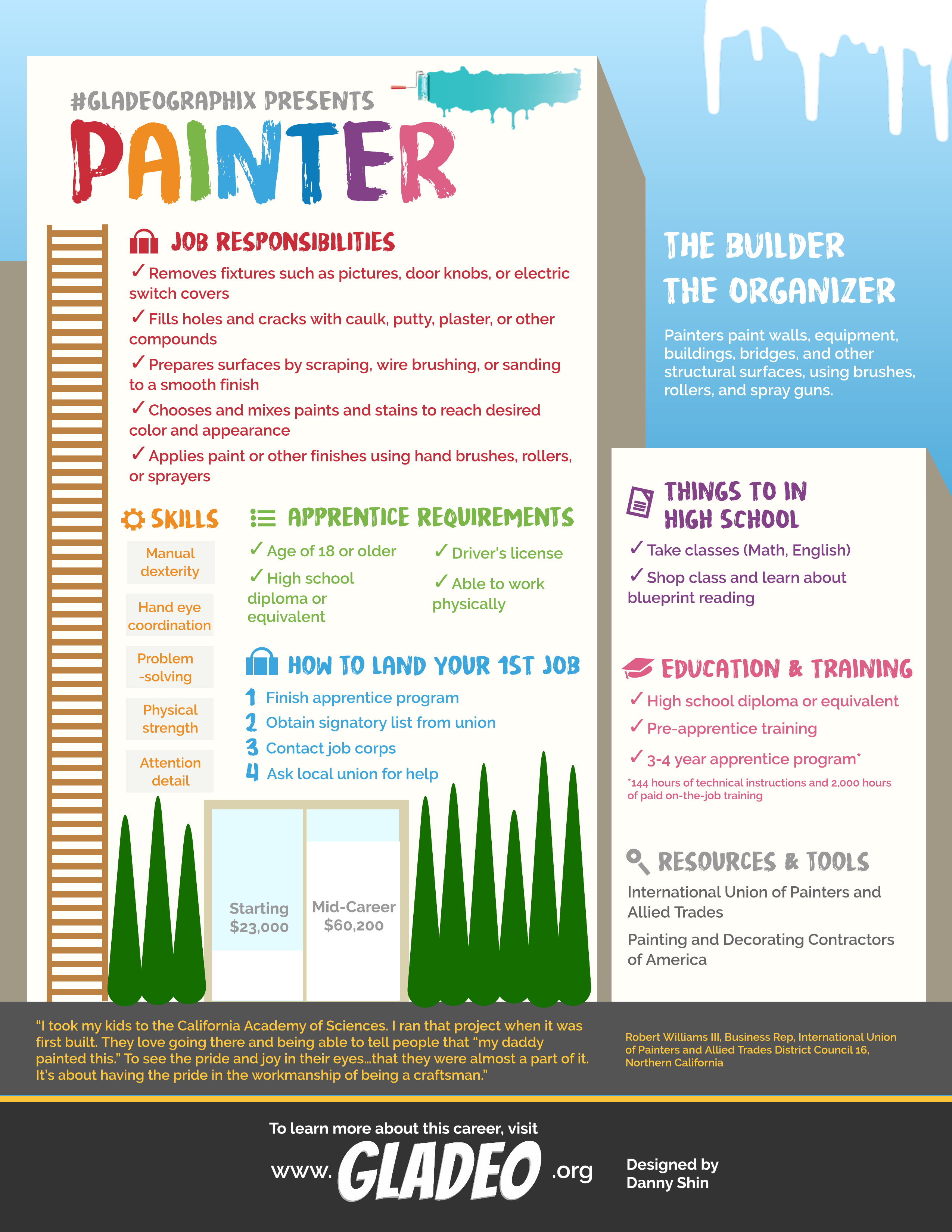
“I took my kids to the California Academy of Sciences. I ran that project when it was first built. They love going there and being able to tell people that “my daddy painted this.” To see the pride and joy in their eyes…that they were almost a part of it. It’s about having the pride in the workmanship of being a craftsman.” Robert Williams III, Business Rep, International Union of Painters and Allied Trades District Council 16, Northern California
Working Schedule
Painters typically work full-time, around 40 hours a week, mostly during daylight hours, though interior commercial painting is sometimes scheduled at night or on weekends to avoid disrupting businesses. Outdoor work is seasonal in colder climates, with painters often busiest in spring, summer, and fall. The job is physically active, involving standing, climbing ladders and scaffolding, and sometimes working from lifts or swing stages on tall buildings. Most painters work for painting contractors or general contractors, while experienced painters often run their own small painting businesses, especially in residential work.
Typical Duties
- Inspecting surfaces to determine the right preparation and coating materials
- Scraping, sanding, and power washing surfaces to remove old paint and debris
- Patching holes, cracks, and imperfections before painting
- Masking and covering areas not meant to be painted
- Mixing paints, stains, and coatings to achieve the correct color and consistency
- Applying primer, paint, and specialty coatings using brushes, rollers, and sprayers
- Operating airless spray equipment for large or industrial surfaces
- Installing wallpaper and other wall coverings
- Applying fireproofing, anti-corrosion, and other protective industrial coatings
- Setting up and safely working from ladders, scaffolding, and swing stages
- Cleaning and maintaining brushes, sprayers, and other equipment
- Inspecting finished work for even coverage, drips, and missed spots
Additional Responsibilities
- Estimating paint quantities and project costs for clients or bids
- Advising clients or project managers on color, finish, and material choices
- Following safety procedures around lead paint, solvents, and heights
- Maintaining a clean, organized job site during and after work
- Training and supervising apprentices or helpers
- Keeping records of materials used and hours worked
- Coordinating scheduling with other trades on renovation or construction sites
- Staying current on new coatings, application tools, and safety regulations
A Painter's day often starts with reviewing the job site and confirming what surfaces are being painted that day, then setting up drop cloths, masking tape, and any scaffolding or ladders needed. Morning work is frequently prep-heavy: sanding rough spots, patching holes, and priming surfaces so the paint has something solid to grip.
Midday is usually when the bulk of the actual painting happens. On a residential job, that might mean carefully cutting in edges around trim with a brush before rolling large wall sections. On a commercial or industrial job, it could mean running an airless sprayer across a warehouse ceiling or applying a protective epoxy coating to a factory floor, all while following strict ventilation and safety procedures for the materials being used.
Afternoons often bring a second coat, detail work around corners and trim, and cleanup of tools and equipment. Painters do a final walkthrough to check for missed spots, drips, or uneven coverage before removing masking and tarps. On multi-day projects, they prep the space for tomorrow's work and make sure everything is secured and protected overnight.
Soft Skills
- Steady hands and strong attention to detail
- Patience during repetitive prep and finishing work
- Physical stamina for standing, climbing, and reaching for long periods
- Reliability and time management to hit project deadlines
- Clear communication with clients and other trades
- Problem-solving when a surface presents unexpected damage or issues
- Comfort working at heights on ladders or scaffolding
- Customer service skills for residential and small business clients
- Cleanliness and care in protecting surfaces not being painted
- Safety awareness around chemicals, solvents, and lead paint
- Adaptability to different surfaces, materials, and environments
- Pride in a clean, professional-looking finished product
Technical Skills
- Surface preparation techniques including sanding, scraping, and patching
- Knowledge of paint types, primers, and specialty industrial coatings
- Proper use of brushes, rollers, and airless sprayers
- Color matching and mixing
- Wallpaper and wall covering installation
- Safe handling of solvents, epoxies, and hazardous materials
- Knowledge of lead-safe work practices for older buildings
- Scaffolding, ladder, and swing stage safety procedures
- Pressure washing and surface cleaning equipment operation
- Basic math for estimating material quantities and coverage areas
- Residential Painter: Paints interiors and exteriors of homes and small properties
- Commercial Painter: Works on offices, retail spaces, and larger buildings
- Industrial Painter: Applies protective coatings in factories, refineries, and plants
- Spray Painter: Specializes in large-scale application using airless spray equipment
- Bridge and Structural Painter: Coats bridges, towers, and steel structures against corrosion
- Decorative Finisher: Applies faux finishes, glazes, and specialty decorative techniques
- Paperhanger: Specializes in wallpaper and wall covering installation
- Maintenance Painter: Handles ongoing touch-up and repainting for facilities and property managers
- Residential painting contractors
- Commercial and industrial painting companies
- Bridge and infrastructure maintenance contractors
- Union painting locals and apprenticeship programs
- Property management and facilities companies
- General contractors on new construction and renovation
- Manufacturing and industrial plants
- School districts and government facilities
- Historic preservation and restoration firms
- Marine and shipyard coating contractors
- Home builders and remodeling companies
- Independent and self-employed painting businesses
Painting looks simple from the outside, but professional painters know that most of the job, and most of what separates a great result from a mediocre one, happens before any paint is applied. Surface prep is tedious and exacting work, and skipping steps to save time almost always shows up later as peeling, bubbling, or uneven color. Painters are expected to do this careful prep work every time, even under deadline pressure.
The physical demands are real and constant: hours spent standing, reaching overhead, climbing ladders, and sometimes working from scaffolding or swing stages many stories up. Exposure to fumes, solvents, and dust requires proper ventilation and protective equipment, and lead-safe practices are essential when working on older buildings. Outdoor painters also depend on the weather, and rained-out days can compress a schedule that was already tight.
In exchange, painting offers one of the more accessible entry points into the skilled trades, with steady demand, relatively low barriers to starting an independent business, and the satisfaction of a visible, dramatic transformation completed in days rather than months. Many painters build stable careers running their own crews or specializing in high-paying industrial and decorative work.
- Growth in low-VOC and environmentally friendly paint and coating options
- Increased use of airless and HVLP spray systems for faster, smoother application
- Rising demand for specialty industrial coatings that resist corrosion and chemicals
- Expansion of infrastructure repainting projects on aging bridges and public structures
- Greater emphasis on lead-safe certification for renovation of older buildings
- Growth in decorative and faux finish techniques for high-end residential work
- Use of color visualization apps and software to help clients choose finishes
- Adoption of drones for inspecting and estimating large-scale exterior and bridge jobs
- Rising demand for antimicrobial and easy-clean coatings in healthcare facilities
- Advances in fall-protection equipment for high-elevation painting work
- Many Painters grew up enjoying hands-on projects around the house, helping repaint a room, touch up furniture, or tackle small home improvement tasks with a parent or relative. They often had an eye for color, order, and clean lines, and they liked the satisfaction of finishing a visible project in a single day or weekend.
- Others were drawn to art or design classes but preferred practical, physical work over fine art, enjoying the technical challenge of getting a smooth, even finish more than free-form creativity. A steady hand, patience for repetitive detail work, and comfort with physical labor often pointed these students toward painting as a skilled trade.
“Some of us we have more Neanderthal DNA than others. You’ve got to be able to express that in the best way possible. We all have a sense of creativity that can be shown and it’s finding that way to show that creativity. Some people they can do that behind a computer, other people it’s great to be able to build a building. It all comes into that sense of being of whatever makes you feel alive.” Robert Williams III, Business Rep, International Union of Painters and Allied Trades District Council 16, Northern California
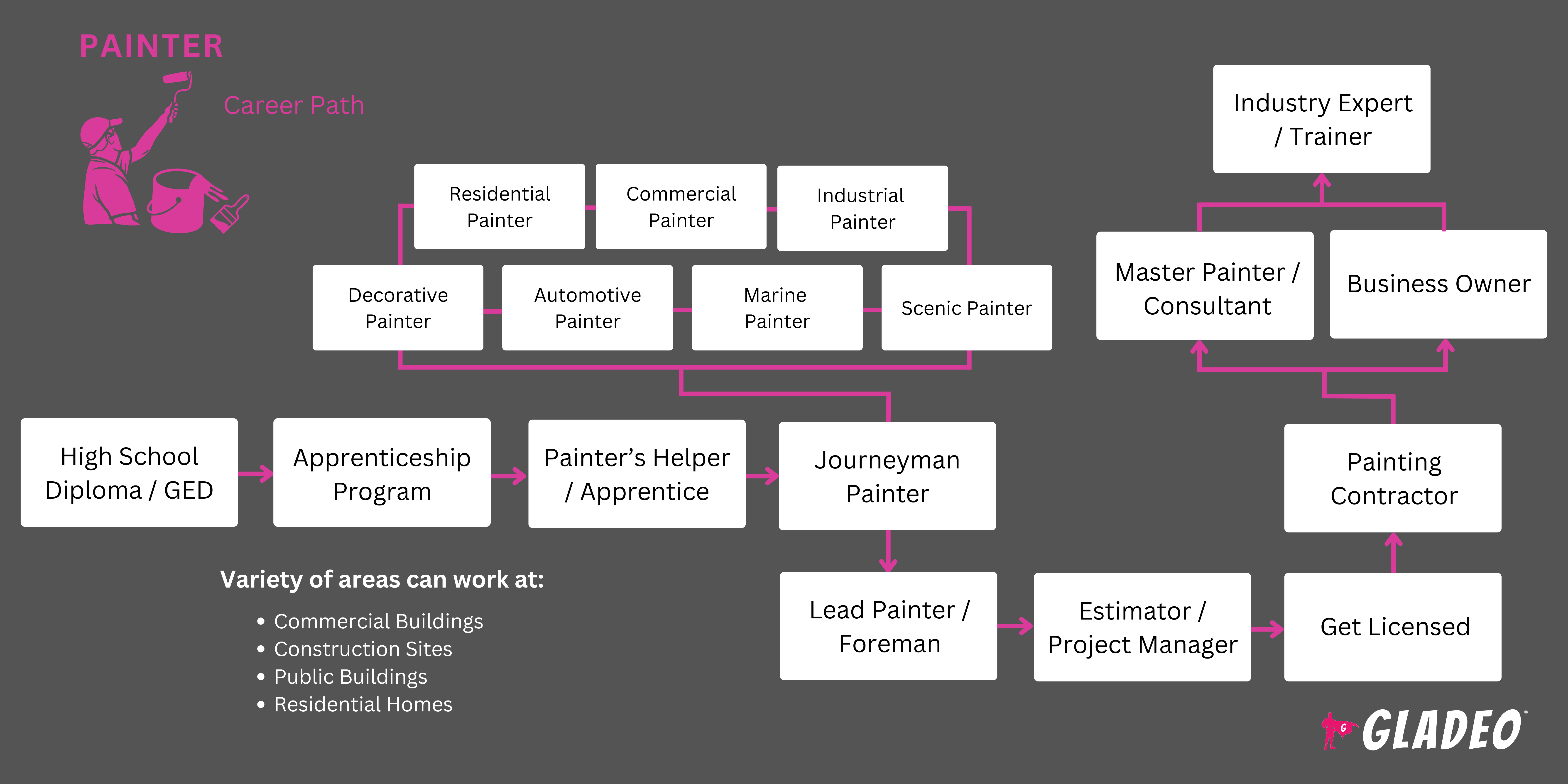
Most Painters learn the trade through a combination of on-the-job training and a registered apprenticeship, often sponsored by the International Union of Painters and Allied Trades (IUPAT) or by painting contractors. Apprenticeships typically last two to four years and combine paid work experience with classroom instruction in surface preparation, coatings, and safety. Many painters also enter the field directly as helpers or laborers and learn skills on the job without a formal apprenticeship, though formal training tends to lead to higher pay and more advancement opportunities.
Students can take courses in relevant subjects such as:
- Introduction to Painting and Coatings
- Surface Preparation Techniques
- Color Theory and Mixing
- Construction Math
- Shop Class and Tool Safety
- Occupational Safety (OSHA 10 or 30)
- Lead-Safe Work Practices
- Industrial Coatings and Corrosion Control
- Basic Business Skills for Contractors
- Customer Service for Trades
Apprentices earn wages while training under experienced painters on real jobs, with pay increasing as they master new techniques and coatings. Building a portfolio of before-and-after photos from completed jobs helps painters, especially those aiming for residential or decorative specialties, demonstrate their skill to future employers or clients. Continuing education in specialty and industrial coatings can open doors to higher-paying commercial and industrial work.
- Take shop, art, or construction technology classes if your school offers them
- Practice painting projects at home to build comfort with brushes, rollers, and prep work
- Contact a local painters union or painting contractor about apprenticeship opportunities
- Attend a SkillsUSA competition or trade career fair to meet contractors and unions
- Job shadow a painter or offer to help with a family or neighbor's painting project
- Earn an OSHA 10 safety certification before applying to programs
- Get comfortable working on ladders safely, building confidence gradually with height
- Study basic color theory, useful for both residential and decorative painting work
- Talk to a working painter about the difference between residential, commercial, and industrial work
- Take on part-time or summer work as a painting helper or laborer
- Start a portfolio of before-and-after photos from any painting projects you complete
- Research lead-safe certification requirements if you plan to work on older buildings
- A registered apprenticeship recognized by the U.S. Department of Labor
- Sponsorship by IUPAT or a reputable local painting contractor
- A curriculum covering both residential and commercial or industrial coatings
- Hands-on training with real surfaces, sprayers, and prep tools
- Instructors with genuine field experience in the trade
- A clear wage progression schedule tied to completed training levels
- Strong safety training including lead-safe practices and fall protection
- Job placement support with local painting contractors
- Opportunities to learn specialty skills like decorative finishes or industrial coatings
- Support for building a project portfolio
- Manageable class sizes with real hands-on practice time
- Flexible scheduling if you plan to work while training
- Apply to a local painters union apprenticeship or a painting contractor directly
- Complete any required interview or aptitude assessment with examples of your work ethic
- Earn an OSHA 10 certification before applying to stand out
- Offer to help friends, family, or neighbors with painting projects to build experience
- Attend union open houses or contractor hiring events in your area
- Consider entry-level helper or laborer roles to get a foot in the door quickly
- Build a simple portfolio of before-and-after photos, even from small personal projects
- Ask about pre-apprenticeship programs at local trade or vocational schools
- Network with working painters or contractors for referrals and advice
- Be honest about your comfort with heights, physical labor, and repetitive tasks
- Keep a valid driver's license, since job sites vary across a region
- Show up on time and ready to work; reliability is highly valued in this trade
- Master efficient, high-quality application techniques across brush, roller, and spray
- Earn certifications in lead-safe practices, industrial coatings, or decorative finishes
- Build a reputation for clean, careful prep work and reliable scheduling
- Move from helper to journeyman painter and eventually to crew leader or foreman
- Learn estimating and bidding to move toward running your own projects or business
- Take on specialized, higher-paying work like bridge, industrial, or decorative painting
- Mentor apprentices and helpers on prep and application techniques
- Consider starting an independent painting contracting business after gaining experience
Websites:
- International Union of Painters and Allied Trades (IUPAT) - iupat.org
- Painting and Decorating Contractors of America - pdca.org
- Society for Protective Coatings - sspc.org
- National Center for Construction Education and Research (NCCER) - nccer.org
- SkillsUSA - skillsusa.org
- Occupational Safety and Health Administration - osha.gov
- Environmental Protection Agency Lead-Safe Certification Program - epa.gov/lead
- Home Builders Institute - hbi.org
- Painting Contractor Magazine - paintmag.com
- American Coatings Association - paint.org
- Journal of Protective Coatings and Linings - paintsquare.com
Books:
- Painting and Decorating Craftsman's Manual by Painting and Decorating Contractors of America
- The Homeowner's Complete Painting Guide by Editors of Creative Homeowner
- Color Theory for Painters by Betty Edwards
- Industrial Coatings: A Practical Guide by Society for Protective Coatings
- Fine Paint Finishes by Deborah Krieger
If you find that being a Painter isn't the right fit, your surface knowledge, precision, and finishing skills carry over well into related trades.
- Drywall Finisher
- Wallpaper Installer
- Flooring Installer
- Sandblaster and Coatings Technician
- Painting Contractor
- Home Inspector
- Property Maintenance Technician
- Sign Painter and Installer
- Auto Body Painter
- Historic Restoration Specialist
“You can get what you want out of it depending on how hard you want to invest yourself into it and how dedicated you want to be. You can just get by or you can flourish and rise up in the industry. It’s all up to the individual.” Robert Williams III, Business Rep, International Union of Painters and Allied Trades District Council 16, Northern California
Newsfeed

Featured Jobs
Online Courses and Tools
Annual Salary Expectations
New workers start around $50K. Median pay is $59K per year. Highly experienced workers can earn around $72K.
Annual Salary Expectations
New workers start around $58K. Median pay is $61K per year. Highly experienced workers can earn around $75K.
Annual Salary Expectations
New workers start around $51K. Median pay is $62K per year. Highly experienced workers can earn around $66K.
Annual Salary Expectations
New workers start around $48K. Median pay is $60K per year. Highly experienced workers can earn around $67K.
Annual Salary Expectations
New workers start around $47K. Median pay is $59K per year. Highly experienced workers can earn around $64K.