






Spotlights
Urban Agriculturalist, City Farmer, Community Farmer, Rooftop Farmer, Urban Horticulturist, Sustainable Farmer, Vertical Farmer, Urban Crop Grower, Market Gardener, Urban Gardening Specialist, Urban Food Producer, Green Roof Farmer
Imagine walking through a bustling city and discovering a lush garden flourishing atop a rooftop or in a vacant lot—fresh vegetables, herbs, and fruits thriving just steps away from busy streets. Urban Farmers bring greenery and fresh food into the heart of cities, transforming unused spaces into vibrant ecosystems that nourish communities.
Urban Farmers plan, plant, and manage crops in city environments, often working in tight spaces like rooftops, community gardens, or indoor vertical farms. They collaborate with local governments, community groups, environmentalists, and sometimes chefs or markets to produce fresh, sustainable food. Their work includes soil preparation, pest control, watering, harvesting, and educating others about urban agriculture. The end result is healthier communities with better access to fresh produce and greener urban spaces.
Using tools ranging from hand trowels and irrigation systems to hydroponic setups and climate monitoring technology, Urban Farmers must adapt traditional farming methods to fit urban challenges. Their role is crucial for promoting sustainability, reducing food miles, and reconnecting city residents with the source of their food.
- Watching a barren city space transform into a thriving garden that feeds people.
- Helping improve community health by providing fresh, local produce in food deserts.
- Teaching others about sustainable farming and environmental stewardship.
- Contributing to greener, more livable cities through innovative farming techniques.
Working Schedule
Urban Farmers often work outdoors and indoors year-round, adapting to seasonal changes in crop cycles. Their days can start early, with hands-on tasks like planting or harvesting, but also involve planning sessions, community meetings, or educational workshops. While some work full-time on farms or with organizations, many are self-employed or work part-time, balancing flexible hours with the demands of crop care and market schedules. Weather, community events, and growing seasons can create busy, sometimes unpredictable workloads.
Typical Duties
- Designing and planning urban farm layouts to maximize limited space.
- Preparing soil or growing media and planting seeds or seedlings.
- Installing and maintaining irrigation and fertilization systems.
- Monitoring plant health and managing pests using organic methods.
- Harvesting crops and preparing them for sale or donation.
- Maintaining tools, equipment, and farm infrastructure.
- Engaging with local communities through workshops or volunteer coordination.
- Managing records of crop cycles, yields, and sales.
- Collaborating with city officials for permits or land use agreements.
- Educating the public about urban agriculture benefits and techniques.
- Coordinating with local markets, restaurants, or food banks for distribution.
- Researching sustainable farming practices to improve yields and reduce waste.
Additional Responsibilities
- Advocating for urban agriculture policies and funding.
- Organizing community events like farm tours or harvest festivals.
- Maintaining compost systems to enrich soil and reduce waste.
- Managing budgets and sourcing supplies sustainably.
- Training volunteers or apprentices interested in urban farming.
- Building partnerships with schools or nonprofits for educational programs.
- Documenting and sharing successes through social media or reports.
- Ensuring compliance with health and safety standards.
Mornings often begin early with hands-on tasks such as inspecting crops, watering plants, and checking irrigation systems to ensure everything is on track. Urban Farmers use this time to troubleshoot any issues like pest invasions or equipment problems before the heat of the day.
Midday might involve community engagement—leading workshops on composting, answering questions from volunteers, or coordinating with local chefs about upcoming crop needs. It’s also a time for administrative work like planning crop rotations, ordering supplies, or applying for grants.
Late afternoons focus on harvesting and preparing produce for markets or deliveries. Urban Farmers might wrap up by cleaning tools, updating records, and planning for the next day’s activities. Evenings can include networking with other urban agriculture professionals or attending city council meetings to advocate for urban farming initiatives.
Soft Skills
- Creativity in solving space and resource limitations
- Strong communication for community outreach and education
- Problem-solving to manage pests and crop challenges sustainably
- Patience and attention to detail in nurturing plants
- Organizational skills for planning and managing farm activities
- Resilience to adapt to changing weather and urban constraints
- Teamwork collaborating with volunteers and local partners
- Leadership to guide community projects and training sessions
- Environmental awareness and passion for sustainability
- Customer service for selling produce and engaging markets
- Flexibility to handle varying schedules and tasks
- Physical stamina for manual labor outdoors
Technical Skills
- Knowledge of plant biology and crop cycles
- Soil science and composting techniques
- Irrigation system installation and maintenance
- Organic pest and disease management
- Hydroponic and vertical farming methods
- Use of farm management software and record-keeping
- Understanding urban zoning and land use regulations
- Safe use and maintenance of farming tools and equipment
- Basic business skills for budgeting and marketing
- Climate and environmental monitoring technologies
- Community Urban Farmer: Focuses on growing food in shared spaces for local residents.
- Rooftop Farmer: Cultivates crops on building roofs, maximizing underused urban areas.
- Vertical Farmer: Uses stacked layers and hydroponics to grow plants indoors.
- Market Gardener: Produces specialty crops for direct sale at farmers’ markets.
- Educational Urban Farmer: Combines farming with teaching and outreach programs.
- Sustainable Systems Farmer: Integrates renewable energy and water recycling into farm operations.
- Social Enterprise Farmer: Runs farms that support social causes like job training.
- Research Urban Farmer: Develops innovative farming techniques suitable for urban environments.
- Community Gardens and Cooperatives
- Nonprofit Environmental Organizations
- City and Municipal Government Programs
- Urban Agriculture Startups
- Local Farmers’ Markets
- Educational Institutions and Universities
- Restaurants and Food Hubs
- Environmental Consulting Firms
- Sustainable Agriculture Associations
- Food Banks and Social Services
- Agricultural Technology Companies
- Land Trusts and Conservation Groups
Urban Farmers face physical demands like bending, lifting, and working outdoors in all weather conditions, which requires good health and stamina. They often juggle multiple roles—from hands-on gardening to community outreach and business management—which can be mentally challenging but rewarding.
The work often involves early mornings and seasonal peaks, especially during planting and harvest times, leading to long hours and weekend commitments. Weather unpredictability and urban constraints add pressure to meet production goals and maintain crop health.
Balancing the need for sustainable practices with financial viability can be stressful. Urban Farmers must be patient with trial and error as they experiment with innovative growing methods in limited spaces. Passion for the mission helps them overcome setbacks and maintain motivation.
- Growing interest in vertical and hydroponic farming techniques to save space and water.
- Increased use of technology like sensors and apps for monitoring plant health and irrigation.
- Rising community support and government grants for urban agriculture projects.
- Focus on food justice and addressing urban food deserts through farming.
- Integration of renewable energy and sustainable water management in farm operations.
- Expansion of educational programs linking urban farming to school curricula.
- Growth of local food movements encouraging consumers to buy city-grown produce.
- Collaboration with tech startups developing smart farming innovations.
- Use of social media to share urban farming stories and build community.
- Emphasis on crop diversity and native plants to support local ecosystems.
Young people drawn to urban farming often enjoyed spending time outdoors, gardening, or caring for plants. They might have experimented with growing vegetables in small spaces at home or participated in community garden projects at school.
They tend to be curious about where food comes from and passionate about sustainability, environmental issues, or social justice. Early interests in science, biology, or hands-on projects often point toward a future in urban agriculture.
Becoming an Urban Farmer doesn’t require a single specific degree, but many pursue education in agriculture, horticulture, environmental science, or sustainability. Hands-on experience through internships, apprenticeships, or volunteering is essential to develop practical skills and understand urban farming challenges.
Students can take courses in relevant subjects such as:
- Horticulture and Plant Science
- Soil Science and Composting
- Sustainable Agriculture Practices
- Urban Planning and Land Use
- Environmental Science
- Business and Marketing for Small Farms
- Organic Pest Management
- Irrigation and Water Management
- Food Systems and Food Justice
- Community Outreach and Education
Combining classroom knowledge with real-world farming experience helps aspiring Urban Farmers build the expertise needed to succeed. Developing a portfolio of projects, participating in community farms, and continuing education through workshops keeps skills sharp and relevant.
- Join or start a school garden club to gain hands-on experience.
- Take science classes focused on biology, ecology, and environmental science.
- Volunteer with local community gardens or urban farms.
- Learn basic business and marketing skills through electives or clubs.
- Attend workshops or summer camps on sustainable agriculture.
- Explore internships with local farms or agricultural nonprofits.
- Study geography or urban planning to understand city environments.
- Develop computer skills for farm management software.
- Practice leadership by organizing community projects.
- Research urban farming careers and connect with professionals.
- Look for programs offering hands-on urban agriculture experience.
- Choose schools that support sustainability and environmental studies.
- Seek internships or apprenticeships with local urban farms.
- Prioritize courses that teach both science and business skills.
- Find programs with partnerships in the community for real-world projects.
- Check for access to modern farming technologies like hydroponics.
- Consider programs that include training in community engagement.
- Evaluate faculty experience in urban or sustainable agriculture.
- Look for opportunities to participate in research projects.
- Ensure programs cover environmental regulations and food safety.
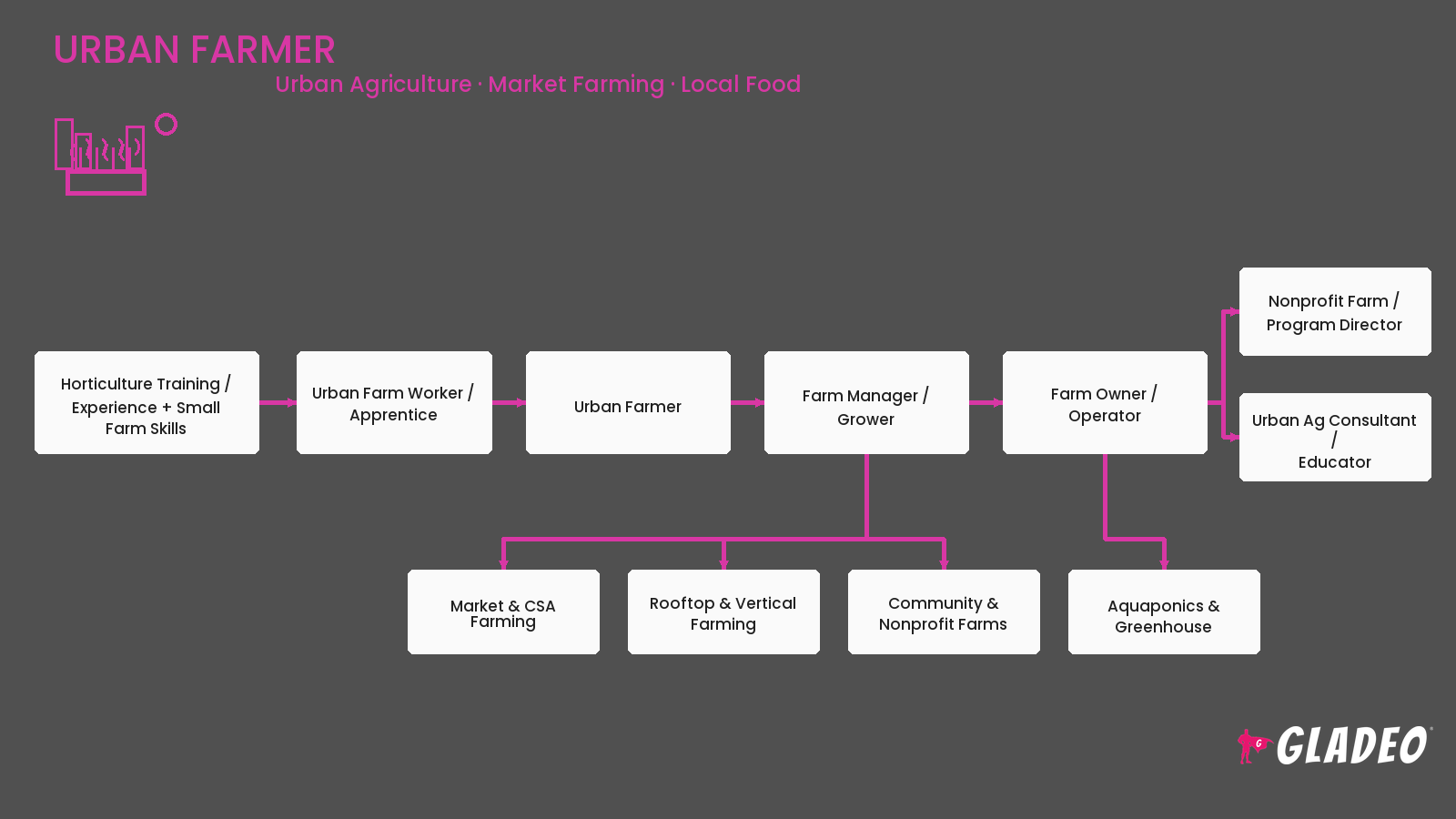
- Apply for internships or volunteer roles at community gardens or urban farms.
- Assist experienced farmers with planting, watering, and harvesting.
- Help maintain farm infrastructure and tools.
- Participate in farmers’ markets and customer service.
- Learn to monitor and manage pests organically.
- Get involved in educational outreach or workshops.
- Track crop growth and record data.
- Support composting and soil health efforts.
- Network with local agriculture groups and nonprofits.
- Seek mentorship from established urban farmers.
- Experiment with small-scale growing projects at home.
- Attend urban agriculture conferences or events.
- Gain expertise in specialized farming methods like hydroponics or aquaponics.
- Build strong community connections to expand farm projects.
- Develop business skills to manage larger operations or start your own farm.
- Become certified in organic or sustainable agriculture practices.
- Lead educational programs or community outreach initiatives.
- Innovate by integrating new technologies and sustainable systems.
- Partner with local governments or organizations for funding.
- Train others and grow a team to run bigger urban farms.
Websites:
- Urban Agriculture Network
- American Community Garden Association
- Green Roofs for Healthy Cities
- Agritecture
- National Sustainable Agriculture Coalition
- LocalHarvest
- Food and Agriculture Organization Urban Farming Resources
- USDA Urban Agriculture Program
- Sustainable Agriculture Research and Education (SARE)
- The Greenbelt Movement
- Slow Food USA
- Community Food Security Coalition
- National Young Farmers Coalition
- Urban Farm Online
Books:
- The Urban Farmer by Curtis Stone
- Urban Agriculture: Ideas and Designs for the New Food Revolution by David Tracey
- Farming the City: Food as a Tool for Resilience by Marielle Anzelone
- The Market Gardener by Jean-Martin Fortier
- Urban Farms by Annette Cottrell and Joshua McNichols
If urban farming doesn’t turn out to be the perfect fit, many related careers still allow you to work with plants, sustainability, and community development.
- Landscape Designer
- Environmental Educator
- Agricultural Technician
- Community Organizer
- Horticulturist
- Sustainability Consultant
- Food Systems Planner
- Garden Center Manager
- Nonprofit Program Coordinator
- Greenhouse Manager
Click here to download the infographic
Newsfeed

Featured Jobs
Online Courses and Tools