






Spotlights
Security Screener, Airport Security Officer, TSA Screener, Transportation Security Inspector, Aviation Security Officer, Passenger Screening Officer, Security Checkpoint Officer, Baggage Screener, Security Screening Technician, Airport Safety Officer, Security Control Officer, Security Operations Specialist
Every day, millions of travelers rely on Transportation Security Screeners to keep air travel safe and secure. These professionals are the frontline defenders at airports, ensuring that passengers and luggage are thoroughly checked so that everyone can fly with confidence and peace of mind.
Transportation Security Screeners conduct security checks on passengers, carry-on items, and checked baggage using a variety of screening technologies. They work closely with airline staff, law enforcement, and airport personnel to identify potential threats and prevent prohibited items from entering secure areas. Their role includes operating scanners, pat-downs, and physical inspections to ensure compliance with safety regulations, all while maintaining respectful and efficient interactions with travelers.
Using advanced X-ray machines, metal detectors, explosive trace detection, and other screening devices, Transportation Security Screeners combine technology with sharp observational skills to detect possible security risks. Their work is essential in preventing dangerous objects from boarding aircraft and maintaining a safe environment for everyone in the airport and onboard flights.
- Playing a vital role in national security and public safety by preventing threats before they happen.
- Interacting with diverse groups of people daily and helping travelers feel safe and informed.
- Developing keen attention to detail and quick decision-making skills in a dynamic environment.
- Being part of a team that protects millions of passengers and keeps the transportation system running smoothly.
Working Schedule
Transportation Security Screeners typically work in shifts to cover all hours airports operate, including early mornings, late nights, weekends, and holidays. The job environment is fast-paced and requires standing for long periods, often in noisy terminals. Some screeners are federal employees, while others work through contracted security firms. Deadlines and peak travel times can increase pressure, but teamwork and clear procedures help manage the workload effectively.
Typical Duties
- Operate X-ray machines and other screening technology to scan carry-on and checked baggage.
- Conduct physical inspections and pat-downs when necessary to detect prohibited items.
- Verify passenger identification and boarding passes at security checkpoints.
- Communicate clearly and calmly with passengers to explain screening procedures and address concerns.
- Report suspicious behavior or items to supervisors or law enforcement immediately.
- Maintain accurate records of security incidents and daily activity logs.
- Ensure compliance with Transportation Security Administration (TSA) regulations and airport policies.
- Participate in ongoing training to stay updated on security threats and screening techniques.
- Assist passengers with special needs or disabilities during the screening process.
- Collaborate with airport personnel and law enforcement to respond to security alerts or emergencies.
- Manage security checkpoint equipment to ensure proper functioning and cleanliness.
- Enforce carry-on baggage size and content restrictions consistently and fairly.
Additional Responsibilities
- Assist in crowd control during peak travel periods or heightened security alerts.
- Provide feedback to supervisors on potential improvements in screening procedures.
- Help train new screeners or participate in refresher training sessions.
- Support enforcement of airport safety regulations beyond the screening checkpoint as needed.
- Participate in drills and simulations to prepare for emergency response situations.
- Maintain confidentiality regarding sensitive security information.
- Assist travelers with lost or delayed belongings related to screening.
- Contribute to a positive and professional atmosphere at the security checkpoint.
A Transportation Security Screener’s day often begins by checking in with supervisors to review any updated security alerts or procedural changes. They inspect their equipment and prepare the checkpoint for incoming passengers, ensuring all technology is functioning properly. Early morning shifts might involve managing lines of travelers as airports get busy.
Midday is usually the busiest time, with screeners carefully scanning luggage and passengers while maintaining steady communication to keep lines moving. They must stay alert for unusual items or behaviors, and sometimes conduct additional screening or pat-downs if alarms sound. Collaborating with colleagues to share information and support each other is key to handling the high pace.
In the afternoon and evening, screeners might assist with training new employees or participate in debriefings about the day’s events. They also help troubleshoot equipment issues and update logs. At shift’s end, they report any security incidents and ensure a smooth handoff to the next team, ready to keep travelers safe around the clock.
Soft Skills
- Attention to detail
- Strong communication
- Calm under pressure
- Empathy and patience
- Teamwork
- Problem-solving
- Integrity and honesty
- Adaptability
- Customer service orientation
- Situational awareness
- Decision-making
- Physical stamina
Technical Skills
- Operating X-ray screening machines
- Using metal detectors and explosive trace detection devices
- Performing physical pat-downs
- Identifying prohibited items
- Maintaining security logs and reports
- Basic computer skills
- Following TSA protocols
- Emergency response procedures
- Equipment troubleshooting
- Applying security scanning techniques
- Airport Screener: Focuses on screening passengers and baggage at commercial airports.
- Railway Security Screener: Conducts security checks at train stations and rail terminals.
- Port Security Screener: Screens cargo and passengers at seaports and ferry terminals.
- Event Security Screener: Provides screening for large public events or venues.
- Contracted Security Screener: Works for private security companies contracted by airports.
- Federal Security Screener: Employed directly by government agencies such as TSA.
- Remote Screening Officer: Utilizes remote technology to monitor and assist with security screening.
- Mobile Screening Technician: Operates portable screening devices for temporary or special events.
- Transportation Security Administration (TSA)
- Federal Aviation Administration (FAA)
- Airport Authorities
- Private Security Companies
- Department of Homeland Security (DHS)
- Airlines
- Port Authorities
- Railway Companies
- Major Event Venues
- Municipal and State Police Departments
- Federal Law Enforcement Agencies
- Emergency Management Agencies
Transportation Security Screeners work under significant pressure to maintain safety without causing unnecessary delays. They must stay alert during long shifts often involving standing, repetitive tasks, and exposure to crowded, noisy environments. The job demands both physical endurance and mental sharpness to spot security threats quickly.
Shifts can be irregular, including nights, weekends, and holidays, to cover 24/7 airport operations. Screeners may face stressful situations, such as handling upset or frustrated passengers or responding swiftly to alarms and security incidents. Maintaining professionalism and composure is essential.
Though the role is vital for public safety, screeners sometimes deal with public misunderstandings or complaints about security measures. They must balance thoroughness with courtesy, adapt to evolving security threats, and continuously update their skills through training and drills.
- Increased use of automated screening technologies like CT scanners and advanced imaging.
- Integration of artificial intelligence to identify threats more quickly and accurately.
- Greater emphasis on risk-based screening to focus resources on high-risk passengers.
- Enhanced training programs incorporating virtual reality simulations.
- Improved communication tools for real-time coordination with law enforcement.
- Growing use of biometric identification to streamline passenger verification.
- Stronger cybersecurity measures protecting screening data and systems.
- Expansion of security screening to emerging transportation hubs and modes.
- Increased focus on traveler experience alongside security effectiveness.
- Adoption of environmentally friendly and energy-efficient screening equipment.
Many Transportation Security Screeners enjoyed activities involving rules, order, and helping others when they were younger. They might have been interested in puzzles, problem-solving games, or role-playing scenarios that involved protecting people or property.
They often showed early signs of patience and the ability to stay calm in stressful situations, along with a natural curiosity about how things work and a desire to contribute to community safety. Team activities and leadership roles in school or clubs were common experiences.
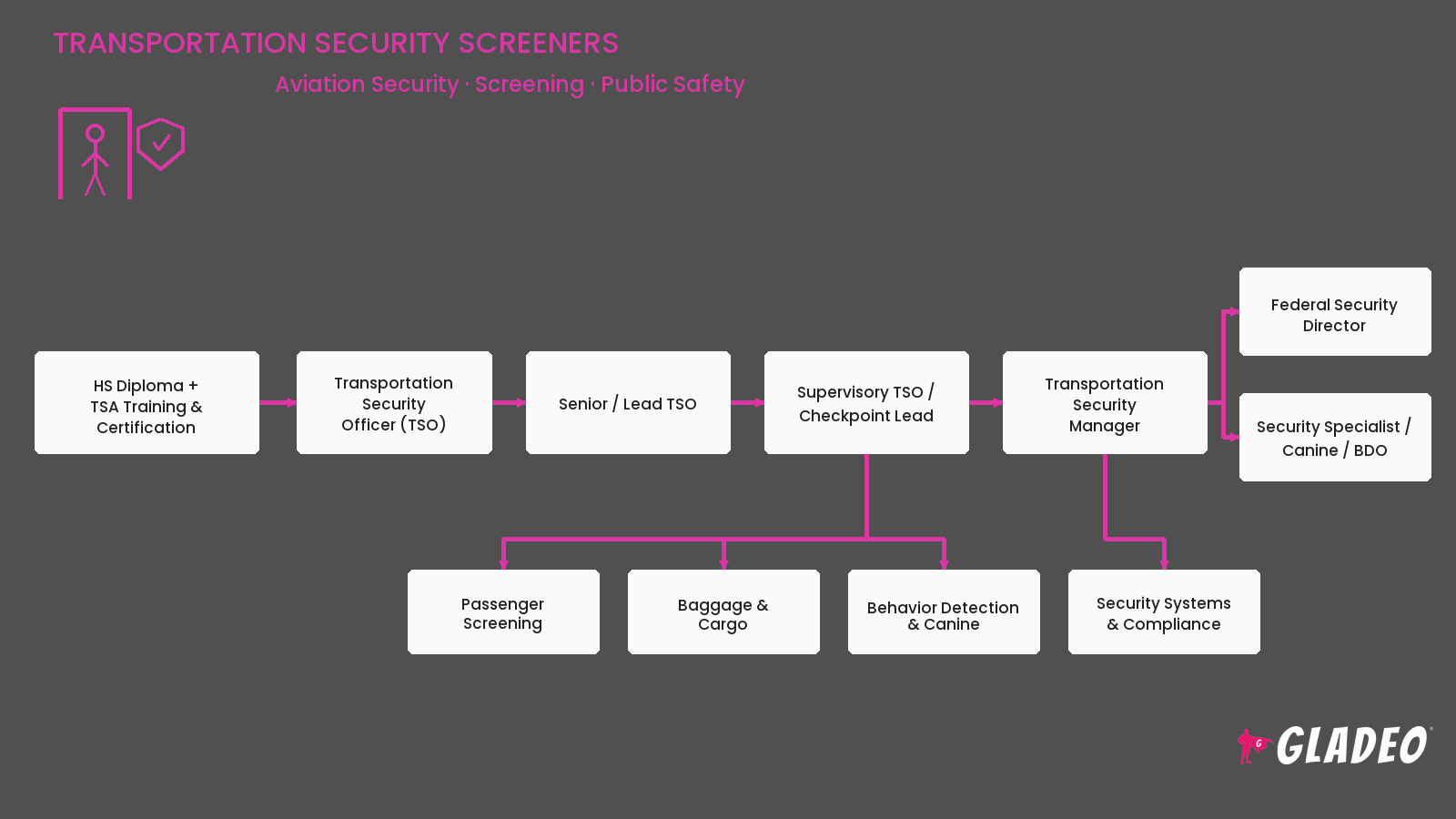
Most Transportation Security Screeners enter the field with a high school diploma or equivalent, although some positions may require additional training or certifications. Specialized training is provided on the job, focusing on security protocols, equipment operation, and passenger interaction skills.
Students can take courses in relevant subjects such as:
- Criminal Justice
- Public Safety and Security
- Communication Skills
- Psychology
- Emergency Management
- Health and Safety
- Technology and Computer Applications
- Conflict Resolution
- Physical Education
- Ethics and Law
Hands-on experience through internships or entry-level roles at airports can be very helpful. Building a strong foundation in communication and customer service, along with gaining familiarity with security technology, prepares candidates for training programs. Continued education and certification opportunities are available for advancement.
- Take courses in criminal justice, public safety, and computer technology.
- Participate in school clubs focused on leadership or community service.
- Develop strong communication and interpersonal skills through presentations and group projects.
- Gain experience in customer service through part-time jobs or volunteering.
- Practice problem-solving and attention to detail with puzzles or games.
- Stay physically active to build stamina and endurance.
- Research security careers and talk to professionals in the field.
- Attend career fairs and informational sessions related to law enforcement and transportation.
- Explore internships or volunteer opportunities with local security or emergency services.
- Maintain a clean disciplinary record and demonstrate responsibility.
- Look for programs offering hands-on training with security technology.
- Choose schools with strong connections to local airports or transportation agencies.
- Prioritize programs that include customer service and communication skill development.
- Seek certifications recognized by the Transportation Security Administration (TSA).
- Consider programs that offer internships or apprenticeships in security settings.
- Evaluate the quality and experience of instructors in security and law enforcement fields.
- Check if the program covers emergency response and conflict resolution.
- Opt for schools providing training on current screening technologies and procedures.
- Verify that the program stays updated with industry standards and regulatory changes.
- Consider flexible scheduling if balancing school with other commitments.
- Review graduate success rates and job placement assistance.
- Look for programs emphasizing ethics and professionalism in security work.
- Apply for entry-level screening positions at local airports or transportation hubs.
- Complete all required background checks and security clearances promptly.
- Prepare a resume highlighting attention to detail, communication skills, and reliability.
- Develop a professional appearance and demeanor for interviews and work.
- Practice explaining security procedures clearly and calmly.
- Volunteer at community safety events to build relevant experience.
- Network with airport staff and attend TSA or transportation security career events.
- Be ready to undergo extensive training and pass certification exams.
- Maintain physical fitness to meet job demands.
- Seek feedback during training to improve screening techniques.
- Stay informed about current security threats and protocols.
- Demonstrate a positive attitude toward teamwork and public service.
- Gain experience and pursue additional certifications in specialized screening technologies.
- Volunteer for or accept assignments in higher-risk or more complex screening areas.
- Develop leadership and training skills to become a team leader or supervisor.
- Build strong relationships with law enforcement and airport management.
- Seek opportunities for cross-training in emergency response or cybersecurity.
- Stay current with industry trends to recommend procedural improvements.
- Attend professional development workshops and seminars.
- Aim for roles in security management or federal agency positions for career growth.
Websites:
- Transportation Security Administration (tsa.gov)
- International Air Transport Association (iata.org)
- American Society for Industrial Security (asisonline.org)
- National Association of Security Companies (nascio.org)
- Federal Emergency Management Agency (fema.gov)
- Airport Council International (aci.aero)
- Security Industry Association (securityindustry.org)
- International Association of Airport Executives (iaae.org)
- Homeland Security Digital Library (hsdl.org)
- National Criminal Justice Reference Service (ncjrs.gov)
- National Safety Council (nsc.org)
- Institute of Security Professionals (securityinstitute.org)
- Aviation Security International (aviationsecurityinternational.com)
- Screening Coordination Office (tsa.gov/screening)
Books:
- Airport and Aviation Security: U.S. Policy and Strategy in the Age of Global Terrorism by Bartholomew Elias
- The TSA and Homeland Security: How the Transportation Security Administration Grew into a Massive Government Agency by John R. MacArthur
- Aviation Security: Principles and Practice by Bruce G. Blair
- Security Officer Field Guide by Byron J. Stewart
- TSA Security Screening Procedures: A Practical Guide by Michael J. McNerney
If you're interested in security but want to explore other related careers, there are many paths that use similar skills and offer opportunities to protect people and property.
- Law Enforcement Officer
- Customs and Border Protection Agent
- Private Security Officer
- Emergency Management Specialist
- Loss Prevention Specialist
- Cybersecurity Analyst
- Firefighter
- Airport Operations Specialist
- Safety Inspector
- Military Security Specialist
Click here to download the infographic
Newsfeed

Featured Jobs
Online Courses and Tools