





Spotlights
Plant Disease Specialist, Plant Pathology Researcher, Agricultural Pathologist, Crop Disease Analyst, Plant Health Scientist, Phytopathologist, Plant Disease Diagnostician, Plant Protection Scientist, Crop Protection Specialist, Plant Disease Consultant, Agricultural Scientist, Plant Disease Investigator
Imagine walking through a lush farm, a flourishing garden, or a vast forest and knowing that the health of every plant you see depends on your expertise. Plant Pathologists play a vital role in protecting the world’s food supply and natural ecosystems by diagnosing, studying, and controlling diseases that threaten plants.
Plant Pathologists spend their days collecting samples of diseased plants, conducting laboratory tests, and analyzing how pathogens like fungi, bacteria, viruses, or nematodes affect crops and native plants. They work closely with farmers, agricultural advisers, scientists, and environmental specialists to develop strategies that prevent or manage these diseases, ensuring plants stay healthy and yields remain strong.
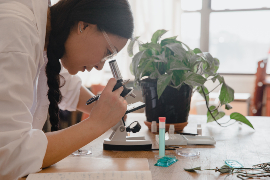
Using microscopes, DNA sequencing tools, and computer software for data analysis, Plant Pathologists identify disease causes and track outbreaks. Their work not only saves crops from devastation but also supports sustainable farming methods and biodiversity conservation, making a huge impact on global food security and environmental health.
- Helping protect farmers’ crops and improve food security worldwide
- Solving complex biological puzzles about plant diseases and their causes
- Collaborating with scientists and farmers to develop innovative disease management strategies
- Contributing to environmental conservation by preserving plant health and biodiversity
Working Schedule
Plant Pathologists typically work full-time in laboratory and field settings, often during regular business hours. However, their schedule can vary depending on growing seasons, disease outbreaks, or urgent research deadlines. They may travel to farms or forests for sample collection and sometimes work longer hours during critical periods to analyze data or prepare reports. Many are employed by universities, government agencies, or agricultural companies, but some work as consultants with flexible schedules.
Typical Duties
- Collect plant and soil samples from fields or greenhouses
- Examine samples under microscopes to detect pathogens
- Conduct laboratory tests, including culturing fungi and bacteria
- Use molecular techniques to identify disease-causing organisms
- Monitor disease outbreaks and record data on plant health
- Collaborate with farmers and agronomists to develop treatment plans
- Design and conduct experiments to test disease control methods
- Write reports and scientific papers to share findings
- Advise on pesticide use and other disease prevention strategies
- Develop educational materials to inform growers and the public
- Stay updated on new research and emerging plant diseases
- Assist in breeding disease-resistant plant varieties
Additional Responsibilities
- Maintain laboratory equipment and ensure safety protocols
- Present research findings at conferences and workshops
- Help train students or junior researchers in lab and field techniques
- Coordinate with regulatory agencies on plant disease control policies
- Secure funding through grant writing for research projects
- Participate in community outreach programs about plant health
- Manage databases of disease incidence and treatment effectiveness
Mornings often start with reviewing recent field reports and planning sample collection trips to farms or research plots. Plant Pathologists coordinate with field staff and check weather conditions to optimize timing for sample gathering.
Midday involves hands-on work in the lab—preparing samples, running tests to detect pathogens, and analyzing results using specialized software. They may also meet with agricultural partners to discuss disease trends and adapt management practices.
Afternoons are dedicated to data interpretation, writing detailed reports, and collaborating with other scientists on ongoing research projects. They might attend virtual meetings or seminars to stay current with advances in plant pathology and share insights with their team.
Soft Skills
- Critical thinking to diagnose complex plant diseases
- Attention to detail in laboratory and field observations
- Problem-solving to develop effective disease management plans
- Communication skills for explaining findings to diverse
audiences - Collaboration with farmers, researchers, and policymakers
- Patience and persistence during long-term research projects
- Adaptability when dealing with unpredictable field conditions
- Organizational skills for managing multiple experiments
- Curiosity to explore emerging plant health issues
- Time management to balance lab work and field visits
- Ethical responsibility in handling pesticides and genetic data
- Creativity in designing innovative research approaches
Technical Skills
- Microscopy and sample preparation techniques
- Molecular biology methods, including DNA sequencing
- Culturing and isolating plant pathogens
- Data analysis using statistical and bioinformatics software
- Field sampling protocols and GPS mapping
- Knowledge of plant physiology and pathology
- Use of laboratory safety and sterilization procedures
- Experimental design and research methodology
- Report writing and scientific documentation
- Computer skills for data management and presentations
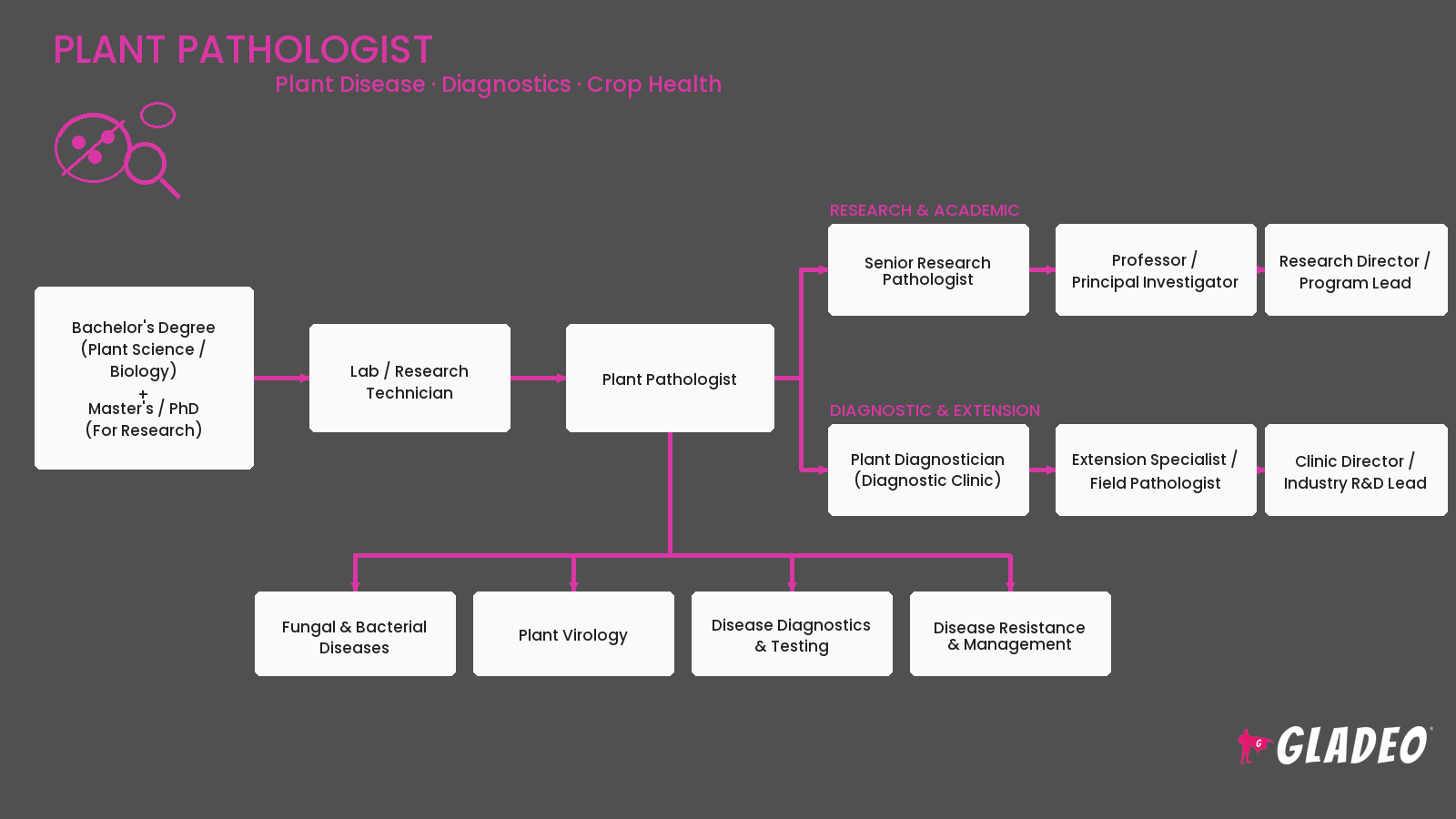
- Research Plant Pathologist: Focuses on studying plant diseases in academic or government labs to find new knowledge and solutions
- Extension Plant Pathologist: Works directly with farmers and communities to apply research in practical ways and provide education
- Diagnostic Plant Pathologist: Specializes in identifying diseases and advising on treatment options in diagnostic clinics or labs
- Industrial Plant Pathologist: Develops disease-resistant crops or plant-based products for agricultural companies
- Forest Pathologist: Studies diseases affecting trees and forest ecosystems to promote environmental health
- Regulatory Plant Pathologist: Works with government agencies to enforce plant health regulations and prevent disease spread
- Biotechnologist in Plant Pathology: Uses genetic engineering to develop disease-resistant plant varieties
- Consultant Plant Pathologist: Provides expert advice to agricultural businesses and policymakers on disease control strategies
- Agricultural research institutes
- Universities and academic research centers
- Government agricultural departments
- Biotechnology companies
- Environmental conservation organizations
- Agricultural extension services
- Plant diagnostic laboratories
- Seed and crop production companies
- Forestry management agencies
- Pesticide and agrochemical firms
- International food security organizations
- Nonprofit environmental groups
Plant Pathologists often face high-pressure situations during disease outbreaks when rapid diagnosis and response are critical to saving crops. They must be ready for urgent fieldwork and laboratory analysis under tight deadlines, requiring focus and resilience.
While most work occurs during regular hours, seasonal demands and research deadlines can extend their workdays. Field sampling can involve outdoor work in varying weather conditions, and lab work may require long periods of concentration on delicate procedures.
The job demands balancing detailed scientific investigation with practical problem-solving and communication. Plant Pathologists must be prepared for ongoing education and adapting to new diseases or technologies, which can involve continuous learning and sometimes travel.
- Increasing use of DNA sequencing and molecular diagnostics for faster disease identification
- Growing importance of sustainable and organic disease management methods
- Integration of artificial intelligence and machine learning in disease prediction models
- Development of genetically modified plants resistant to pests and diseases
- Climate change impacting patterns and emergence of plant diseases
- Expansion of remote sensing and drone technology for field disease monitoring
- Collaboration between international organizations to address global plant health threats
- Emphasis on reducing chemical pesticide use through biological controls
- Use of big data to track disease outbreaks and improve management
- Greater focus on educating farmers about early disease detection and prevention
Many Plant Pathologists fondly remember exploring gardens, forests, or farms as kids, fascinated by how plants grow and what can make them sick. Early interests in biology, nature, and problem-solving often spark their curiosity about plant health.
Young future Plant Pathologists might have enjoyed science fairs, growing plants, or collecting insects and fungi. These experiences help build observation skills and a love for discovering how living things interact in ecosystems.
Becoming a Plant Pathologist typically involves earning a bachelor's degree in plant science, biology, or a related field, followed by advanced degrees like a master's or PhD for research and specialized roles. Hands-on experience through internships or lab work is critical to building expertise.
Students can take courses in relevant subjects such as:
- Plant Biology
- Microbiology
- Genetics
- Biochemistry
- Soil Science
- Plant Physiology
- Statistics and Data Analysis
- Molecular Biology
- Mycology and Virology
- Agricultural Sciences
Besides formal education, building a strong portfolio of lab and field work is essential. Many students join research projects or internships to gain practical skills. Graduate study often includes original research and specialization in plant disease topics.
- Take advanced biology and chemistry classes to build a strong science foundation
- Join science clubs or environmental organizations for hands-on experience
- Participate in science fairs focusing on plant or environmental research
- Seek internships or volunteer opportunities at local farms, botanical gardens, or labs
- Develop skills in data analysis and computer software
- Explore summer programs in agriculture or biology
- Work on communication skills through presentations and writing
- Connect with mentors in agricultural or biological sciences
- Attend agriculture or science career days to learn about the field
- Consider dual enrollment or AP courses in related sciences
- Explore college programs with strong plant science departments
- Plan for graduate school if interested in research or advanced roles
- Look for programs accredited and recognized for agricultural or biological sciences
- Choose schools with strong research facilities and laboratory access
- Seek programs offering internships or cooperative education opportunities
- Consider programs that emphasize both fieldwork and lab skills
- Check for faculty expertise in plant pathology and related fields
- Evaluate availability of scholarships and funding for research
- Look for programs with connections to agricultural industries or extension services
- Consider programs offering courses in molecular biology and genetics
- Choose schools with active student organizations in plant and environmental sciences
- Find programs that teach data analysis and bioinformatics
- Seek out opportunities for interdisciplinary study with environmental science or biotechnology
- Look for programs that support undergraduate research projects
- Apply for internships or assistant roles in agricultural research labs
- Volunteer with local extension services or botanical gardens
- Create a portfolio showcasing any research projects and lab skills
- Network with professors and attend agricultural conferences
- Seek entry-level technician positions in plant diagnostic labs
- Work as a field assistant for crop disease monitoring programs
- Join agricultural companies as junior plant health analysts
- Gain experience with data collection and sample processing
- Develop proficiency with lab equipment and software used in plant pathology
- Attend workshops on disease identification and management
- Prepare for interviews by reviewing common plant disease topics
- Keep current with scientific literature and advances in the field
- Pursue advanced degrees to specialize and lead research projects
- Publish research findings in scientific journals
- Build a professional network through conferences and industry events
- Take leadership roles in managing research teams or extension programs
- Develop expertise in cutting-edge molecular techniques or data analytics
- Diversify skills by collaborating with interdisciplinary teams
- Seek certifications relevant to agricultural or environmental science
- Stay updated on emerging plant diseases and control technologies
Websites:
- American Phytopathological Society (apsnet.org)
- International Society for Plant Pathology (ispweb.org)
- USDA Agricultural Research Service (ars.usda.gov)
- Plant Management Network (plantmanagementnetwork.org)
- CropLife Foundation (croplifefoundation.org)
- National Institute of Food and Agriculture (nifa.usda.gov)
- The Phytopathological Society of America (phytopath.org)
- European and Mediterranean Plant Protection Organization (eppo.int)
- Plant Health Australia (phau.com.au)
- Global Plant Council (globalplantcouncil.org)
- AgriLife Extension Texas A&M (agrilifeextension.tamu.edu)
- International Maize and Wheat Improvement Center (cimmyt.org)
- Nature Plants Journal (nature.com/nplants)
- Science Daily - Plant Biology Section (sciencedaily.com/news/plants_animals)
Books:
- Plant Pathology by George N. Agrios
- Introduction to Plant Pathology by M. Anandaraj and R. Parthasarathy
- Plant Pathology Concepts and Laboratory Exercises by Robert N. Trigiano
- Molecular Plant Pathology by Matthew Dickinson
- Principles of Plant Disease Management by Richard N. Strange
If you’re passionate about plants and science but want to explore different paths, many related careers offer exciting opportunities to work with plants, agriculture, or environmental health.
- Agronomist: Focuses on crop production and soil management
- Horticulturist: Works with garden plants and landscaping
- Environmental Scientist: Studies ecosystems and pollution effects
- Soil Scientist: Analyzes soil composition and health
- Biotechnologist: Applies technology to develop plant-based solutions
- Forester: Manages forest resources and conservation
- Entomologist: Studies insects that affect plants
- Microbiologist: Investigates microorganisms in agriculture and environment
- Agricultural Technician: Supports farm operations and research
- Plant Breeder: Develops new plant varieties with desired traits
Click here to download the infographic
Newsfeed

Featured Jobs
Online Courses and Tools