






Spotlights
Medical Administrative Assistant, Medical Office Assistant, Medical Receptionist, Healthcare Administrative Coordinator, Clinical Secretary, Medical Records Clerk, Front Desk Medical Coordinator, Patient Services Representative, Medical Office Coordinator, Health Unit Coordinator, Medical Billing Assistant, Practice Administrative Assistant
Walk into almost any doctor's office, and the first person you meet sets the tone for everything that follows. When a nervous patient checks in, when an insurance question needs answering, when a doctor's whole day needs to run on schedule, it is the Medical Secretary or Administrative Assistant holding it all together, often being the calm, familiar face patients see every single visit.
Medical Secretaries and Administrative Assistants keep the business side of healthcare running smoothly so doctors, nurses, and clinical staff can focus on patient care. They schedule appointments, manage medical records, verify insurance information, process billing, and communicate directly with patients about everything from upcoming visits to test results. They work closely with physicians, nurses, office managers, and insurance companies, acting as the connective tissue between patients and the clinical team. In many offices, they are the person patients call first with a question and the last person they see on their way out.
Using electronic health record systems, medical billing software, and scheduling platforms, Medical Secretaries and Administrative Assistants keep a clinic's daily operations accurate and efficient. Their work matters because a well-run front office means shorter wait times, fewer billing errors, and patients who feel genuinely cared for from the moment they walk in the door.
- Being a trusted, familiar presence for patients during stressful or vulnerable moments
- Keeping a busy medical office organized so care can happen smoothly
- Building long-term relationships with patients and the clinical team
- Playing an essential, behind-the-scenes role in a patient's overall healthcare experience
Working Schedule
Most Medical Secretaries and Administrative Assistants work full-time during regular business hours, though offices attached to hospitals, urgent care centers, or specialty practices may require evening, weekend, or rotating shifts. The work takes place almost entirely in a medical office, clinic, or hospital administrative setting, with a steady flow of phone calls, patient interactions, and paperwork throughout the day. Most are employed directly by hospitals, private medical practices, or outpatient clinics, though some work for staffing agencies that place them in temporary or rotating positions.
Typical Duties
- Greeting patients and managing the front desk or check-in process
- Scheduling and confirming patient appointments
- Answering phones and responding to patient questions and concerns
- Verifying insurance coverage and collecting co-payments
- Entering and updating patient information in electronic health record systems
- Preparing and organizing medical charts and records for appointments
- Processing medical billing and coding basic procedures
- Coordinating referrals to specialists and other healthcare providers
- Transcribing physician notes and preparing correspondence
- Managing incoming and outgoing mail, faxes, and prescription refill requests
- Ensuring patient confidentiality and compliance with privacy regulations
- Ordering and maintaining office and medical supplies
Additional Responsibilities
- Training new front-office staff on office procedures and software systems
- Coordinating with insurance companies to resolve billing disputes
- Scheduling surgeries, procedures, or hospital admissions when needed
- Maintaining office calendars for physicians and clinical staff
- Assisting with quality assurance or compliance audits
- Managing patient recall systems for preventive care reminders
- Supporting telehealth appointment scheduling and technical setup
- Handling sensitive patient situations with discretion and professionalism
The day often begins by preparing the front desk for opening, checking the day's appointment schedule, and pulling or reviewing patient charts for morning visits. As patients start arriving, the Medical Secretary greets them, checks them in, verifies insurance, and lets the clinical team know they are ready to be seen.
Midday is typically a steady mix of phone calls, scheduling, and administrative tasks. A Medical Secretary might spend time confirming next week's appointments, processing insurance claims, or coordinating a referral to a specialist a patient needs to see. Between patient interactions, they update records, respond to prescription refill requests, and answer questions from both patients and staff.
Afternoons often bring more of the same rhythm: checking patients out, collecting payments, scheduling follow-up visits, and fielding calls from insurance companies or pharmacies. Before the office closes, the Medical Secretary usually confirms the next day's schedule, follows up on any outstanding billing issues, and makes sure records are complete and accurate for every patient seen that day.
Soft Skills
- Warm, professional communication with patients
- Strong organizational skills and attention to detail
- Multitasking and prioritization under time pressure
- Empathy and patience, especially with anxious or unwell patients
- Discretion and respect for patient privacy
- Problem solving for scheduling conflicts or billing issues
- Active listening
- Teamwork and collaboration with clinical staff
- Adaptability to a fast-paced, interrupt-driven environment
- Customer service orientation
- Calm demeanor during stressful or emotional situations
- Reliability and consistency
Technical Skills
- Electronic health record (EHR) systems such as Epic or Cerner
- Medical terminology
- Medical billing and coding basics
- Insurance verification and claims processes
- Appointment scheduling software
- Basic knowledge of HIPAA and patient privacy regulations
- Office software including word processing and spreadsheets
- Phone and multi-line communication systems
- Data entry accuracy and speed
- Familiarity with medical office equipment
- Front Desk Coordinator: Manages patient check-in, check-out, and daily scheduling
- Medical Records Specialist: Focuses on organizing, updating, and securing patient records
- Medical Billing Assistant: Specializes in insurance claims, coding, and payment processing
- Referral Coordinator: Manages specialist referrals and coordination between providers
- Hospital Unit Coordinator: Supports administrative needs on a specific hospital floor or unit
- Practice Administrative Assistant: Supports the overall business operations of a medical practice
- Telehealth Coordinator: Manages scheduling and technical support for virtual appointments
- Surgical Scheduling Coordinator: Focuses specifically on coordinating procedures and surgeries
- Private medical and specialty practices
- Hospitals and health systems
- Urgent care centers
- Outpatient clinics and surgery centers
- Dental and orthodontic offices
- Mental health and behavioral health practices
- Physical therapy and rehabilitation centers
- Community health centers
- Long-term care and rehabilitation facilities
- Insurance companies
- Telehealth companies
- Government healthcare agencies
Medical Secretaries and Administrative Assistants work in an environment where accuracy truly matters. A scheduling mistake, a missed insurance detail, or an error in a patient's record can create real problems for patient care and for the office's operations, so the job demands consistent focus even during the busiest hours.
The pace can be relentless. Phones ring constantly, patients arrive with questions or frustrations, and the schedule can change at a moment's notice due to emergencies or physician availability. Staying calm and organized while juggling multiple tasks at once is a daily requirement, not an occasional challenge.
The role also asks for emotional steadiness. Patients are sometimes scared, in pain, or upset about billing issues, and the Medical Secretary is often the one absorbing that stress while still providing warm, professional service. Building the resilience to stay compassionate day after day, especially in a busy practice, is one of the quieter demands of the job.
- Growing use of electronic health records and integrated practice management systems
- Expansion of telehealth scheduling and virtual visit coordination
- Increased automation of appointment reminders and patient communication
- Greater emphasis on data security and HIPAA compliance training
- Rising demand for medical administrative staff as the healthcare industry grows
- Integration of patient portals that let patients message offices and view records directly
- Growth of centralized scheduling systems across multi-location practices
- Increased focus on reducing billing errors through automated coding tools
- Expansion of remote and hybrid administrative roles in some healthcare settings
- Greater cross-training between administrative and basic clinical support duties
Many Medical Secretaries and Administrative Assistants were the organized kids who kept track of everyone's schedules, ran the school office as a student aide, or were the go-to person for keeping a club or team on track. They tended to enjoy helping people feel comfortable and taken care of, whether that meant welcoming a new student or calming a nervous friend.
Others found their interest through volunteering at hospitals or clinics, babysitting or caregiving roles, or part-time jobs in customer service. A natural mix of patience, organization, and genuine warmth toward people often pointed toward this career long before it had a name.
Most Medical Secretaries and Administrative Assistants complete a postsecondary certificate or associate degree in medical administrative assisting, health information technology, or a related field, though some enter the field with a high school diploma and on-the-job training. Programs typically cover medical terminology, healthcare office procedures, and electronic health record systems, and many employers prefer or require certification in medical administrative assisting or medical billing and coding.
Students can take courses in relevant subjects such as:
- Medical Terminology
- Healthcare Office Procedures
- Electronic Health Records Management
- Medical Billing and Coding
- Anatomy and Physiology Basics
- Healthcare Law and Ethics, including HIPAA
- Business Communications
- Keyboarding and Office Software
- Customer Service in Healthcare Settings
- Introduction to Health Insurance
Hands-on experience through internships or clinical externships is a common and valuable part of most training programs, giving students real exposure to a working medical office before they graduate. Many Medical Secretaries also earn certifications, such as a Certified Medical Administrative Assistant credential, to strengthen their resume and demonstrate readiness for the fast pace of a real clinic.
- Take health science, biology, and business or office technology courses
- Practice typing and basic computer skills to build speed and accuracy
- Volunteer at a hospital, clinic, or nursing home to gain healthcare exposure
- Get a part-time job in customer service or office administration
- Research medical administrative assisting or health information certificate programs
- Shadow a medical secretary or front-office staff member if possible
- Learn basic medical terminology through free online resources or a course
- Practice clear, professional phone and written communication
- Build organizational habits through planners, clubs, or student leadership roles
- Explore internships or externships at local medical offices or clinics
- Take a course in healthcare privacy and confidentiality basics
- Practice staying calm and helpful under pressure in any people-facing role
- Accredited medical administrative assisting or health information programs
- Programs that include a clinical externship or internship placement
- Coursework covering both administrative and basic clinical terminology skills
- Instructors with real medical office or healthcare administration experience
- Access to current electronic health record software for hands-on practice
- Support for pursuing a medical administrative or billing certification
- Career services that help place graduates in local medical offices
- Flexible or part-time scheduling options for working students
- Reasonable program length and affordable tuition
- Strong relationships with local hospitals, clinics, and physician practices
- Small class sizes for individualized instruction
- Positive outcomes and reviews from recent program graduates
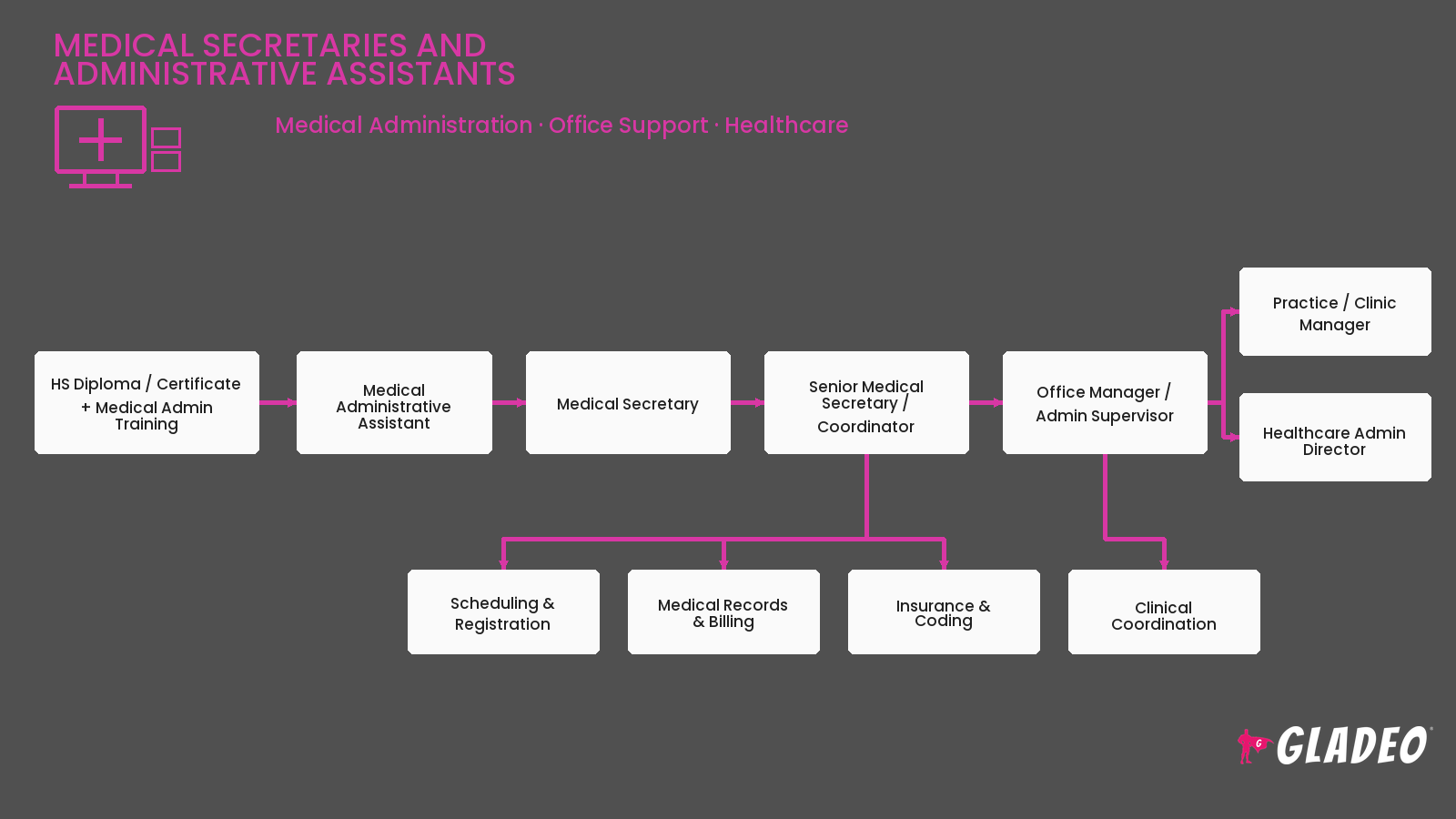
- Complete a certificate or associate degree program with a clinical externship
- Earn a medical administrative assisting or medical billing and coding certification
- Apply for entry-level titles like Medical Receptionist, Front Desk Coordinator, or Medical Office Assistant
- Search job boards like Indeed, LinkedIn, and hospital or clinic career pages
- Volunteer or intern at a medical office to gain firsthand experience
- Highlight organizational skills, typing speed, and any healthcare exposure on your resume
- Practice answering common interview questions about handling difficult patients calmly
- Network with instructors, classmates, and local healthcare professionals
- Be open to starting in a smaller practice to build broad, hands-on experience
- Demonstrate familiarity with electronic health record systems if possible
- Show reliability and punctuality, which are highly valued in medical office settings
- Follow up professionally after interviews to express continued interest
- Build expertise in medical billing, coding, or health information management
- Take on more responsibility, such as training new staff or managing scheduling systems
- Pursue additional certifications to specialize or qualify for higher pay
- Build a reputation for accuracy, reliability, and excellent patient service
- Move into office manager or practice administrator roles
- Expand your knowledge into related areas like human resources or compliance
- Develop leadership skills by supervising other administrative staff
- Consider pursuing further education in healthcare administration for long-term advancement
Websites:
- American Association of Medical Assistants (AAMA) - aama-ntl.org
- American Health Information Management Association (AHIMA) - ahima.org
- National Healthcareer Association (NHA) - nhanow.com
- Medical Group Management Association (MGMA) - mgma.com
- American Academy of Professional Coders (AAPC) - aapc.com
- HealthIT.gov - healthit.gov
- U.S. Department of Health and Human Services HIPAA resources - hhs.gov/hipaa
- American Medical Association (AMA) - ama-assn.org
- National Association for Health Care Recruitment - nahcr.com
- American Association of Healthcare Administrative Management (AAHAM) - aaham.org
- MedlinePlus Medical Terminology Resources - medlineplus.gov
- Professional Association of Health Care Office Management (PAHCOM) - pahcom.com
Books:
- Medical Terminology for Health Professions by Ann Ehrlich and Carol L. Schroeder
- The Medical Office Handbook by Nenna L. Bayes
- Health Information Management: Concepts, Principles, and Practice by Nadinia Davis
- Kinn's The Medical Assistant by Deborah B. Proctor and Alexandra Patricia Adams
- Medical Insurance: A Revenue Cycle Process Approach by Joanne D. Valerius
If you find that being a Medical Secretary or Administrative Assistant isn't the right fit, your organizational skills, healthcare knowledge, and people skills transfer well to many related careers.
- Medical Billing and Coding Specialist
- Health Information Technician
- Medical Assistant
- Patient Care Coordinator
- Hospital Unit Coordinator
- Office Manager
- Human Resources Assistant
- Pharmacy Technician
- Insurance Claims Processor
- Healthcare Recruiter
Newsfeed

Featured Jobs
Online Courses and Tools
Annual Salary Expectations
New workers start around $48K. Median pay is $52K per year. Highly experienced workers can earn around $73K.
Annual Salary Expectations
New workers start around $48K. Median pay is $62K per year. Highly experienced workers can earn around $74K.
Annual Salary Expectations
New workers start around $43K. Median pay is $48K per year. Highly experienced workers can earn around $59K.
Annual Salary Expectations
New workers start around $48K. Median pay is $61K per year. Highly experienced workers can earn around $74K.
Annual Salary Expectations
New workers start around $43K. Median pay is $45K per year. Highly experienced workers can earn around $50K.