






Spotlights
Mortician, Undertaker, Funeral Arranger, Funeral Service Practitioner, Embalmer, Grief Counselor, Crematory Operator, Funeral Consultant, Funeral Home Manager, Bereavement Coordinator, Funeral Services Director
When families face the difficult moment of losing a loved one, Funeral Directors step in to provide comfort, guidance, and dignity during one of life’s most challenging times. Every service they organize helps families honor memories and begin healing, creating meaningful rituals that touch hearts forever.
Funeral Directors manage all aspects of funeral services, from preparing the deceased for burial or cremation, coordinating with families and clergy, to handling legal documents and arranging transportation. They collaborate closely with embalmers, grief counselors, cemetery staff, and community members to ensure every detail respects cultural and personal wishes, delivering a compassionate experience that helps families say goodbye with grace.
Using specialized embalming techniques, restoration tools, and funeral planning software, Funeral Directors combine technical skill with empathy. Their role is vital in preserving dignity, easing grief, and supporting communities during loss, turning complex logistics into moments of peace and remembrance.
- Helping families find comfort and closure during times of grief
- Creating meaningful ceremonies that honor lives and traditions
- Building trusting relationships with diverse communities
- Using both technical skills and compassion to make a profound difference in people’s lives
Working Schedule
Funeral Directors often work irregular hours, including evenings, weekends, and holidays, because death can occur at any time. Many work full-time and may be on call to respond promptly to family needs. The work environment combines office settings, funeral homes, and sometimes hospitals or nursing homes, with a mix of administrative and hands-on tasks. Freelance opportunities exist, but most Funeral Directors are employed by funeral homes or cemeteries.
Typical Duties
- Consulting with families to plan funeral and memorial services
- Coordinating transportation of the deceased from place of death to funeral home
- Preparing legal paperwork such as death certificates and burial permits
- Arranging embalming and restorative care with licensed embalmers
- Organizing visitations, ceremonies, and burials or cremations
- Managing funeral home staff and scheduling services
- Advising families on funeral products like caskets and urns
- Providing grief support or referring families to counseling services
- Maintaining accurate records and financial accounts
- Ensuring compliance with health and safety regulations
- Handling arrangements for veterans and other special groups
- Coordinating with clergy, cemeteries, and crematories
Additional Responsibilities
- Marketing funeral home services and building community relationships
- Training and supervising apprentices or junior staff
- Maintaining funeral home facilities and equipment
- Staying updated on legal requirements and industry standards
- Managing finances, billing, and insurance claims
- Organizing pre-planning services for future funerals
- Participating in professional associations and continuing education
- Supporting staff wellness given the emotional demands of the job
A Funeral Director’s day often begins by reviewing calls received overnight and contacting families to offer support and start planning. They might visit hospitals or nursing homes to coordinate transfers of the deceased and check on paperwork. Mornings often include meetings with embalmers and staff to prepare bodies and facilities for upcoming services.
Midday is busy with consultations, helping families select service options and guiding them through decisions about ceremonies, caskets, or cremation. Funeral Directors also handle logistics like scheduling clergy, arranging transportation, and filing necessary documents. They often meet with vendors or cemetery staff to finalize arrangements.
Afternoons and evenings might involve hosting visitations, conducting funerals, or attending to last-minute details. Funeral Directors also spend time managing administrative tasks like billing, staff supervision, and community outreach. The role requires balancing technical duties with compassionate presence throughout every step.
Soft Skills
- Empathy and compassion
- Strong communication skills
- Organizational and time management abilities
- Problem-solving under pressure
- Active listening
- Cultural sensitivity and respect
- Team leadership and collaboration
- Discretion and professionalism
- Emotional resilience
- Adaptability to changing circumstances
- Attention to detail
- Customer service orientation
Technical Skills
- Knowledge of embalming and restorative techniques
- Funeral service laws and regulations
- Preparation of legal documents
- Use of funeral planning and management software
- Basic accounting and billing
- Public speaking and ceremony coordination
- Safety and sanitation procedures
- Facility maintenance skills
- Grief counseling basics
- Transportation logistics
- Embalmer: Specializes in preparing and preserving bodies for viewing and burial
- Crematory Operator: Manages the cremation process and related equipment
- Funeral Home Manager: Oversees business operations and staff management
- Grief Counselor: Provides emotional support and resources to grieving families
- Pre-Need Counselor: Helps clients plan and pay for future funeral services
- Memorial Service Coordinator: Focuses on planning and organizing ceremonial aspects
- Veterans’ Funeral Specialist: Coordinates services honoring military members
- Green Burial Director: Facilitates environmentally friendly burial options
- Funeral Homes
- Cemeteries
- Hospitals and Hospices
- Religious Institutions
- Government Agencies
- Veterans’ Affairs Offices
- Crematories
- Nonprofit Grief Support Groups
- Mortuary Schools and Training Centers
- Professional Funeral Service Associations
- Community Health Organizations
- Insurance Companies
Funeral Directors often face emotionally intense situations, requiring a calm and supportive demeanor while managing details accurately. The pressure to honor families’ wishes and legal requirements can be high, especially during back-to-back services.
Work hours frequently extend beyond the typical 9-to-5, including nights, weekends, and on-call shifts to respond promptly to deaths. This irregular schedule can challenge work-life balance but is essential to meet client needs.
The role demands physical stamina for standing long hours, lifting, and managing multiple tasks simultaneously. Emotional resilience is critical to handle grief without personal burnout, alongside continuous learning to stay current with regulations and industry practices.
- Increasing use of digital funeral planning and virtual memorial services
- Growth in eco-friendly and green burial options
- Rising popularity of cremation over traditional burial
- Greater emphasis on cultural and religious inclusivity in services
- Integration of grief counseling within funeral services
- Use of social media to share memorial information and celebrate lives
- Adoption of advanced embalming and restorative technologies
- More pre-planning and pre-payment funeral arrangements
- Collaboration with legal and healthcare providers for end-of-life services
- Expansion of personalized and non-traditional ceremonies
Many Funeral Directors showed early interest in helping others and organizing events, often volunteering for community service or leadership roles. A natural comfort with sensitive topics and strong interpersonal skills were common traits.
Children who gravitated towards biology or healthcare, combined with a desire to support families during difficult times, often found this career path aligned with their passions. Early experiences in caregiving or counseling also pointed towards this profession.
Becoming a Funeral Director typically requires specialized education in mortuary science, often through a two- to four-year degree or diploma program. This training covers anatomy, embalming, ethics, law, and grief counseling. After completing education, most states require passing a licensing exam and completing an apprenticeship or internship.
Students can take courses in relevant subjects such as:
- Anatomy and Physiology
- Embalming Techniques
- Funeral Service Management
- Mortuary Law and Ethics
- Grief Psychology and Counseling
- Restorative Art and Cosmetology
- Business and Accounting for Funeral Services
- Public Speaking and Ceremony Planning
- Health and Safety Procedures
- Cultural Diversity in Funeral Practices
Hands-on experience through internships or apprenticeships is essential to develop practical skills and industry knowledge. Building a strong portfolio of service planning and community involvement helps prepare for licensing exams and future employment. Continued education ensures Funeral Directors stay informed on legal changes and emerging trends.
- Take biology and health science courses to understand human anatomy and physiology
- Enroll in psychology classes to learn about grief and counseling
- Develop strong communication skills through English and speech classes
- Volunteer in community service or hospice programs
- Participate in leadership roles or student organizations
- Research mortuary science programs and their requirements
- Attend career fairs and speak with professionals in funeral services
- Practice organizational and time management skills
- Explore internships or job shadowing opportunities at funeral homes
- Learn about cultural diversity and customs related to death and mourning
- Take business or accounting classes to prepare for management duties
- Build emotional resilience through peer support or mentoring
- Choose accredited mortuary science or funeral service programs
- Look for programs with strong internship or apprenticeship placements
- Ensure curriculum covers both technical embalming and business management
- Find schools offering grief counseling and restorative art courses
- Check for state licensing exam preparation support
- Explore options with modern facilities and up-to-date equipment
- Seek programs with career placement assistance
- Consider programs that teach cultural competency
- Look for small class sizes for personalized instruction
- Find schools with active professional association connections
- Check for flexible scheduling or part-time options if needed
- Evaluate tuition costs and financial aid availability
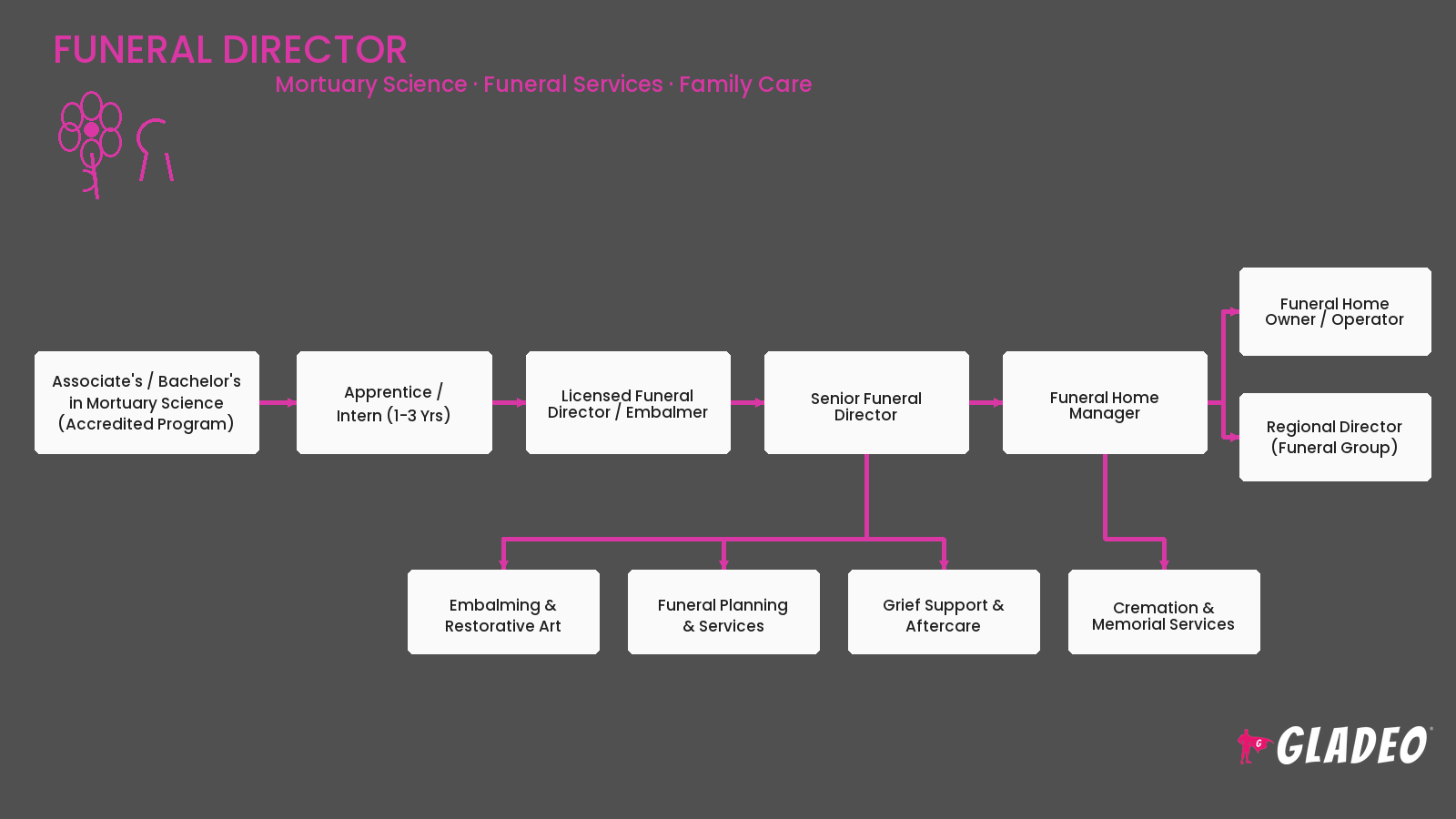
- Apply for internship or apprenticeship positions at local funeral homes
- Volunteer in hospice or grief counseling settings to gain experience
- Develop a professional portfolio including service planning examples
- Network with funeral directors at industry events or association meetings
- Attend workshops and continuing education seminars
- Prepare for and pass state licensing exams
- Seek entry-level roles such as funeral assistant or embalmer trainee
- Build relationships with suppliers and community organizations
- Practice public speaking and customer service skills
- Stay organized and detail-oriented in all tasks
- Demonstrate empathy and professionalism consistently
- Request feedback and mentorship from experienced directors
- Gain experience managing more complex cases and larger ceremonies
- Pursue advanced certifications or specialized training
- Build a reputation for compassionate service and reliability
- Develop leadership skills to manage staff and operations
- Expand professional network within funeral service communities
- Explore ownership or management opportunities in funeral homes
- Stay current with industry trends and legal changes
- Mentor apprentices and new Funeral Directors
Websites:
- National Funeral Directors Association (NFDA) - nfda.org
- International Cemetery, Cremation and Funeral Association (ICCFA) - iccfa.com
- American Board of Funeral Service Education (ABFSE) - abfse.org
- Funeral Service Foundation - funeralservicefoundation.org
- Funeral Consumers Alliance - funeralconsumers.org
- International Order of the Golden Rule - goldenrule.org
- National Association of Funeral Directors (UK) - nafd.org.uk
- Cremation Association of North America - cremationassociation.org
- Society of American Funeral Directors - safd.org
- The Order of the Eastern Star - easternstar.org
- Grief Recovery Method - griefrecoverymethod.com
- Mortuary Management - mortuarymanagement.co.uk
- Funeralwise - funeralwise.com
- The Compassionate Friends - compassionatefriends.org
Books:
- The Funeral Director's Handbook by Sheldon J. Katz
- Grief Counseling and Grief Therapy by J. William Worden
- The American Way of Death Revisited by Jessica Mitford
- Restorative Art and Science by E.R. Green
- Funeral Service Exam Review by National Funeral Directors Association
If you find that being a Funeral Director isn't the right path for you, there are many related careers where your skills in organization, empathy, and healthcare can shine.
- Mortuary Technician
- Grief Counselor
- Healthcare Social Worker
- Hospice Care Worker
- Cemetery Manager
- Embalmer
- Chapel Attendant
- Medical Examiner Assistant
- Funeral Sales Consultant
- Bereavement Coordinator
Newsfeed

Featured Jobs
Online Courses and Tools