





Spotlights
Forest Manager, Forestry Technician, Forest Ranger, Conservation Forester, Silviculturist, Timber Cruiser, Forest Ecologist, Urban Forester, Fire Management Officer, Forest Inventory Specialist, Forest Operations Manager, Forest Resource Analyst
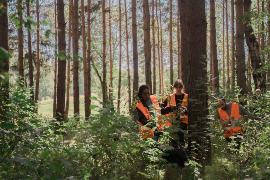
Imagine walking through a vast forest where every tree, path, and wildlife habitat depends on careful planning and stewardship. Foresters ensure forests remain healthy and sustainable, balancing environmental needs with economic uses like timber and recreation.
Foresters work outdoors surveying and managing forested lands, collaborating with environmental scientists, loggers, government agencies, and landowners. They analyze forest conditions, plan harvesting and reforestation projects, oversee wildfire prevention, and guide conservation efforts to maintain biodiversity and soil health.
Using tools like GPS equipment, GIS software, and forest growth models, foresters collect and interpret data to make informed decisions. Their work is vital for clean air, water, wildlife habitats, and renewable resources that communities and industries rely on now and into the future.
- Playing a key role in protecting and restoring natural landscapes for future generations.
- Working outdoors in varied environments, connecting with nature every day.
- Contributing to sustainable resource management that supports communities and economies.
- Seeing the tangible results of your efforts in healthier forests and thriving ecosystems.
Working Schedule
Foresters often split their time between office work and fieldwork in forests, which means spending long hours outdoors in all kinds of weather. Their schedules can be seasonal, with busy periods during planting or harvest seasons, and they may work weekends or evenings to meet project deadlines or respond to emergencies like wildfires. Some foresters are employed by government agencies, others by private companies or nonprofits, and many work as consultants or contractors, which can offer flexibility but also require managing multiple projects at once.
Typical Duties
- Conduct field surveys to assess tree health, growth rates, and forest conditions.
- Use GPS and GIS technology to map forest areas and plan resource management.
- Develop and implement forest management plans balancing conservation and economic goals.
- Advise loggers and landowners on sustainable harvesting techniques.
- Monitor forest regeneration after logging or disturbances.
- Inspect forest areas for signs of pests, diseases, or invasive species.
- Collaborate with fire management teams to prevent and control wildfires.
- Collect data on soil, water, and wildlife habitats to support environmental assessments.
- Prepare reports and recommend policy changes to government agencies.
- Educate the public on forest conservation and sustainable practices.
- Oversee reforestation and tree-planting efforts.
- Ensure compliance with environmental laws and regulations.
Additional Responsibilities
- Coordinate with environmental scientists to protect endangered species.
- Participate in community outreach and education programs.
- Manage budgets and resources for forestry projects.
- Stay updated on new forestry techniques and environmental policies.
- Train and supervise forestry technicians or seasonal workers.
- Assist in wildfire risk assessments and emergency response planning.
- Advocate for sustainable forestry in policy and land-use discussions.
- Contribute to research projects on forest ecology and climate impact.
A forester's day often begins early with reviewing maps, weather forecasts, and project plans in the office. They prepare equipment and coordinate with field teams before heading out into the forest to conduct surveys or inspections. Morning hours might be spent measuring tree diameters, assessing soil conditions, or checking for signs of pests.
By midday, they might meet with loggers, landowners, or government officials to discuss ongoing projects and ensure sustainable practices are followed. They collect data using GPS devices and record observations about forest health, wildlife activity, and environmental changes.
In the afternoon and evening, foresters analyze the data collected, update management plans, and write reports. They may attend public meetings or training sessions and sometimes respond to urgent situations like wildfire outbreaks or pest infestations, requiring flexible hours and quick problem-solving.
Soft Skills
- Strong communication for working with diverse groups.
- Problem-solving to handle environmental challenges.
- Attention to detail when collecting and analyzing data.
- Physical stamina for extended outdoor work.
- Critical thinking to balance ecological and economic needs.
- Adaptability to changing weather and field conditions.
- Teamwork collaborating with scientists and workers.
- Leadership for managing projects and teams.
- Patience for long-term forest growth cycles.
- Organization to manage multiple projects and reports.
- Decision-making under pressure, especially in emergencies.
- Curiosity and willingness to keep learning.
Technical Skills
- Proficiency with GPS and GIS mapping software.
- Knowledge of forestry and ecological data collection methods.
- Ability to use forest growth and yield modeling tools.
- Understanding of environmental laws and regulations.
- Skill in preparing technical reports and management plans.
- Competence in wildfire prevention and control techniques.
- Experience with soil and water testing procedures.
- Familiarity with tree identification and forest ecology.
- Use of drone technology for aerial surveys.
- Basic first aid and safety protocols for outdoor work.
- Urban Forester: Manages and maintains trees and green spaces in cities and towns.
- Conservation Forester: Focuses on protecting natural habitats and biodiversity.
- Fire Management Forester: Specializes in wildfire prevention and control.
- Timber Cruiser: Estimates timber volume and value for logging operations.
- Forest Ecologist: Studies forest ecosystems and wildlife relationships.
- Forest Operations Manager: Oversees logging activities and resource extraction.
- Silviculturist: Plans and implements tree planting and forest regeneration.
- Forest Inventory Specialist: Collects and analyzes data on forest resources.
- Federal forestry agencies like the U.S. Forest Service
- State and local government natural resource departments
- Private timber and logging companies
- Environmental and conservation nonprofit organizations
- Urban forestry departments in cities
- Consulting firms specializing in natural resource management
- Research institutions and universities
- Wildlife and habitat restoration projects
- Fire management and emergency response agencies
- Land trusts and private landowners
- International forestry organizations
- Agricultural extension services
Foresters face the challenge of working in remote and sometimes rugged outdoor environments, which demands physical endurance and comfort with unpredictable weather conditions. The job requires patience and persistence since forest growth and recovery can take years, and the results of their work are often long-term rather than immediate.
Work hours can be irregular and extended, especially during planting or harvesting seasons, wildfire outbreaks, or environmental emergencies. While some foresters have a regular office schedule, many must be flexible to respond to field demands, which may include weekends or holidays.
The career also involves balancing multiple interests — economic, environmental, recreational — often requiring negotiation and communication skills. Foresters must stay current with evolving environmental regulations, scientific research, and technology, which means ongoing learning and adaptability.
- Increased use of drone technology for forest monitoring and mapping.
- Advances in GIS and remote sensing improving data accuracy.
- Growing focus on climate change impact and carbon sequestration in forests.
- Development of sustainable forestry certification programs.
- Integration of artificial intelligence to analyze forest health data.
- Expansion of urban forestry to combat city heat and pollution.
- More emphasis on wildfire prevention and management strategies.
- Use of genetic research for disease-resistant and climate-adapted tree species.
- Community-based forest management and indigenous partnerships.
- Shift toward balancing timber production with ecosystem services.
Young foresters often show a deep love for nature, wildlife, and outdoor adventures from an early age. Activities like hiking, camping, birdwatching, or gardening can spark an interest in how forests and ecosystems work. They may enjoy studying biology, earth sciences, or environmental topics in school.
Many also have a curiosity about how natural resources are used and conserved, combined with problem-solving skills and a desire to protect the environment. Early experiences volunteering for park cleanups or tree planting can inspire a lifelong commitment to forestry and conservation.
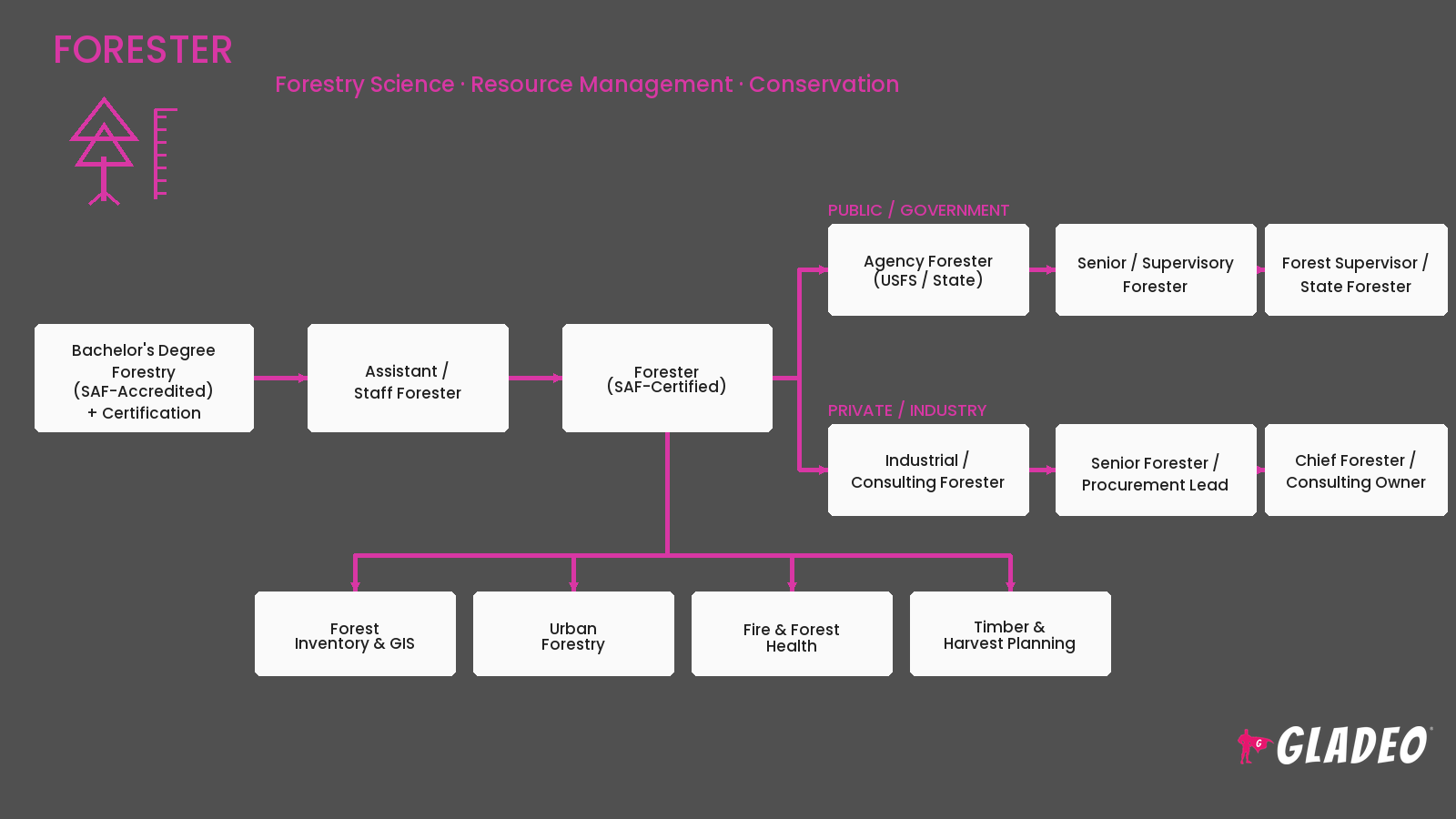
Becoming a forester usually requires a bachelor's degree in forestry, environmental science, natural resource management, or a related field. These programs combine classroom learning with fieldwork to teach students about ecology, biology, soil science, and forest management techniques.
Students can take courses in relevant subjects such as:
- Forestry Principles and Practices
- Forest Ecology and Biology
- Soil Science
- Wildlife Management
- Geographic Information Systems (GIS)
- Forest Measurements and Inventory
- Silviculture (Tree Cultivation)
- Environmental Policy and Law
- Fire Ecology and Management
- Remote Sensing and Aerial Photography
Hands-on field experience is essential, so internships, cooperative education, or summer forestry jobs are highly recommended. Building a strong portfolio of fieldwork and data analysis projects helps when applying for jobs. Many foresters also pursue certifications like the Society of American Foresters’ Registered Professional Forester credential to advance their careers.
- Take science courses like biology, chemistry, and environmental science.
- Enroll in outdoor education or agriculture classes if available.
- Participate in environmental clubs or conservation groups.
- Volunteer with local parks, forestry departments, or nature centers.
- Learn computer skills, especially GIS and data management.
- Attend summer camps focused on forestry or wildlife.
- Explore internships or summer jobs in forestry or environmental fields.
- Develop strong writing and communication skills.
- Study math, especially statistics and geometry.
- Research colleges with strong forestry or natural resource programs.
- Connect with professionals for mentorship.
- Prepare for college entrance exams focusing on science and math.
- Choose programs accredited by forestry or environmental science organizations.
- Look for a balance of classroom instruction and fieldwork opportunities.
- Find schools with strong GIS and remote sensing training.
- Seek programs offering internships or partnerships with forestry agencies.
- Consider programs that teach environmental law and policy.
- Check for faculty with active research in forestry topics.
- Explore options for studying forest ecology and wildlife management.
- Ensure access to modern forestry technology and software.
- Prioritize programs with career services and job placement support.
- Look for opportunities to join student forestry organizations.
- Consider graduate programs for specialization and advancement.
- Attend forestry conferences or workshops offered by the school.
- Apply for internships or entry-level technician roles with government forestry agencies.
- Volunteer for conservation projects and tree planting events.
- Create a portfolio showcasing fieldwork, data collection, and GIS mapping.
- Join forestry or environmental clubs to build networks.
- Attend job fairs focused on natural resources and environmental careers.
- Prepare for interviews by practicing questions about forestry knowledge and teamwork.
- Seek seasonal work in forest inventory or wildfire prevention crews.
- Gain experience with forestry software and GPS tools.
- Obtain necessary certifications or licenses as required.
- Network with professionals through social media and industry groups.
- Consider jobs in related fields like park ranger or environmental technician.
- Stay open to relocating for fieldwork opportunities.
- Develop specialized skills like wildfire management or urban forestry.
- Earn advanced certifications such as Registered Professional Forester.
- Build strong relationships with agencies, landowners, and communities.
- Stay current with new forestry technologies and research.
- Take on leadership roles in projects and teams.
- Pursue graduate education for research or management positions.
- Contribute to policy development and sustainable forestry initiatives.
- Expand your expertise to related areas like climate change or conservation biology.
Websites:
- Society of American Foresters (www.eforester.org)
- Forest Stewardship Council (www.fsc.org)
- International Society of Arboriculture (www.isa-arbor.com)
- US Forest Service (www.fs.usda.gov)
- National Wildfire Coordinating Group (www.nwcg.gov)
- Tree Care Industry Association (www.treecareindustry.org)
- American Forest Foundation (www.forestfoundation.org)
- Pinchot Institute for Conservation (www.pinchot.org)
- Forest Resources Association (www.forestresources.org)
- Urban Forestry Network (www.urbanforestrynetwork.org)
- Association of Consulting Foresters (www.acf-foresters.org)
- Natural Resources Conservation Service (www.nrcs.usda.gov)
- International Union of Forest Research Organizations (www.iufro.org)
- National Arbor Day Foundation (www.arborday.org)
Books:
- Introduction to Forestry Science by Raymond H. Jordan
- Forest Management by Jerry F. Franklin and Thomas A. Spies
- Forest Measurements by Thomas Eugene Avery and Harold E. Burkhart
- Urban Forestry: Planning and Managing Urban Greenspaces by Robert W. Miller
- The Practice of Silviculture by H.S. Graves and J.R. Johnson
If forestry doesn’t end up being the right fit, there are many related careers that also focus on natural resources, environmental protection, and outdoor work.
- Environmental Scientist
- Park Ranger
- Wildlife Biologist
- Agricultural and Food Scientist
- Landscape Architect
- Conservation Scientist
- Natural Resource Manager
- Forest Firefighter
- Ecologist
- Horticulturist
Click here to download the infographic
Newsfeed

Featured Jobs
Online Courses and Tools