






Spotlights
Wildfire Prevention Specialist, Fire Management Officer, Forest Fire Safety Officer, Fire Control Inspector, Wildland Fire Inspector, Fire Prevention Coordinator, Forestry Fire Technician, Fire Risk Analyst, Wildfire Mitigation Specialist, Forest Fire Safety Coordinator
Imagine vast forests, grasslands, and parks where the safety of people, wildlife, and ecosystems depends on preventing destructive wildfires. Forest Fire Inspectors and Prevention Specialists are the frontline defenders who help protect these landscapes and communities from devastating fires every day.
These specialists spend their days investigating areas at risk for wildfires, inspecting campgrounds, recreational areas, and industrial sites to ensure fire safety rules are followed. They collaborate with firefighters, forestry officials, park managers, and local governments to assess fire hazards and recommend prevention strategies. Their work includes educating the public about fire safety, conducting fire risk assessments, and enforcing regulations to minimize fire outbreaks.
Using tools like fire hazard assessment software, GPS mapping, and weather monitoring systems, they analyze environmental conditions to predict potential fire dangers. Their role is critical in preventing wildfires that can destroy homes, harm wildlife, and threaten human lives, making their work essential to environmental conservation and public safety.
- Making a real difference by helping prevent devastating wildfires that protect communities and natural habitats.
- Working outdoors in forests, parks, and natural settings while applying science and safety knowledge.
- Collaborating with firefighters, environmental scientists, and community leaders to develop effective fire prevention strategies.
- Educating the public and raising awareness about fire safety to save lives and property.
Working Schedule
Forest Fire Inspectors and Prevention Specialists typically work full-time, often spending many hours outdoors in various weather conditions. Their schedule can be irregular during fire season, with potential for overtime or emergency call-outs. Some work as government employees, while others may be contracted through environmental agencies or forestry services. The job often requires travel to remote or rural areas, and inspectors must be prepared for physically demanding tasks and exposure to natural elements.
Typical Duties
- Conduct field inspections of forests, campgrounds, industrial sites, and public lands to identify fire hazards.
- Review and enforce compliance with fire safety regulations and permits.
- Assess fire risk by analyzing vegetation, topography, weather, and human activities.
- Develop and recommend fire prevention plans and mitigation strategies.
- Investigate causes of fires and report findings to relevant authorities.
- Educate the public, campers, and workers about fire safety practices and regulations.
- Coordinate with firefighting teams and emergency responders during fire threats.
- Maintain records and prepare detailed inspection and incident reports.
- Use GPS and mapping software to document inspection areas and fire risk zones.
- Monitor weather conditions and fire danger ratings to advise on fire restrictions and alerts.
- Participate in training sessions and community outreach programs.
- Advise landowners and businesses on fire safety improvements and compliance.
Additional Responsibilities
- Assist in developing local and regional wildfire prevention policies.
- Collaborate with environmental agencies on habitat conservation during fire management.
- Support firefighting efforts by providing intelligence and risk assessments.
- Inspect and maintain fire detection and suppression equipment in the field.
- Contribute to research on wildfire trends and prevention techniques.
- Help organize public workshops and educational events on fire safety.
- Participate in wildfire drills and emergency preparedness exercises.
- Stay updated on new fire prevention technologies and legislation.
A Forest Fire Inspector often starts the day reviewing weather forecasts and fire danger ratings to plan inspection routes and prioritize high-risk areas. They check communication equipment and prepare maps and inspection tools for the fieldwork ahead.
Midday is spent traveling through forests, parks, and industrial sites, conducting detailed inspections. They take notes on fire hazards like dry vegetation, unauthorized campfires, or noncompliance with safety rules. During this time, they educate visitors or workers about fire risks and prevention measures.
In the afternoon or evening, they compile inspection data, write reports, and coordinate with firefighting teams or local authorities. They may attend meetings to discuss fire prevention strategies or conduct public outreach to spread awareness about wildfire safety.
Soft Skills
- Attention to detail
- Strong communication skills
- Problem-solving mindset
- Ability to work independently
- Team collaboration
- Adaptability to changing environments
- Public speaking and education
- Critical thinking
- Physical stamina and endurance
- Observation skills
- Decision-making under pressure
- Patience and persistence
Technical Skills
- Fire hazard assessment
- Use of GPS and mapping software
- Weather and climate data interpretation
- Fire safety regulations knowledge
- Report writing and documentation
- Basic first aid and emergency response
- Familiarity with fire suppression tools
- Data analysis and risk evaluation
- Use of firefighting communication devices
- Knowledge of wildfire behavior and ecology
- Wildland Fire Inspector: Focuses on natural forest and grassland areas to prevent wildfires in remote regions.
- Urban Interface Fire Inspector: Works in areas where urban development meets wildland to manage fire risks in residential and commercial zones.
- Industrial Fire Prevention Specialist: Inspects factories, power plants, and other industrial facilities for fire hazards related to operations.
- Campground Fire Safety Officer: Monitors recreational areas to ensure visitor compliance with fire regulations and safe practices.
- Fire Risk Analyst: Uses data modeling and environmental information to predict and map potential wildfire hotspots.
- Community Outreach Fire Educator: Specializes in public education campaigns and workshops to promote fire safety awareness.
- Fire Investigation Specialist: Focuses on determining the causes of fires and providing reports for legal or insurance purposes.
- Emergency Preparedness Coordinator: Develops plans and coordinates response efforts for wildfire emergencies.
- Federal Forestry Agencies
- State Forestry Departments
- National Park Services
- Fire Protection Districts
- Environmental Conservation Organizations
- Utility Companies
- Industrial Facilities with Fire Risks
- Local Government Fire Prevention Offices
- Wildlife and Habitat Preservation Groups
- Emergency Management Agencies
- Campground and Recreational Management
- Private Fire Safety Consulting Firms
Forest Fire Inspectors and Prevention Specialists often face high-pressure situations, especially during peak fire seasons when the risk of wildfire outbreaks increases dramatically. They must be vigilant and ready to respond quickly to changing conditions, sometimes working long hours or being on call for emergencies.
The job requires physical endurance as inspectors frequently work outdoors in rough terrain and varied weather, including hot, dry, or smoky conditions. They must be prepared for hiking, climbing, and spending extended periods outside while carrying equipment.
Sacrifices may include time away from family during fire season, exposure to hazardous environments, and the mental strain of knowing the consequences if fires are not prevented. The role demands continuous learning and adaptation to new fire management technologies and regulations to remain effective in protecting communities and natural resources.
- Increased use of drones and satellite imagery for fire monitoring and inspection.
- Integration of AI and data analytics to predict wildfire risks and improve prevention strategies.
- Growing emphasis on community education and engagement to reduce human-caused fires.
- Development of more advanced fire-resistant building materials and land management practices.
- Climate change increasing the frequency and intensity of wildfires, raising the importance of prevention roles.
- Collaboration between multiple agencies using shared data platforms for coordinated fire response.
- Use of virtual reality training for fire prevention and emergency preparedness.
- Expansion of prescribed burns and controlled fire techniques to reduce fuel loads safely.
- Implementation of mobile apps for real-time fire alerts and public communication.
- Growing focus on protecting wildlife habitats and biodiversity during fire management.
Many Forest Fire Inspectors and Prevention Specialists enjoyed spending time outdoors as kids, exploring forests, parks, or camping with family. They often showed curiosity about nature, wildlife, and how ecosystems work, fueling their passion for protecting the environment.
They might have been interested in science, especially biology and environmental studies, and enjoyed activities like hiking, scouting, or volunteering in conservation projects. Early experiences with fire safety education or witnessing wildfires could inspire their commitment to this career.
Becoming a Forest Fire Inspector or Prevention Specialist usually involves completing a degree or certificate in forestry, environmental science, fire science, or a related field. Hands-on experience through internships, volunteer work, or seasonal fire crews is highly valuable.
Students can take courses in relevant subjects such as:
- Forestry and Natural Resource Management
- Fire Science and Wildfire Behavior
- Environmental Science
- Ecology and Conservation
- Geographic Information Systems (GIS)
- Meteorology and Weather Patterns
- •Emergency Management and Response
- Fire Safety Regulations and Codes
- Public Education and Communication
- Occupational Health and Safety
Many professionals also receive ongoing training and certification in fire prevention, investigation, and emergency response. Building a strong portfolio of field experience and networking with forestry and fire agencies helps open doors to entry-level positions and career advancement.
- Take science courses focusing on biology, chemistry, and environmental science to build foundational knowledge.
- Participate in outdoor clubs, scouting, or environmental volunteer projects to gain practical experience.
- Enroll in introductory fire science or forestry classes if available at your high school.
- Develop strong communication skills through public speaking or writing classes to prepare for educational outreach.
- Pursue internships or summer jobs with local fire departments, forestry services, or conservation groups.
- Attend workshops or camps related to wildfire prevention and emergency preparedness.
- Learn to use GPS and mapping software through computer classes or online tutorials.
- Join student organizations focused on environmental issues or emergency response.
- Research colleges with strong forestry or fire science programs and connect with advisors early.
- Build physical fitness through sports or outdoor activities to prepare for fieldwork demands.
- Choose programs accredited by forestry or fire science professional organizations.
- Look for hands-on learning opportunities like field trips, labs, and internships.
- Select schools offering access to forestry research centers or partnerships with fire departments.
- Consider programs that teach GIS and remote sensing technology.
- Ensure curriculum covers both fire prevention and emergency response techniques.
- Check for availability of certifications such as Firefighter Type 2 or Fire Inspector credentials.
- Look for strong career services and networking opportunities in natural resource agencies.
- Seek programs that emphasize communication skills for public education roles.
- Choose schools with faculty experienced in wildfire management and ecology.
- Explore dual-degree or minor options in environmental policy or public safety.
- Prioritize programs that offer community outreach or service learning components.
- Consider geographic location near forests or fire-prone areas for relevant experience.
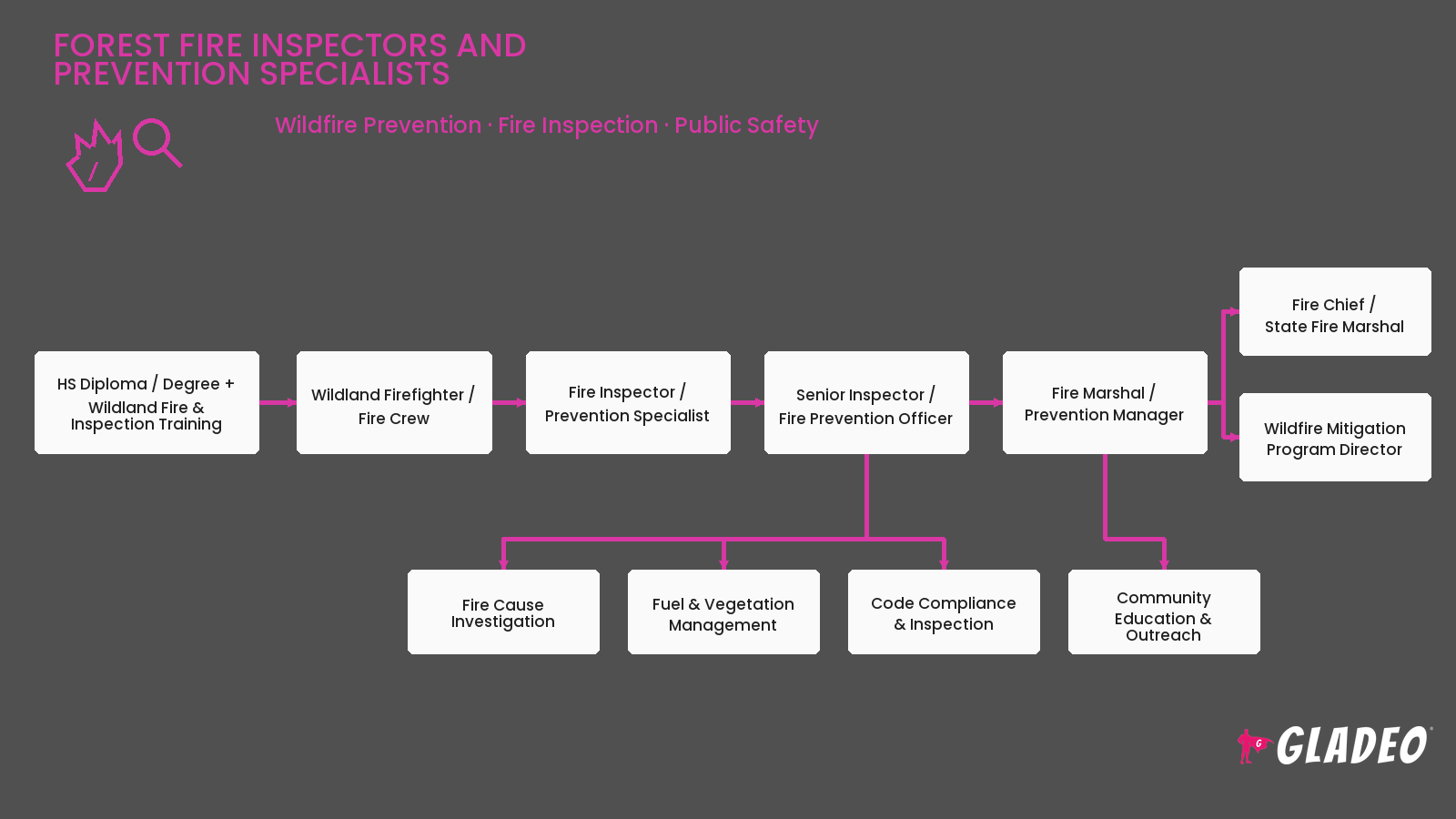
- Apply for seasonal wildfire firefighting crews to gain firsthand fire behavior knowledge.
- Volunteer with local forestry or fire prevention agencies to build experience and connections.
- Create a portfolio documenting volunteer work, forest ecology projects, or fire prevention education.
- Seek entry-level inspector assistant roles supporting senior fire prevention officers.
- Attend job fairs and connect with forestry department recruiters.
- Prepare for interviews by studying local fire safety laws and common wildfire causes.
- Obtain certifications such as First Aid, CPR, or Firefighter Type 2 to strengthen your resume.
- Network with professionals through environmental or fire science organizations.
- Participate in community education events to develop public speaking skills.
- Use online job boards focused on government and environmental jobs for entry-level openings.
- Prepare a resume that highlights outdoor skills, science coursework, and teamwork experience.
- Request informational interviews with forest fire prevention specialists to learn about career paths.
- Gain certifications in advanced fire inspection and investigation techniques.
- Develop expertise in GIS and fire risk modeling software.
- Build strong relationships with firefighting, forestry, and emergency management agencies.
- Take leadership roles in community outreach and education programs.
- Pursue advanced degrees in forestry, fire science, or environmental management.
- Stay current on wildfire research and climate impacts affecting fire behavior.
- Seek promotions to supervisory or regional fire prevention coordinator positions.
- Expand skills into emergency response planning and wildfire mitigation strategy development.
Websites:
- National Wildfire Coordinating Group (wildfirelessons.net)
- Society of American Foresters (safnet.org)
- International Association of Fire Chiefs (iafc.org)
- National Fire Protection Association (nfpa.org)
- U.S. Forest Service (fs.usda.gov)
- Fire Adapted Communities Learning Network (fireadaptednetwork.org)
- Wildland Fire Leadership Council (wildfirelessons.net/wflc)
- National Interagency Fire Center (nifc.gov)
- The Nature Conservancy Fire Program (nature.org/fire)
- Environmental Protection Agency Wildfire Resources (epa.gov/wildfire)
- Forest Stewards Guild (foreststewardsguild.org)
- Fire Science Online (firescience.org)
- American Red Cross First Aid and Fire Safety (redcross.org)
- State Forestry Department websites
Books:
- Introduction to Wildland Fire Behavior by Stephen J. Pyne
- Fire Management Today by U.S. Forest Service
- Wildfire: A Century of Failed Forest Policy by George Wuerthner
- Fire Ecology: The Science of Fire and Its Role in the Environment by Edward A. Johnson and Kiyoko Miyanishi
- The Fire Line: The Story of the Granite Mountain Hotshots by Fernanda Santos
If you find that becoming a Forest Fire Inspector or Prevention Specialist isn’t the right fit, there are many related careers where you can still work with the environment, safety, and emergency response.
- Wildland Firefighter
- Environmental Scientist
- Park Ranger
- Emergency Management Specialist
- Forestry Technician
- Fire Investigator
- Conservation Officer
- Safety Inspector
- Hazardous Materials Specialist
- GIS Analyst for Natural Resources
Newsfeed

Featured Jobs
Online Courses and Tools