





Spotlights
Forest Technician, Conservation Technician, Forestry Laborer, Conservation Worker, Forest Ranger Assistant, Natural Resource Worker, Timber Cruiser, Firefighter – Forest, Wildlife Technician, Reforestation Worker, Forest Firefighter, Environmental Field Technician
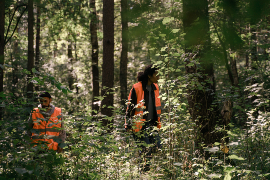
Imagine stepping into a vast forest where every tree, plant, and animal plays a role in keeping our planet healthy. Forest and Conservation Workers are the hands-on heroes who care for these natural spaces, ensuring that forests thrive and wildlife habitats remain protected for generations to come.
On any given day, these workers might plant new trees, clear away harmful underbrush to prevent wildfires, monitor forest health, or build trails and fences to support conservation efforts. They collaborate closely with foresters, environmental scientists, park rangers, and wildlife specialists to carry out plans that maintain and restore forests and natural habitats. Their work directly impacts the quality of air, water, and biodiversity that communities depend on.
Using tools ranging from chainsaws and shovels to GPS devices and firefighting equipment, Forest and Conservation Workers apply practical skills and knowledge of ecology to protect and enhance natural environments. Their efforts help sustain ecosystems, combat climate change, and provide safe spaces for both humans and wildlife to enjoy.
- Connecting deeply with nature and spending time outdoors every day.
- Knowing your work directly helps protect endangered species and fragile ecosystems.
- Playing a critical role in preventing wildfires and preserving natural resources for future generations.
- Working as part of a team dedicated to environmental stewardship and community well-being.
Working Schedule
Forest and Conservation Workers often work outdoors in all kinds of weather, from sunny days to rain or snow. Their schedules can vary widely depending on the season—spring and summer may be busy with planting and maintenance, while fire season demands quick, sometimes long shifts. Many are employed by government agencies or environmental organizations, but some work as seasonal or contract laborers. Physical stamina and flexibility are key, as the job may require early mornings, weekends, or overtime during urgent conservation or firefighting efforts.
Typical Duties
- Plant seeds and seedlings to restore forests and wildlife habitats.
- Operate hand and power tools such as chainsaws and brush cutters to clear dead or invasive vegetation.
- Assist with controlled burns to reduce wildfire risks and promote forest health.
- Maintain and build trails, fences, firebreaks, and other forest infrastructure.
- Monitor forests for signs of disease, pest infestation, or environmental damage.
- Collect samples and data on soil, water, and plant life for analysis.
- Help manage wildlife populations by creating and preserving habitats.
- Respond to and help fight forest fires under the direction of fire management teams.
- Remove trash and invasive species to improve ecosystem quality.
- Assist in environmental education and outreach programs in parks and forests.
- Transport equipment and materials to remote field sites, often in rough terrain.
- Follow safety protocols to protect themselves and others while working in hazardous conditions.
Additional Responsibilities
- Report observations about forest conditions to supervisors and scientists.
- Participate in emergency response drills and training sessions.
- Maintain equipment and ensure it is safe and functional.
- Help install protective measures against soil erosion and water pollution.
- Support research projects by setting up monitoring stations and camera traps.
- Educate the public about forest conservation and responsible recreation.
- Document work activities and prepare reports for funding or regulatory agencies.
- Assist with wildlife rescue or relocation efforts when needed.
In the morning, Forest and Conservation Workers often gather tools and equipment, review safety procedures, and discuss the day's tasks with supervisors or team members. This planning phase ensures everyone knows their roles, especially if work involves hazardous activities like controlled burns or tree removal.
Midday is spent working directly in the field—planting trees, clearing brush, monitoring wildlife, or maintaining trails. Workers must stay alert to changing weather and environmental conditions, using both physical skills and knowledge of ecosystems to complete tasks effectively.
Afternoons often include checking equipment, recording data collected during the day, and communicating with foresters or conservationists about progress or concerns. On busy days, workers may join firefighting crews or assist in emergency response, requiring quick coordination and teamwork.
Soft Skills
- Physical stamina and endurance
- Attention to detail in observing natural conditions
- Teamwork and collaboration
- Problem-solving in unpredictable environments
- Communication skills for reporting and educating
- Patience and persistence
- Adaptability to weather and terrain
- Safety awareness and responsibility
- Respect for nature and ecosystems
- Willingness to learn new techniques
- Time management in fieldwork
- Self-motivation and initiative
Technical Skills
- Use of hand and power tools like chainsaws and brush cutters
- GPS and mapping technology
- Basic forestry and ecology knowledge
- Operation of firefighting equipment
- Data collection and environmental monitoring
- First aid and emergency response
- Equipment maintenance and repair
- Soil and water sampling techniques
- Planting and propagation methods
- Use of protective gear and safety protocols
- Reforestation Worker: Focuses on planting and nurturing new trees to restore forest areas.
- Firefighter – Forest: Specializes in preventing and fighting wildfires to protect forests.
- Wildlife Technician: Monitors animal populations and habitats within forests.
- Forest Technician: Supports foresters in managing forest resources through data collection and fieldwork.
- Conservation Worker: Engages in a broad range of activities aimed at preserving natural habitats and ecosystems.
- Trail Crew Member: Builds and maintains trails to allow safe public access while protecting the environment.
- Environmental Field Technician: Collects environmental data and assists with research projects in forested areas.
- Timber Cruiser: Surveys and measures trees to assess forest resources for sustainable logging.
- National Park Service
- U.S. Forest Service
- State and local forestry departments
- Environmental nonprofits
- Conservation districts
- Private forestry companies
- Fire management agencies
- Wildlife refuges
- Land trusts
- Botanical gardens
- Outdoor education centers
- Agricultural extension services
Forest and Conservation Workers face physically demanding work that requires strength and endurance. Working outdoors means exposure to varying weather conditions, insects, and sometimes rough terrain. The role involves using potentially dangerous equipment, so strict safety practices are essential to avoid injury.
Work hours can be irregular, especially during fire season or emergency conservation efforts. Early mornings, weekends, and overtime are common when responding to urgent environmental needs. Seasonal employment is typical, which may require flexibility and planning for periods without work.
The job demands patience and resilience since conservation work can involve repetitive tasks and long hours spent in remote locations. Workers must be able to handle the mental and physical stress of working in sometimes isolated conditions while maintaining a strong commitment to environmental protection.
- Increased use of drones and remote sensing for forest monitoring.
- Growing importance of wildfire prevention and management.
- Rising focus on climate change impacts on forests.
- Expansion of ecological restoration projects.
- Use of GPS and GIS technology for precise mapping.
- Greater emphasis on sustainable forestry practices.
- Integration of community-based conservation programs.
- Development of better personal protective equipment.
- Increased collaboration with scientists for data-driven management.
- More funding for invasive species control and habitat restoration.
Many Forest and Conservation Workers show an early love for the outdoors, spending time hiking, camping, or exploring natural areas. Childhood interests often include wildlife watching, gardening, or participating in environmental clubs and activities.
They tend to enjoy hands-on activities like planting trees, caring for animals, or helping with community cleanups. A curiosity about nature, combined with a desire to protect it, often sparks their passion for this career path.
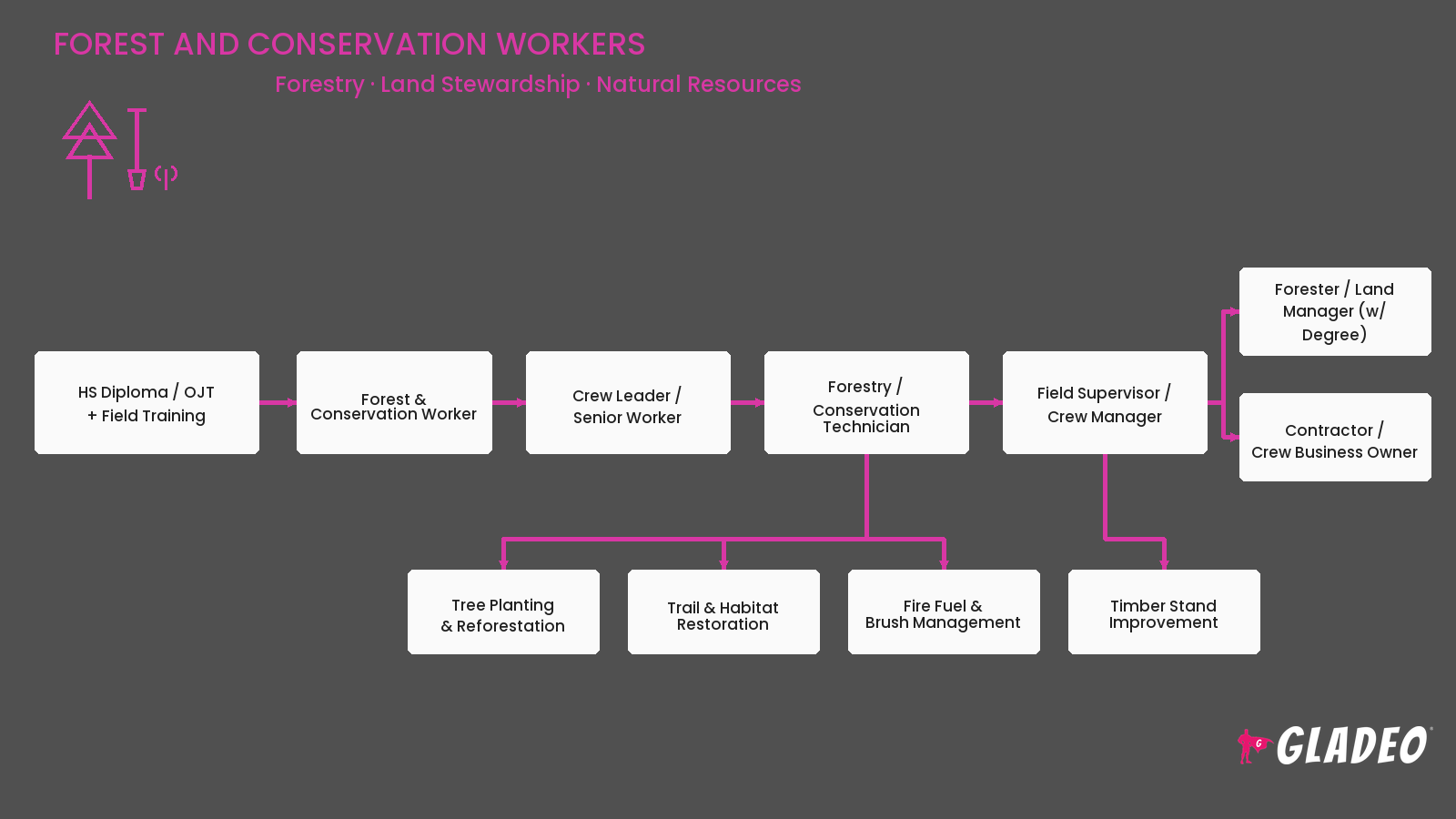
Becoming a Forest and Conservation Worker usually requires a high school diploma or equivalent, combined with hands-on training and experience. Many workers start with seasonal or entry-level positions and learn skills on the job or through specialized training programs offered by government agencies or technical schools.
Students can take courses in relevant subjects such as:
- Biology and Environmental Science
- Forestry and Natural Resources
- Agriculture and Horticulture
- Wildlife Management
- Fire Science and Safety
- Geography and Earth Science
- Outdoor Education and Recreation
- Chemistry (basic)
- Mathematics (basic algebra and geometry)
- First Aid and CPR
Beyond classroom learning, gaining practical experience through internships, volunteer work, or seasonal jobs is essential. Building a strong portfolio of skills and certifications, such as chainsaw operation and wildfire training, helps workers advance. On-the-job training continues throughout a career, especially as new technologies and conservation methods develop.
- Join environmental or forestry clubs at school to build your knowledge and network.
- Volunteer for local conservation projects and park cleanups.
- Take science and math classes focused on biology, ecology, and earth science.
- Participate in outdoor leadership or wilderness survival courses.
- Attend workshops or camps about forestry and wildlife management.
- Apply for internships or summer jobs with forestry departments or environmental organizations.
- Develop physical fitness through sports or outdoor activities.
- Learn to safely use tools and equipment under supervision.
- Explore GIS and mapping software through electives or online courses.
- Seek mentorship from professionals in natural resource management.
- Look for programs with hands-on fieldwork and practical training.
- Choose schools with partnerships to local forestry agencies or parks.
- Ensure access to equipment training, like chainsaw certification.
- Find courses that include fire science and emergency response.
- Check for opportunities in ecological restoration and wildlife management.
- Seek instructors with field experience in forestry or conservation.
- Prioritize schools offering internships or co-op work placements.
- Look for programs teaching GPS and GIS technology.
- Choose programs emphasizing safety training and regulations.
- Consider certificate programs for specialized skills like firefighting.
- Apply for seasonal forestry assistant or conservation laborer positions.
- Volunteer with local parks or environmental nonprofits to gain experience.
- Build a resume highlighting outdoor work and physical stamina.
- Create a portfolio documenting any fieldwork, plant identification, or conservation projects.
- Network with forestry professionals at community or school events.
- Obtain certifications in first aid, chainsaw use, and wildfire safety.
- Prepare for physically demanding interviews and fitness tests.
- Seek mentorship from experienced Forest Workers or foresters.
- Develop a strong understanding of local ecosystems and conservation challenges.
- Use job boards focused on environmental or government work.
- Attend job fairs for natural resource careers.
- Demonstrate reliability and teamwork skills during internships or volunteer work.
- Gain advanced certifications in wildfire management or forestry technology.
- Develop expertise in GIS mapping and data analysis.
- Build leadership skills to supervise field crews or projects.
- Pursue additional education, such as an associate or bachelor's degree in forestry or environmental science.
- Network with professionals in forestry management and conservation organizations.
- Stay current with emerging conservation techniques and technologies.
- Seek opportunities to lead community outreach or education programs.
- Consider specializing in areas like wildlife habitat restoration or fire management.
Websites:
- Society of American Foresters (www.eforester.org)
- National Association of State Foresters (stateforesters.org)
- U.S. Forest Service (www.fs.usda.gov)
- International Society of Arboriculture (www.isa-arbor.com)
- Conservation Corps (conservationcorps.org)
- Firewise USA (firewise.org)
- Wildlife Society (wildlife.org)
- American Conservation Experience (usaconservation.org)
- National Wildfire Coordinating Group (www.nwcg.gov)
- Environmental Career Opportunities (environmentalcareer.com)
- Green Jobs Network (greenjobs.net)
- The Nature Conservancy (www.nature.org)
- National Park Service (www.nps.gov)
- Society for Ecological Restoration (www.ser.org)
Books:
- Forestry Handbook by Helmut K. Preisler
- Introduction to Forest Ecology and Management by John A. Stanturf
- Fire Behavior and Combustion Processes by Eugene V. Sturtevant
- Restoring Forests: A Practical Guide by William C. Denison
- Wildlife Ecology and Management by Martin G. Raphael
If working directly in forests or conservation sites isn’t the right fit, there are many related careers that also focus on protecting the environment and natural resources in different ways.
- Park Ranger: Protects and manages parks, often focusing more on visitor safety and education.
- Environmental Scientist: Studies environmental problems and develops solutions.
- Urban Forester: Manages trees and green spaces in cities and towns.
- Wildlife Biologist: Focuses on studying and protecting animal species.
- Landscape Technician: Works on designing and maintaining natural and built outdoor spaces.
- Environmental Educator: Teaches communities about conservation and sustainability.
- Firefighter (Municipal or Wildland): Specializes in fire prevention and control in various environments.
- Agricultural Technician: Supports sustainable farming and soil conservation.
- Conservation Policy Analyst: Helps create and evaluate environmental laws and regulations.
- Natural Resource Manager: Oversees the sustainable use of forests, water, and land resources.
Newsfeed

Featured Jobs
Online Courses and Tools