





Spotlights
Food Stylist, Food Photography Specialist, Culinary Photographer, Food Visual Artist, Food Image Creator, Gastronomy Photographer, Food Media Producer, Menu Photographer, Food Content Creator, Culinary Visual Storyteller
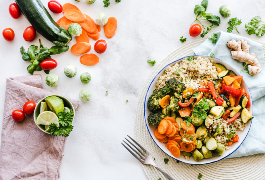
Every mouthwatering image you see in a cookbook, on a restaurant menu, or scrolling through social media was captured by a Food Photographer who makes food look irresistible and artful.
Food Photographers specialize in capturing stunning images of food and beverages that tell a story and tempt the senses. They collaborate closely with chefs, food stylists, art directors, and marketing teams to compose and photograph dishes that highlight texture, color, and freshness. Their work appears in advertising campaigns, menus, cookbooks, websites, and social media platforms, where visual appeal drives customer appetite and sales.
Using professional cameras, various lenses, and carefully controlled lighting setups, Food Photographers adjust camera angles and props to create the perfect shot. They then enhance images through editing software to ensure each photo looks vibrant and delicious. Their skill transforms simple ingredients into mouthwatering visual experiences that influence how people choose what to eat.
- Bringing culinary creations to life through stunning visuals that inspire hunger and delight viewers.
- Collaborating with creative teams, chefs, and stylists to craft unique and artistic food presentations.
- Seeing your photographs featured in menus, advertisements, cookbooks, and social media reaching wide audiences.
- Combining technical photography skills with artistic creativity to tell stories through food imagery.
Working Schedule
Food Photographers often work in studios, restaurants, or on location, balancing flexible hours with project deadlines. Many work freelance, managing their own schedules, while others are employed by advertising agencies, publishing companies, or food brands. They may need to work evenings or weekends to capture fresh food or meet client demands, and fast-paced shoots require focus and quick problem-solving.
Typical Duties
- Collaborate with chefs and food stylists to arrange dishes for photography.
- Set up and adjust lighting equipment to enhance the food’s appearance.
- Select and operate professional cameras and lenses for high-quality shots.
- Frame and compose images to highlight texture, color, and freshness.
- Direct the placement of props and backgrounds to support the food’s story.
- Shoot multiple angles and styles to provide diverse options.
- Edit and retouch images using photo editing software for color accuracy and appeal.
- Maintain and troubleshoot photography equipment to ensure reliability.
- Communicate with clients and creative teams to understand project goals.
- Manage photo shoots from concept through final image delivery.
- Research food trends and photography styles to stay current.
- Organize and archive image files for easy access and reuse.
Additional Responsibilities
- Plan and schedule photo shoots based on client timelines.
- Source or create props and backgrounds to complement food presentation.
- Stay updated on new photography gear and editing software.
- Build and maintain a professional portfolio showcasing varied food photography styles.
- Negotiate contracts and pricing when working freelance.
- Educate clients on how to best use food images for marketing.
- Ensure food safety and hygiene standards during shoots.
- Handle business aspects like invoicing and marketing if self-employed.
Mornings often begin by reviewing client briefs and preparing equipment for the day’s shoot, including selecting lenses, checking batteries, and setting up lighting. Food may be delivered fresh from kitchens or suppliers to ensure peak appearance.
Midday is focused on the actual photo shoot, collaborating with food stylists to arrange dishes, testing lighting angles, taking multiple shots, and making real-time adjustments to capture the perfect image. Communication with the creative team ensures alignment on vision and style.
Afternoons and evenings are dedicated to editing photos with software like Adobe Photoshop or Lightroom, retouching colors and textures to enhance appeal. Photographers finalize images and deliver them to clients, while also planning upcoming projects and updating their portfolio.
Soft Skills
- Creativity and artistic vision
- Attention to detail
- Strong communication and collaboration
- Time management and organization
- Problem-solving under pressure
- Adaptability to changing conditions
- Patience and persistence
- Customer service orientation
- Ability to take constructive criticism
- Flexibility with working hours
- Visual storytelling ability
- Teamwork with chefs and stylists
Technical Skills
- Proficiency with DSLR and mirrorless cameras
- Expertise in lighting setup and control
- Knowledge of composition and framing
- Skills in photo editing software like Adobe Photoshop
- Understanding of color theory and balance
- Ability to use editing techniques like retouching and masking
- Experience with studio and natural lighting
- Camera settings management (ISO, aperture, shutter speed)
- File management and digital archiving
- Basic equipment maintenance and troubleshooting
- Studio Food Photographer: Specializes in controlled environment shoots with artificial lighting and props.
- On-Location Food Photographer: Shoots in restaurants, farms, or events capturing food in context.
- Advertising Food Photographer: Focuses on creating images for commercials, packaging, and marketing.
- Editorial Food Photographer: Works on cookbooks, magazines, and blogs telling food stories.
- Social Media Food Photographer: Creates visually engaging content specifically tailored for online platforms.
- Menu Photographer: Produces clear, appealing images specifically for restaurant menus.
- Product Food Photographer: Highlights packaged food products for catalogs and websites.
- Fine Art Food Photographer: Creates artistic and conceptual food imagery for galleries or exhibitions.
- Advertising Agencies
- Publishing Companies
- Food Magazines
- Restaurants and Catering Companies
- Food Brands and Manufacturers
- Marketing and PR Firms
- Photography Studios
- Social Media Agencies
- Cookbook Publishers
- Event Planning Companies
- Grocery Retail Chains
- Health and Nutrition Companies
Food Photographers often face tight deadlines to capture fresh food at its best, which can create a high-pressure environment. They must consistently deliver visually compelling images that meet client expectations and brand standards, often requiring multiple revisions and retakes.
Work hours can be irregular, including early mornings, late nights, or weekends, especially when coordinating with chefs and food stylists or capitalizing on natural light. Freelancers handle their own scheduling but may need to be available during peak client demand periods.
The role requires physical stamina to stand for long periods, carry heavy equipment, and maintain focus during detailed shoots. Patience is necessary when dealing with delicate food items and ensuring every shot is perfect, which can involve repetitive work and creative problem-solving.
- Increasing use of natural light and minimalist styling for authentic food imagery.
- Growing demand for video content and behind-the-scenes food photography.
- Advancements in camera technology enabling higher resolution and better low-light shots.
- Rise of social media influencers driving trend-focused food photography.
- Integration of drone and 360-degree photography for immersive food experiences.
- Use of AI and software tools for automated photo editing and enhancement.
- Sustainability focus leading to showcasing locally sourced and eco-friendly food.
- Virtual and augmented reality applications in food marketing visuals.
- Collaboration with nutritionists to promote healthy eating through images.
- Shift toward diverse cultural cuisines and storytelling in food photography.
Many Food Photographers loved drawing, painting, or photography as kids, showing early interest in visuals and colors. They often enjoyed cooking or baking at home, experimenting with arranging food and taking photos to share with family or friends.
Creative kids who took joy in storytelling through images or enjoyed experimenting with cameras and lighting setups often found their passion for food photography. Interests in both art and food combined to spark curiosity about how to present food in beautiful, tempting ways.
Becoming a Food Photographer usually involves a mix of formal education in photography or visual arts and hands-on experience with food styling and culinary environments. Many start with associate or bachelor's degrees in photography, art, or communications, while others learn through workshops, apprenticeships, or self-teaching.
Students can take courses in relevant subjects such as:
- Photography fundamentals
- Digital photography techniques
- Lighting and studio setup
- Food styling basics
- Photo editing and retouching
- Color theory and composition
- Visual storytelling
- Graphic design principles
- Culinary arts introduction
- Marketing and branding basics
Building a strong portfolio through internships, freelance projects, or assisting established photographers is crucial. Continuous learning about new equipment and food trends helps stay competitive. Practical experience in both photography and food presentation makes candidates stand out in this creative field.
- Take art and photography classes in high school to build foundational skills.
- Join photography clubs or competitions to gain practical experience.
- Explore culinary classes or cooking clubs to understand food preparation.
- Learn basic graphic design and editing software skills.
- Seek internships or volunteer opportunities with local food photographers or restaurants.
- Build a portfolio of food photos for college applications.
- Attend workshops or summer programs focused on photography or culinary arts.
- Research colleges with strong photography or visual arts programs.
- Consider dual studies in photography and hospitality management.
- Develop communication skills useful for client interactions.
- Choose programs with hands-on photography labs and studio access.
- Look for courses that offer training in both digital and traditional photography.
- Select schools with internship or mentorship opportunities in food photography.
- Ensure curriculum includes photo editing and post-production.
- Consider programs that collaborate with culinary schools or food businesses.
- Find schools with strong career services and portfolio development support.
- Seek instructors with industry experience in food or commercial photography.
- Evaluate the availability of modern photography equipment and software.
- Look for programs teaching business skills for freelance photographers.
- Check for opportunities to exhibit work or participate in competitions.
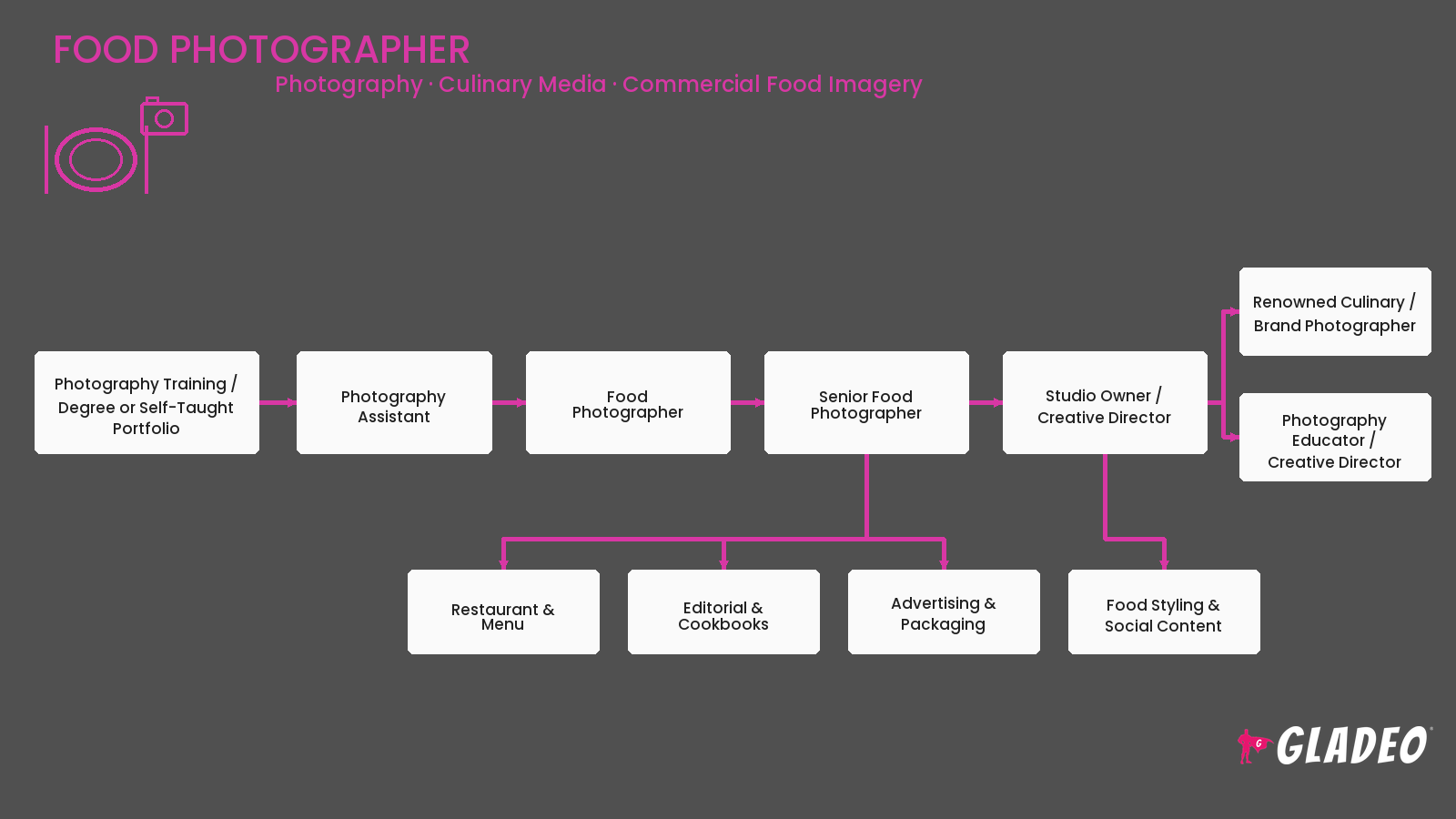
- Build a diverse portfolio showcasing your best food photography.
- Offer to assist established food photographers to learn on the job.
- Create social media accounts to share your food photography work.
- Network with local restaurants, chefs, and food stylists to find opportunities.
- Apply for internships or entry-level photography assistant roles.
- Attend food and photography events to meet professionals.
- Develop skills in photo editing software like Adobe Photoshop.
- Practice shooting in different lighting conditions and settings.
- Learn how to prepare and style food for photography.
- Prepare a professional resume and cover letter highlighting relevant skills.
- Create a website or online portfolio to showcase your work.
- Be open to freelancing and small paid projects to gain experience.
- Master advanced photography and editing techniques to improve image quality.
- Build strong relationships with chefs, stylists, and creative directors.
- Expand your network through industry events and social media platforms.
- Seek larger or more prestigious clients and projects to build reputation.
- Stay updated on food trends and photography styles to remain relevant.
- Develop business skills to manage freelance work or start your own studio.
- Specialize in a niche like editorial or advertising food photography.
- Teach workshops or create online content to establish authority.
Websites:
- American Society of Media Photographers (ASMP) - asmp.org
- Food Photographers Guild - foodphotographersguild.com
- Professional Photographers of America (PPA) - ppa.com
- PDN Online - pdnonline.com
- CreativeLive - creativelive.com
- Digital Photography Review - dpreview.com
- Adobe Creative Cloud - adobe.com
- The Spruce Eats - thespruceeats.com
- Food Network - foodnetwork.com
- Food Styling Magazine - foodstylingmagazine.com
- The Art of Food Photography - artoffoodphotography.com
- Instagram Food Photography Community - instagram.com
- 500px - 500px.com
- Photo District News (PDN) - pdn.com
Books:
- Plate to Pixel: Digital Food Photography & Styling by Helene Dujardin
- Food Photography: From Snapshots to Great Shots by Nicole S. Young
- The Food Stylist's Handbook by Denise Vivaldo
- Food Photography: Pro Secrets for Styling, Lighting & Shooting by Teri Lyn Fisher and Jenny Meyers
- The Photographer's Guide to Food Styling by Lou Manna
If food photography doesn't turn out to be the perfect fit, there are many related careers where your creative and technical skills can shine.
- Commercial Photographer
- Food Stylist
- Graphic Designer
- Culinary Writer or Blogger
- Social Media Content Creator
- Advertising Art Director
- Restaurant Marketing Coordinator
- Event Photographer
- Visual Merchandiser
- Videographer specializing in food content
Newsfeed

Featured Jobs
Online Courses and Tools
Annual Salary Expectations
New workers start around $42K. Median pay is $56K per year. Highly experienced workers can earn around $80K.
Annual Salary Expectations
New workers start around $41K. Median pay is $49K per year. Highly experienced workers can earn around $74K.
Annual Salary Expectations
New workers start around $48K. Median pay is $61K per year. Highly experienced workers can earn around $75K.