





Spotlights
Ecologist, Wildlife Biologist, Conservation Biologist, Environmental Scientist, Field Ecologist, Naturalist, Research Biologist, Habitat Specialist, Wildlife Technician, Environmental Consultant, Conservation Scientist, Marine Biologist
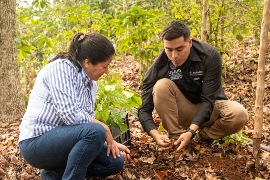
Imagine exploring forests, wetlands, and remote wilderness areas to discover how animals, plants, and ecosystems interact—and how your findings can protect the natural world we all depend on. Field Biologists bring the wild world into focus, helping us understand the delicate balance of nature that affects everything from clean water to climate health.
Each day, Field Biologists head outdoors to collect data on wildlife behavior, plant populations, and environmental conditions. They collaborate with research teams, conservation organizations, and government agencies to design studies, track species, and assess habitats. Their work results in reports, scientific papers, and recommendations that guide conservation efforts and policy decisions.
Using tools like GPS devices, binoculars, sampling kits, and data collection software, Field Biologists carefully observe and record natural phenomena. Their expertise ensures that ecosystems remain healthy and resilient, making the role vital to preserving biodiversity and informing environmental stewardship for generations to come.
- Contributing directly to the protection and understanding of wildlife and ecosystems.
- Spending time outdoors in diverse and often beautiful natural environments.
- Being part of scientific discoveries that can influence conservation policies.
- Collaborating with passionate teams dedicated to environmental sustainability.
Working Schedule
Field Biologists often work irregular hours that vary with the seasons and the needs of their research projects. They spend significant time outdoors, sometimes in remote or rugged locations, and may face challenging weather conditions. While some positions are full-time and salaried, many Field Biologists work on a contract or grant basis, requiring flexibility and adaptability. Deadlines can be tight, especially when data collection must align with specific seasonal cycles or animal behaviors.
Typical Duties
- Design and plan field research studies focused on wildlife or plant populations.
- Collect samples of soil, water, plants, and animals for analysis.
- Observe and record animal behaviors, migration patterns, and habitat use.
- Use GPS and mapping tools to document study sites and track species movement.
- Set up and maintain equipment such as camera traps, mist nets, or acoustic monitors.
- Analyze field data using statistical software and prepare detailed reports.
- Collaborate with conservation agencies to apply findings toward habitat protection.
- Educate the public or stakeholders about ecological findings and conservation needs.
- Monitor environmental changes and assess impacts of human activity.
- Ensure compliance with environmental regulations and ethical research standards.
- Write scientific papers and grant proposals to support ongoing research.
- Train and supervise field assistants or volunteers.
Additional Responsibilities
- Maintain field equipment and ensure safety protocols are followed.
- Participate in community outreach and environmental education programs.
- Attend conferences and workshops to stay current with ecological research.
- Assist in fundraising and securing grants for conservation projects.
- Develop partnerships with local tribes, landowners, and organizations.
- Advocate for policy changes based on scientific evidence.
- Document unusual or endangered species sightings.
- Contribute to habitat restoration and species reintroduction efforts.
Morning often begins early with a review of the day's goals, equipment checks, and travel planning to field sites. Field Biologists coordinate with team members to ensure everyone understands their tasks and safety measures are in place.
Midday is devoted to data collection—observing wildlife, taking measurements, collecting samples, and recording environmental conditions. This hands-on work can involve hiking long distances, setting up equipment, and adapting to weather and terrain challenges.
Afternoon and evening might include data entry, preliminary analysis, and team meetings to discuss findings and next steps. Field Biologists also use this time to communicate with partners, write reports, and plan future fieldwork, balancing outdoor activity with office and lab tasks.
Soft Skills
- Curiosity and passion for nature and science
- Attention to detail for accurate data collection
- Patience and perseverance in challenging environments
- Strong communication for sharing findings clearly
- Problem-solving to adapt to unexpected field conditions
- Collaboration and teamwork across disciplines
- Physical stamina and resilience outdoors
- Critical thinking for analyzing complex ecological data
- Time management to meet project deadlines
- Flexibility to handle changing schedules and tasks
- Ethical judgment regarding wildlife and habitat
- Observation skills to notice subtle environmental changes
Technical Skills
- Use of GPS and GIS mapping technologies
- Proficiency with data collection software and mobile apps
- Knowledge of sampling techniques for flora and fauna
- Statistical analysis using programs like R or SPSS
- Operation of specialized field equipment (e.g., camera traps, mist nets)
- Identification of plant and animal species
- Understanding of ecological survey methods
- Report writing and scientific documentation
- Use of remote sensing and drone technology
- First aid and safety practices for fieldwork
- Terrestrial Field Biologist: Studies land-based ecosystems such as forests, grasslands, and deserts.
- Aquatic Field Biologist: Focuses on freshwater or marine environments, studying fish, amphibians, and aquatic plants.
- Wildlife Biologist: Specializes in the behavior and population dynamics of wild animals.
- Conservation Biologist: Works on preserving endangered species and habitats.
- Ecologist: Examines interactions between organisms and their environment at various scales.
- Botanist: Concentrates on plant species, their distribution, and ecology.
- Entomologist: Studies insects and their roles within ecosystems.
- Marine Biologist: Investigates ocean life and marine ecosystems.
- Environmental consulting firms
- Government wildlife and natural resource agencies
- Universities and research institutions
- Nonprofit conservation organizations
- National and state parks departments
- Agricultural and forestry services
- Zoos and aquariums with research programs
- Environmental education centers
- Private environmental laboratories
- International conservation groups
- Wildlife rehabilitation centers
- Ecotourism companies
Field Biologists often face physical challenges such as hiking through rough terrain, working in extreme weather, and carrying equipment over long distances. The job demands strong endurance and the ability to stay alert in potentially hazardous environments.
Work hours can be irregular and extend beyond the typical 9-to-5, especially during critical field seasons that depend on animal migrations or plant cycles. Time away from home for weeks at a time is common in some roles.
The role requires patience to cope with slow or unpredictable research progress and the possibility of repeated experiments or data collection. Emotional resilience is important when confronting environmental degradation or endangered species situations.
- Increasing use of drones and remote sensing for habitat mapping.
- Advancements in DNA analysis for species identification.
- Growing emphasis on climate change impact studies.
- Integration of citizen science data into research projects.
- Use of AI and machine learning to analyze ecological data.
- Collaborations across global networks for biodiversity conservation.
- Development of mobile apps for real-time field data recording.
- Increased focus on restoration ecology and ecosystem services.
- More interdisciplinary work combining ecology with social sciences.
- Expansion of environmental policy influence based on scientific findings.
Many Field Biologists loved exploring nature as kids—collecting insects, observing birds, or tending gardens. Early curiosity about how living things interact and change often sparked a lifelong passion for the outdoors.
They typically enjoyed science fairs, hiking, camping, and reading about animals or plants. Hands-on activities like fishing, volunteering at nature centers, or joining environmental clubs helped build skills and confidence in the field.
Becoming a Field Biologist usually starts with a bachelor's degree in biology, ecology, environmental science, or a related field. Coursework combines classroom learning with hands-on lab and field experience to build a strong foundation in the natural sciences.
Students can take courses in relevant subjects such as:
- Biology and Zoology
- Ecology and Environmental Science
- Botany and Plant Sciences
- Wildlife Management
- Statistics and Data Analysis
- Geographic Information Systems (GIS)
- Chemistry and Soil Science
- Field Methods and Sampling Techniques
- Conservation Biology
- Animal Behavior
Internships and volunteer work with research projects or conservation groups provide invaluable real-world experience. Many Field Biologists pursue advanced degrees or certifications to specialize further and increase job opportunities. Building a strong portfolio of fieldwork and research is key to success in this competitive field.
- Join science clubs focused on biology or environment.
- Take advanced classes in biology, chemistry, and math.
- Participate in outdoor educational programs or nature camps.
- Volunteer with local environmental groups or parks.
- Attend lectures or workshops on wildlife and conservation.
- Develop computer skills, especially in data management.
- Explore summer internships or research assistant roles.
- Practice writing clear scientific reports or summaries.
- Learn about GIS and mapping software.
- Engage in citizen science projects in your community.
- Choose programs with strong fieldwork opportunities.
- Look for schools with partnerships in environmental research.
- Ensure access to modern lab equipment and technology.
- Seek faculty who are active researchers in ecology or conservation.
- Prioritize programs offering internships or co-op placements.
- Check for courses in statistics and data analysis.
- Consider schools near diverse ecosystems for hands-on study.
- Evaluate support for undergraduate research projects.
- Look for interdisciplinary programs combining science and policy.
- Verify opportunities for study abroad or field semesters.
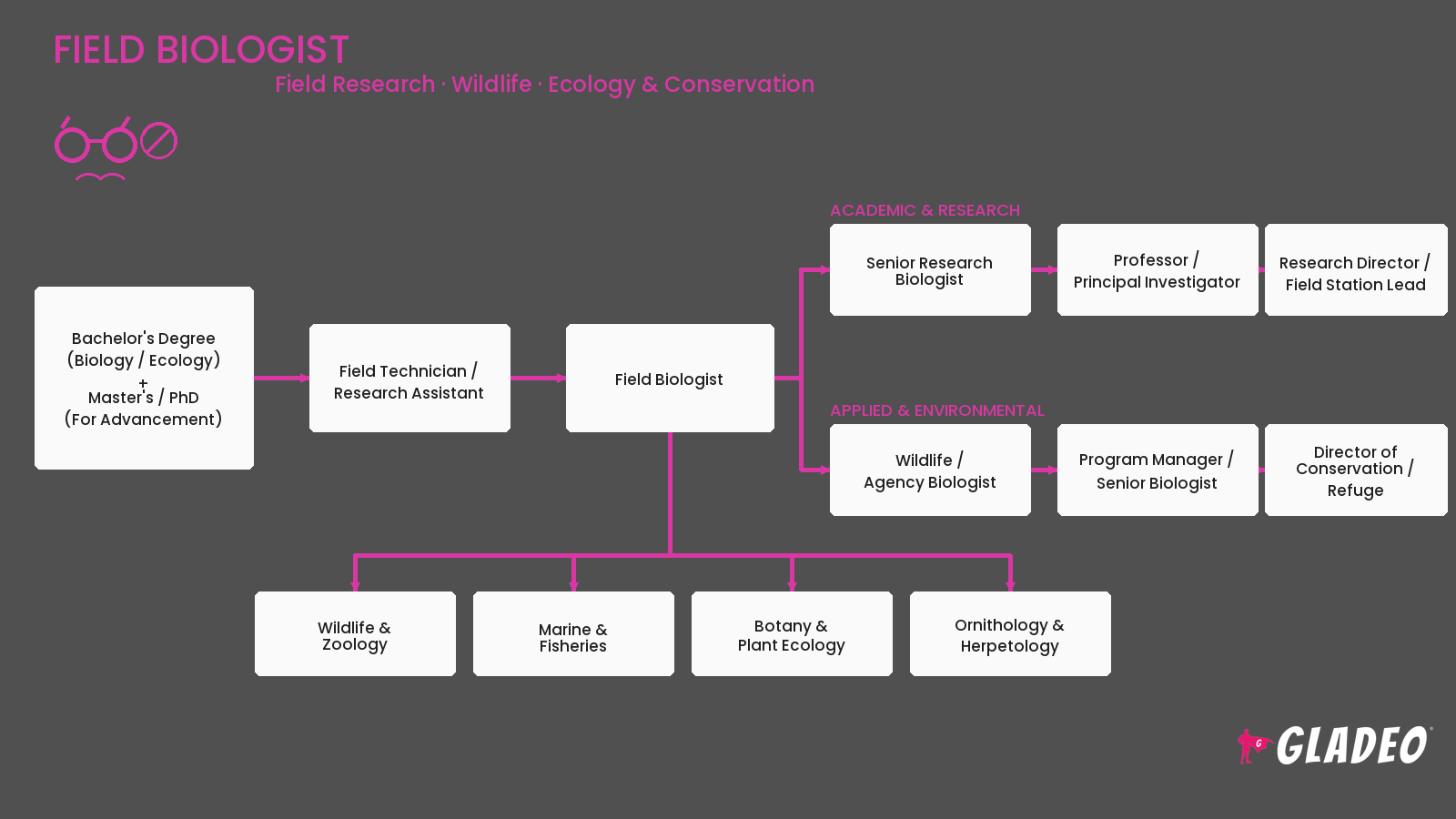
- Apply for entry-level technician or research assistant roles.
- Build a detailed portfolio of fieldwork and data collection experience.
- Network with professors, environmental groups, and field researchers.
- Gain certifications such as wilderness first aid or GIS proficiency.
- Volunteer for citizen science or habitat restoration projects.
- Attend industry conferences and workshops to meet professionals.
- Develop strong report writing and presentation skills.
- Practice using field equipment and data software.
- Seek mentorship from experienced Field Biologists.
- Prepare for physically demanding outdoor work environments.
- Be ready to relocate or travel for field projects.
- Stay flexible and open to contract or seasonal work.
- Master specialized research techniques and data analysis tools.
- Publish research findings in scientific journals.
- Earn advanced degrees (master’s or PhD) for higher-level roles.
- Develop leadership skills to manage teams and projects.
- Build relationships with government agencies and nonprofits.
- Gain experience writing grant proposals and securing funding.
- Expand expertise into policy or environmental consulting.
- Stay current with emerging technologies and ecological trends.
Websites:
- Society for Conservation Biology (conbio.org)
- Ecological Society of America (esa.org)
- Wildlife Society (wildlife.org)
- Environmental Careers Organization (eco.org)
- National Wildlife Federation (nwf.org)
- American Fisheries Society (fisheries.org)
- US Fish and Wildlife Service (fws.gov)
- Conservation International (conservation.org)
- National Geographic Society (nationalgeographic.org)
- Society of Wetland Scientists (wetlands.org)
- International Association for Ecology (intecol.org)
- Environmental Protection Agency (epa.gov)
- World Wildlife Fund (worldwildlife.org)
- Association of Field Ornithologists (afonet.org)
Books:
- Field Guide to the Natural World of New York City by Barbara Bash
- A Sand County Almanac by Aldo Leopold
- The Serengeti Rules by Sean B. Carroll
- Silent Spring by Rachel Carson
- The Diversity of Life by Edward O. Wilson
If becoming a Field Biologist isn’t the perfect fit, many related careers still let you work with nature, science, or conservation in meaningful ways.
- Environmental Scientist
- Wildlife Technician
- Park Ranger
- Forestry Technician
- Environmental Educator
- Laboratory Biologist
- Marine Science Technician
- Conservation Officer
- Agricultural Scientist
- Ecotourism Guide
Newsfeed

Featured Jobs
Online Courses and Tools