





Spotlights
Agricultural Equipment Mechanic, Farm Machinery Technician, Agricultural Service Technician, Tractor Mechanic, Combine Harvester Technician, Diesel Equipment Mechanic, Field Service Technician, Agricultural Maintenance Technician, Heavy Equipment Mechanic, Agricultural Machinery Repairer
Imagine a vast field of crops ready for harvest or a farm bustling with activity where every machine runs smoothly and efficiently. Farm Equipment Mechanics and Service Technicians are the hidden heroes behind the scenes who keep these powerful machines working, ensuring farmers can plant, cultivate, and harvest without delay.
Day-to-day, these technicians diagnose, repair, and maintain a variety of agricultural machinery like tractors, combines, balers, and irrigation systems. They work closely with farmers, equipment dealers, and manufacturers to troubleshoot problems, replace worn parts, and fine-tune machines to operate at peak performance. Their work directly impacts food production and the success of farming operations.
Using specialized diagnostic tools, welding equipment, and computerized systems, Farm Equipment Mechanics rely on deep mechanical knowledge and technical skill. Their expertise ensures machines run safely and efficiently, helping farms stay productive through every planting and harvesting season.
- Knowing your skills help feed communities by keeping farm machinery running smoothly
- Solving complex mechanical problems and seeing machines come back to life
- Working outdoors and engaging with cutting-edge agricultural technology
- Building strong relationships with farmers and technicians who depend on your expertise
Working Schedule
Farm Equipment Mechanics often work full-time hours, with schedules that can vary depending on the farming season. During peak planting and harvest times, they may work longer or irregular hours, including weekends, to ensure equipment is operational when farmers need it most. Many work in repair shops, on farms, or travel to job sites, facing sometimes challenging outdoor conditions. While some are employed by dealerships or farms, many work as mobile technicians providing on-site repairs.
Typical Duties
- Inspect, diagnose, and repair mechanical and hydraulic systems on farm machinery
- Perform routine maintenance such as oil changes, lubrication, and filter replacements
- Use computerized diagnostic tools to identify equipment malfunctions
- Replace or repair engines, transmissions, brakes, and electrical systems
- Weld or fabricate parts to restore damaged components
- Test repaired equipment to ensure proper operation and safety
- Maintain detailed records of repairs and maintenance
- Advise farmers on equipment care and preventive maintenance
- Order and manage inventory of replacement parts and tools
- Collaborate with manufacturers for technical updates and recalls
Additional Responsibilities
- Train farm staff on basic equipment maintenance
- Stay updated on new farming technologies and machinery
- Assist in installing new equipment on farms
- Follow safety regulations to prevent accidents
- Manage service schedules to minimize downtime
- Provide cost estimates for repairs and upkeep
- Maintain clean and organized workshop areas
The day often starts with reviewing repair requests or diagnosing equipment issues reported by farmers. They gather tools and parts, then travel to the farm or workshop to begin inspections.
Midday involves hands-on work — disassembling faulty components, using diagnostic computers, welding repairs, or replacing parts. They communicate with farmers about progress and recommend solutions.
After repairs, technicians test machinery under actual working conditions, adjust settings, and document the work completed. They may also update maintenance schedules and prepare for the next day's service calls.
Soft Skills
- Problem-solving mindset
- Attention to detail
- Good communication skills
- Patience and persistence
- Physical stamina
- Adaptability to changing environments
- Customer service orientation
- Time management
- Team collaboration
- Mechanical intuition
- Safety awareness
- Dependability
Technical Skills
- Mechanical repair and troubleshooting
- Hydraulic system maintenance
- Welding and fabrication
- Use of diagnostic software and tools
- Electrical system repair
- Engine rebuilding
- Preventive maintenance techniques
- Reading technical manuals and schematics
- Computer literacy
- Equipment calibration
- Mobile Technician: Travels to farms to perform on-site repairs and maintenance
- Shop Mechanic: Works primarily in a repair shop handling equipment brought in for service
- Field Service Technician: Specializes in diagnosing complex machinery problems on location
- Diesel Mechanic: Focuses on diesel engine repair and maintenance in agricultural equipment
- Preventive Maintenance Specialist: Concentrates on scheduled upkeep to avoid breakdowns
- Equipment Installer: Handles the setup and calibration of new farm machinery
- Parts Specialist Mechanic: Combines repair with managing parts inventory and ordering
- Diagnostic Technician: Uses advanced computerized systems to troubleshoot equipment issues
- Agricultural equipment dealerships
- Farm cooperatives
- Independent repair shops
- Large commercial farms and ranches
- Agricultural machinery manufacturers
- Government agricultural departments
- Agricultural service companies
- Equipment rental companies
- Farm supply stores
- Diesel engine service centers
- Vocational training centers
- Agricultural research institutions
This job can be physically demanding, requiring lifting heavy parts, standing for long periods, and working outdoors in all weather conditions. Precision and careful attention are essential to avoid costly mistakes.
Farm Equipment Mechanics often face tight deadlines during planting or harvest seasons, meaning they must work efficiently under pressure and sometimes outside normal business hours to get equipment operational quickly.
Technicians must be prepared for frequent troubleshooting and repairs in unpredictable settings, requiring flexibility, problem-solving skills, and a commitment to safety to protect themselves and farm workers.
- Increasing use of GPS and precision agriculture technology in equipment
- Growing reliance on computerized diagnostic systems
- Shift toward electric and hybrid farm machinery
- Expansion of mobile repair services directly on farms
- More integration of software updates and remote monitoring
- Emphasis on sustainable and fuel-efficient machinery maintenance
- Rising demand for multi-skilled technicians familiar with electronics and hydraulics
- Development of advanced training programs and certifications
- Use of augmented reality for repair guidance
- Increased importance of safety protocols and environmental regulations
Kids who enjoyed tinkering with gadgets, taking things apart and putting them back together showed early signs of interest in this career. Playing with model tractors or helping with small engine repairs around the house also hinted at a future in farm equipment mechanics.
Those fascinated by how machines work, who liked hands-on projects and solving mechanical puzzles, often find themselves drawn to this field. A passion for agriculture or rural life can also inspire a desire to support farming through machinery maintenance.
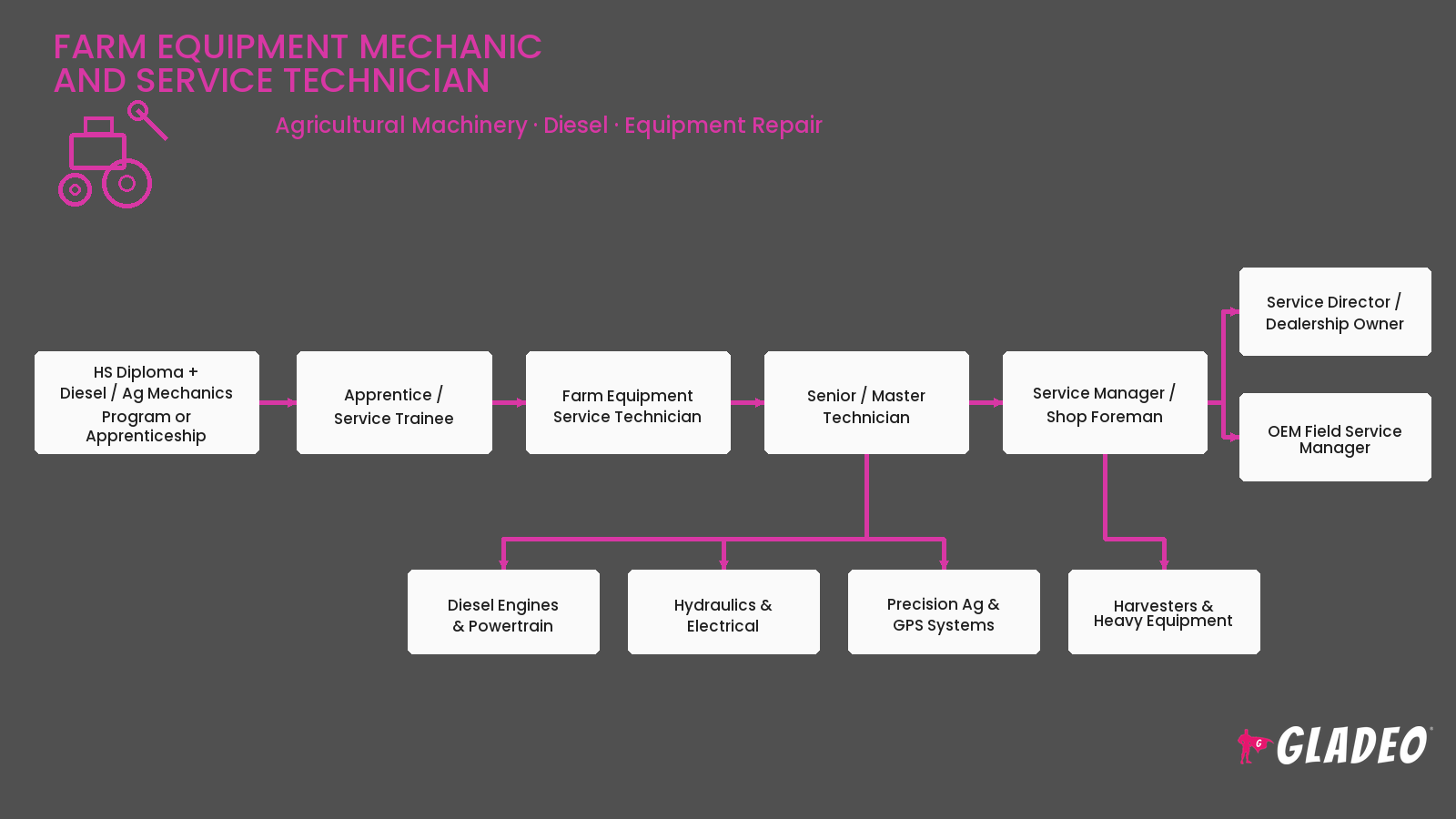
Becoming a Farm Equipment Mechanic typically involves a mix of formal education and hands-on training. Many technicians start with a high school diploma and pursue specialized technical training through vocational schools or community colleges. Apprenticeships and on-the-job experience are crucial to mastering the mechanical, hydraulic, and electrical systems found in modern agricultural machinery.
Students can take courses in relevant subjects such as:
- Agricultural Mechanics
- Diesel Engine Repair
- Hydraulics and Pneumatics
- Welding and Fabrication
- Electrical Systems
- Computer Diagnostics
- Machine Shop Technology
- Preventive Maintenance
- Safety and Environmental Practices
- Technical Drawing and Blueprint Reading
Hands-on experience through internships, apprenticeships, or cooperative education programs is essential for building practical skills. Creating a portfolio of work and obtaining industry certifications can boost job prospects and career growth in this hands-on and evolving field.
- Take advanced math and science courses, especially physics and electronics
- Join vocational clubs or agricultural programs like FFA
- Participate in hands-on shop classes or mechanics workshops
- Seek internships or summer jobs at local farms or repair shops
- Learn welding and fabrication basics
- Practice using diagnostic tools and software
- Develop computer skills for modern equipment
- Attend agricultural technology fairs or expos
- Build communication skills through presentations or group projects
- Explore online resources and tutorials on machinery repair
- Look for programs with strong hands-on training and modern equipment
- Choose schools offering diesel mechanic or agricultural technology certifications
- Check for partnerships with local farms or dealerships for apprenticeships
- Consider programs with up-to-date computer diagnostic instruction
- Ensure safety training is a key component
- Seek classes taught by experienced mechanics or industry professionals
- Look for smaller class sizes for personalized instruction
- Verify that the program offers career placement assistance
- Choose schools with access to the latest agricultural machinery models
- Select programs that include soft skills and customer service training
- Apply for entry-level technician or mechanic assistant roles at local dealerships or repair shops
- Build a solid resume highlighting hands-on experience and relevant coursework
- Create a portfolio showing repairs or projects completed
- Network with agricultural professionals and attend trade shows
- Obtain industry certifications such as ASE Agricultural Equipment Technician
- Prepare for interviews by practicing technical questions and problem-solving scenarios
- Gain experience working on a variety of equipment brands and models
- Volunteer for overtime or on-call shifts during peak seasons
- Learn from experienced mechanics by shadowing them
- Keep a detailed log of repairs and maintenance tasks performed
- Stay current with new farming technology through workshops or webinars
- Develop good communication skills to work effectively with farmers and colleagues
- Earn advanced certifications in diesel mechanics or electronics
- Develop expertise in emerging farm technologies like GPS and automation
- Build strong relationships with manufacturers and dealers
- Take leadership roles in service departments or teams
- Explore opportunities in equipment sales or technical training
- Stay updated on industry trends and continuous learning
- Consider specializing in a specific type of machinery or system
- Pursue further education in agricultural engineering or business management
Websites:
- Agricultural Equipment Technician Association (AETA)
- National Institute for Automotive Service Excellence (ASE)
- American Society of Agricultural and Biological Engineers (ASABE)
- AgCareers.com
- Farm Equipment Manufacturers Association
- Diesel Technology Forum
- Equipment World
- Modern Farmer
- National FFA Organization
- TractorHouse
- John Deere Careers
- Kubota USA
- AGCO Careers
- PrecisionAg Alliance
Books:
- Farm Equipment Mechanics Handbook by Robert N. Brady
- Diesel Engine Repair and Maintenance by John F. Kershaw
- Agricultural Mechanics: Fundamentals & Applications by Ray V. Herren
- Modern Tractor Service and Repair by Tom Q. Nelson
- Precision Agriculture Technology: Equipment and Applications by Qin Zhang
If you love working with machines and agriculture but want to explore other paths, there are many related careers that use similar skills and interests.
- Diesel Engine Mechanic
- Heavy Equipment Operator
- Agricultural Inspector
- Irrigation Technician
- Farm Manager
- Automotive Service Technician
- Manufacturing Equipment Technician
- Landscape Equipment Technician
- Industrial Machinery Mechanic
- Agricultural Sales Representative
Newsfeed

Featured Jobs
Online Courses and Tools