







Spotlights
Meeting Planner, Conference Planner, Convention Services Manager, Conference Services Manager, Events Manager, Event Coordinator, Special Events Manager, Corporate Event Planner, Wedding Planner, Catering Manager, Director of Events, Certified Meeting Professional
The wedding where everything felt effortless, the concert where the lights hit just right, the conference where the schedule ran like clockwork: none of it happens by accident. Event planners are the people behind the scenes who turn an idea into an experience, and the best ones make it look easy. When the doors open and guests walk in smiling, hundreds of small decisions have already been made and checked.
Event planners organize, plan, and coordinate meetings, conferences, conventions, weddings, festivals, fundraisers, and other gatherings. They work with clients to understand the purpose, the audience, and the budget. They choose the location, negotiate contracts with hotels and vendors, build timelines, manage registration and guest lists, line up speakers or entertainment, arrange food, décor, transportation, and technology, and handle problems as they come up. On event day, the planner is often the calm, quick-thinking person with the master plan and the radio.
Event planners use project management tools, budget spreadsheets, registration and event apps, floor plan software, and constant communication to keep every piece in sync. The role matters because events bring people together to celebrate, learn, do business, and raise money, and a smooth event shapes how guests feel about the people and organizations behind it.
- Seeing a plan you built come to life in a room full of happy, engaged people
- Working in a dynamic job that mixes office planning, vendor meetings, site visits, and time on the event floor
- Getting to be creative while solving practical puzzles around budgets, schedules, and logistics
- Having room to grow into a leader or start your own business, deciding your own clients, schedule, and style
“I’m in the business of creating environments where people relax and have fun. When the doors open and everything you planned works, it’s a total rush. It is totally gratifying. Also, you can never stop learning – both about new elements to put into an event and learning about new ways to get people to meet and retain information.” Heather Keenan, President, Key Events, Inc.
Working Schedule
Event planners do not keep regular business hours. Weeks leading up to an event are often spent in an office or at home planning, emailing, meeting with clients, and visiting venues. Event days, however, can be very long and mean early mornings, late nights, weekends, and holidays, and busy seasons such as wedding season or conference season can pack many events into a few months. Travel is common for site visits and large conferences. Event planners work for event companies, hotels, corporations, associations, nonprofits, and universities, and a large number are independent, running their own businesses or working as contractors.
Typical Duties
- Meeting with clients to define the purpose, audience, and goals of the event
- Creating budgets and tracking every expense
- Researching and choosing event locations, such as hotels, convention centers, and outdoor venues
- Negotiating contracts and prices with venues, caterers, and vendors
- Building schedules, floor plans, and run-of-show documents for the event day
- Managing guest lists, registration, invitations, and attendee communication
- Arranging speakers, entertainment, and the program
- Coordinating food and beverage, décor, rentals, lighting, sound, and video
- Planning travel, housing, parking, and local transportation for guests
- Securing permits, insurance, and safety plans
- Supervising staff, volunteers, and vendors on event day
- Gathering feedback and reviewing results after the event
Additional Responsibilities
- Promoting events through email, social media, and partnerships
- Finding sponsors and managing exhibitors and sponsor benefits
- Working with a destination management company when planning events in an unfamiliar city
- Preparing backup plans for weather, technology problems, or last-minute cancellations
- Managing accessibility, dietary, and cultural needs so every guest feels welcome
- Keeping records, photos, and references to build a portfolio
- Training and mentoring assistants and interns
- Keeping up with industry news, technology, and new trends
A planner's morning often starts with email and a check on every event in progress. Has the venue confirmed the setup? Did the caterer update the guest count? Are any speakers waiting on travel details? A quick call or meeting with the team sets the priorities, and then it is time to chase the details that can't wait.
Midday might mean touring a hotel ballroom with a client, comparing bids from two florists, or testing the registration site for a conference. The planner asks many questions about space, timing, and costs, and negotiates with vendors for the best terms. In between, they answer client messages and update the budget and timeline.
Afternoons and evenings depend on the calendar. During planning season, they may be finalizing contracts, drawing floor plans, or building the day-of schedule. On an event day, they arrive hours before guests, check every detail, brief the staff, and then stay in motion, troubleshooting, greeting people, and keeping everything on time. After the last guest leaves, the work continues with a wrap-up, vendor payments, and a thank-you to the team.
Soft Skills
- Strong organization and attention to detail
- Clear, friendly communication with clients, vendors, and guests
- Negotiation skills, so you can work well with vendors and clients
- Creative thinking and an eye for design and atmosphere
- Quick thinking and problem-solving when plans change
- Calm leadership under pressure
- Interpersonal skills and the ability to build trust quickly
- Time management across many projects and deadlines
- Physical stamina for long days on your feet
- Flexibility and a positive attitude
- Teamwork and the ability to guide staff and volunteers
- Professionalism, including polished emails and a respectful, professional manner
Technical Skills
- Budgeting and spreadsheet skills
- Project management and scheduling tools
- Contract basics, including cancellation terms, deposits, and insurance
- Event registration, ticketing, and mobile app platforms
- Floor plan and seating software
- Virtual and hybrid event platforms
- Social media, email marketing, and basic graphic design
- Knowledge of audiovisual, lighting, and staging needs
- Food and beverage planning and catering basics
- Understanding of permits, safety, and risk management
- Corporate Event Planner: Plans meetings, product launches, trainings, and company celebrations
- Meeting and Convention Planner: Organizes large conferences, trade shows, and association meetings with registration, speakers, housing, and exhibits
- Wedding and Social Event Planner: Plans weddings, milestone birthdays, bar and bat mitzvahs, and other personal celebrations
- Nonprofit and Fundraising Event Planner: Plans galas, auctions, walks, and donor events that raise money for causes
- Destination Management Company Planner: Uses deep local knowledge to arrange tours, transportation, venues, and activities for groups visiting a city
- Healthcare and Association Event Planner: Plans education meetings and conferences for medical and professional groups
- Festival and Entertainment Event Planner: Plans concerts, festivals, sports events, and large public gatherings
- Event Marketing and Experiential Planner: Creates brand activations, pop-ups, and promotional events
- Event planning and production companies
- Destination management companies
- Hotels, resorts, and convention centers
- Corporations in every industry
- Professional and trade associations
- Nonprofit organizations and foundations
- Universities and school districts
- Government agencies and military organizations
- Healthcare organizations and pharmaceutical companies
- Sports teams, theaters, and entertainment venues
- Marketing, advertising, and public relations agencies
- Self-employed planners and independent consultants
Event planning is exciting, and it is also a job that asks for a lot. Events happen when other people are free, so nights, weekends, and holidays are part of the schedule. On event days, planners may work 12 or more hours in a row, on their feet and ready to respond to anything. Several events in a row can leave little time for rest, so energy and good habits matter.
The work can be stressful because events are live and cannot be redone. A late vendor, a power outage, or a speaker who cancels all need quick solutions, and the planner is the one guests and clients turn to. Planners also deal with demanding clients and big emotions, especially at personal events like weddings, where families may have strong opinions and high expectations. Social events can bring more headaches and less pay than corporate events, and in slower economic times, business meetings and conferences are often the first budgets to shrink.
The upside is variety and pride. Every event is different, and planners learn to negotiate, budget, manage people, and think creatively. They build a network of venues, vendors, and clients and, over time, many go on to start their own companies. People who thrive here are organized, energetic, and genuinely love bringing people together.
- Hybrid events that mix in-person and online audiences continue to grow
- Event technology, including mobile apps, digital check-in, and AI tools, helps with personalization, communication, and planning
- Sustainability is a major priority, with planners reducing waste, choosing greener venues, and sourcing locally
- Accessibility and inclusion are central, from venue access to menu choices and program content
- Safety, security, and emergency planning are bigger parts of event design
- Experiential events focus on interactive, memorable moments instead of passive attendance
- Data and feedback are used to show the value of an event and improve the next one
- Wellness-minded events offer quieter spaces, healthier food, and better pacing
- Healthcare and professional education meetings stay important because many professionals must keep learning
- Clients increasingly understand that event planning is a professional service that supports a brand's image
Many event planners were the ones who threw the best parties, planned the class trip, or ran the school dance. They enjoyed hosting, decorating, making lists, and getting everyone to the right place at the right time. They noticed details like music, lighting, and food and loved the feeling of making others happy.
Others came from performance, design, travel, or hospitality backgrounds. They acted in school plays, helped with stage crews, designed costumes, worked at restaurants, or loved visiting new places. They got used to being flexible, working with a team, and putting on a show.
“Everything I did when I was young was performance-related whether it was costume design or in fashion, travel. I’m not performing but I’m making a performance happen. Everything I did was an asset to where I eventually ended up.” Heather Keenan, President, Key Events, Inc.
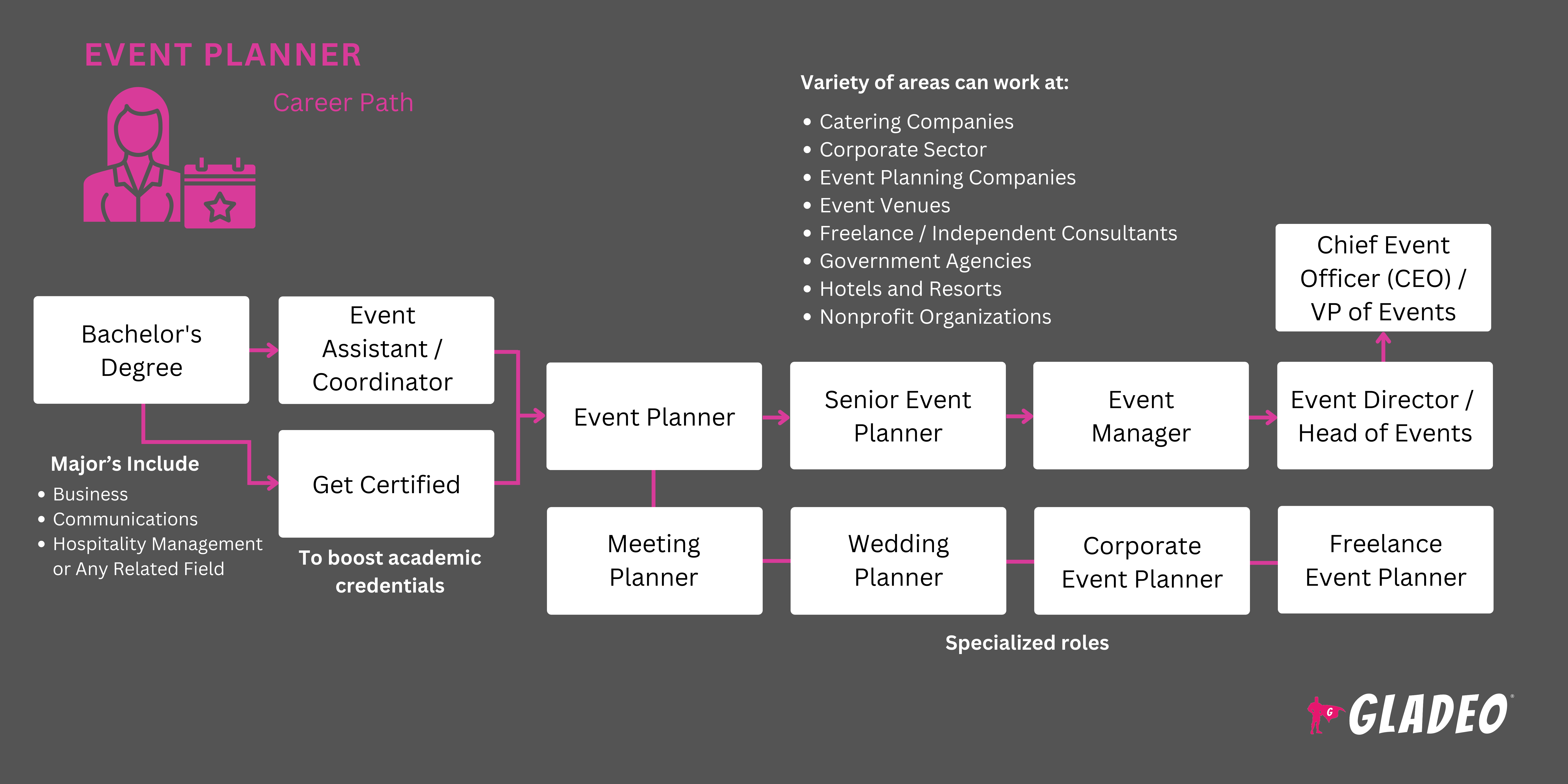
Event planners come from many backgrounds. Many earn a bachelor's degree in event management, hospitality, tourism, business, marketing, or communications, though some enter with an associate degree or start with experience at a hotel, catering company, or venue. The more closely your degree and experience match the type of event you want to plan, the more responsibility you may be trusted with early. Employers often care just as much about real event experience as about your major.
Students can take courses in relevant subjects such as:
- Event and Meeting Management
- Hospitality and Tourism Management
- Marketing and Public Relations
- Business and Project Management
- Accounting and Budgeting
- Contracts and Hospitality Law
- Food and Beverage Management
- Communications and Public Speaking
- Event Technology and Digital Marketing
- Risk Management and Event Safety
Credentials can be a helpful plus, but experience comes first. The best-known credential is the Certified Meeting Professional (CMP) from the Events Industry Council. It is voluntary, and applicants generally need around three years of full-time experience in the meetings and events field plus continuing education or an approved internship, and then pass an exam. The Events Industry Council also offers a healthcare specialty, the CMP-HC. Other options include the Certified Special Events Professional (CSEP) from the International Live Events Association, the Certificate in Meeting Management from Meeting Professionals International, the Certified in Exhibition Management (CEM) from the International Association of Exhibitions and Events, the Certified Government Meeting Professional (CGMP) from the Society of Government Meeting Professionals, and wedding planner certifications from groups such as the American Association of Certified Wedding Planners and the Association of Bridal Consultants. None will automatically land you a job or clients, but they can show your commitment and knowledge.
Hands-on experience is where planners really learn. Part-time jobs at hotels, convention centers, caterers, wedding venues, and event companies teach how events work from the inside. Many employers also like to see specific experience, such as weddings, conferences, or fundraisers, in addition to a degree, and planners continue to learn through workshops and professional groups throughout their careers.
- Take classes in communications, speech, marketing, business, accounting, art, and a foreign language
- Volunteer to help plan events for schools, religious groups, or community organizations, and keep track of the budget, guest count, and results
- Join the events committee for a club or student organization and plan a dance, fundraiser, or service project
- Work part-time at a hotel, restaurant, venue, caterer, or convention center to see events up close
- Try jobs that let you watch events happen, such as coat check, waiting tables, bartending, flower arranging, or setup crew
- Intern with an event planning company, a hotel sales team, a university events office, or a nonprofit
- Start an inspiration board or lookbook of colors, décor, food, and layouts to develop your own style
- Practice phone and email manners and customer service skills
- Build a simple online portfolio with photos, timelines, and notes about events you have helped with
- Join a professional group such as Meeting Professionals International or the International Live Events Association, many of which offer student memberships
- Learn about a specialty, such as weddings, nonprofit galas, sports, or conferences, so you can aim your experience
- Follow industry news from sources like Skift Meetings, Smart Meetings, and BizBash
- Event, hospitality, tourism, or meeting management programs with practical coursework
- Internship or co-op requirements with hotels, venues, and event companies
- Opportunities to plan real events for campus, community, or nonprofit clients
- Faculty who have worked in the meetings and events industry
- Courses in budgeting, contracts, marketing, and event technology
- Student chapters of professional groups such as Meeting Professionals International
- Alumni networks in hospitality and events
- Programs near cities with strong tourism, convention, or entertainment industries
- Career services that connect students to employers and job fairs
- Training that prepares you for professional credentials such as the CMP
- Chances to travel, tour venues, or attend industry conferences
- Flexibility to specialize in weddings, corporate events, nonprofit events, sports, or festivals
- Tell your network when you are finishing school or ready for a new role
- Work for a business that serves events, such as a caterer, florist, hotel, rental company, or lighting company, to learn how events come together
- Use your school's career center to polish your resume and practice interviewing
- Apply for entry-level jobs such as event coordinator, event assistant, catering assistant, hotel sales coordinator, or conference assistant
- Look at the places planners work, including associations, nonprofits, hotels, corporations, and event companies
- Build a portfolio of events you have helped with, including photos, schedules, budgets, and results
- Keep references from clients, supervisors, and vendors who can speak to your reliability
- Share your work online with a simple website or social profile, and write short posts about events you've worked
- Make your resume impactful and error-free, with numbers like guest counts, budgets, and ticket sales
- Search for jobs on job boards, hospitality sites, and company career pages, and be open to moving where events are plentiful
- Practice interview questions and mock interviews, and get ready to talk about how you handle surprises
- Ask people for permission before listing them as references
“I look at where they have worked before and how long they have been there. I’m looking for someone who has passion, attitude, confidence, energy, someone who can think on their feet, someone I’d be proud of that can interact with a client…” Heather Keenan, President, Key Events, Inc.
"Anything you can do to SEE events. That's where people get the most exposure. Any extracurricular jobs you can get. I started as coat check. I saw every event that ever happened. If you can be a waiter, be a waiter at an event. If you can arrange flowers, get in with a floral company that does flowers for events. If you are a janitor, be a restroom attendant where there are events. SEE IT!" Heather Keenan, President, Key
- Learn every part of an event, from budgets and contracts to design and day-of logistics
- Specialize in a type of event or industry, such as healthcare, weddings, nonprofits, or sports, so you become the go-to expert
- Earn credentials like the CMP when you qualify, and keep adding training
- Stay current on event technology, including virtual meeting tools, registration platforms, and social media
- Learn another language, which can open up clients and events around the world
- Build a distinct personal brand and market it through your portfolio, website, and social channels
- Grow relationships with venues, vendors, and clients, who are often your best source of referrals
- Move toward senior planner, director of events, or starting your own company as you gain experience
Websites
- Events Industry Council - eventscouncil.org
- Meeting Professionals International - mpi.org
- International Live Events Association - ileahub.com
- International Association of Exhibitions and Events - iaee.com
- PCMA - pcma.org
- Society of Government Meeting Professionals - sgmp.org
- Event Service Professionals Association - espaonline.org
- Association of Collegiate Conference and Events Directors-International - acced-i.org
- American Association of Certified Wedding Planners - aacwp.org
- Association of Bridal Consultants - abcweddingplanners.com
- Skift Meetings - meetings.skift.com
- Smart Meetings - smartmeetings.com
- BizBash - bizbash.com
Books
- Event Planning and Management: Principles, Planning and Practice by Ruth Dowson and David Bassett
- Professional Event Coordination by Julia Rutherford Silvers
- Event Planning by Judy Allen
- The Art of Gathering by Priya Parker
If event planning isn't the right fit, your organization, creativity, and people skills apply to many related careers.
- Hotel Sales or Catering Manager
- Marketing Manager
- Public Relations Specialist
- Trade Show or Exhibit Manager
- Nonprofit Fundraising or Development Coordinator
- Travel Planner
- Project Manager
- Venue Manager
- Experiential Marketing Specialist
- Hospitality Manager
"Make sure you love it because it's hard work. It's sort of like the circus. It's a calling, not just a job." Heather Keenan, President, Key Events, Inc.

Newsfeed

Featured Jobs
Online Courses and Tools
Annual Salary Expectations
New workers start around $56K. Median pay is $64K per year. Highly experienced workers can earn around $72K.
Annual Salary Expectations
New workers start around $59K. Median pay is $78K per year. Highly experienced workers can earn around $112K.
Annual Salary Expectations
New workers start around $48K. Median pay is $61K per year. Highly experienced workers can earn around $77K.
Annual Salary Expectations
New workers start around $46K. Median pay is $58K per year. Highly experienced workers can earn around $66K.
Annual Salary Expectations
New workers start around $48K. Median pay is $62K per year. Highly experienced workers can earn around $80K.