





Spotlights
Construction Worker, General Laborer, Building Laborer, Construction Helper, Site Laborer, Heavy Construction Laborer, Highway Construction Laborer, Demolition Laborer, Construction Crew Member, Utility Laborer, Pipelayer Helper, Grading Laborer
Every road you drive on, every school you walk into, and every bridge you cross started as an empty lot or a stretch of dirt. Before a single wall goes up, Construction Laborers are already there, digging, hauling, leveling, and setting the stage for everything that gets built on top of their work. Nothing in construction happens without them.
Construction Laborers handle the essential physical work that keeps a job site moving: clearing and preparing sites, digging trenches, hauling materials, and operating hand and power tools like jackhammers and compactors. They work alongside nearly every specialty trade on a site, carpenters, electricians, plumbers, masons, and equipment operators, following blueprints and instructions from supervisors while staying alert to safety hazards all around them. It is a job that puts you at the center of everything happening on a site.
Using tools ranging from shovels and wheelbarrows to jackhammers, concrete mixers, and small equipment like skid steers, Construction Laborers turn plans into physical progress. For many, this role is more than a job: it is a hands-on education in every trade on the site, and one of the most common launchpads into skilled apprenticeships in electrical work, plumbing, carpentry, and beyond.
- Watching a building or road go from an empty lot to a finished structure you helped create
- Learning the basics of every trade on-site, which opens doors to skilled apprenticeships
- Staying active and working outdoors instead of sitting behind a desk all day
- Being part of a tight-knit crew that gets real, visible things built together
Working Schedule
Construction Laborers typically work full-time, often starting early in the morning, sometimes as early as 6 or 7 a.m., to make the most of daylight and beat the heat in warmer months. The work is physically demanding and almost entirely outdoors or on active job sites, in all kinds of weather. Overtime is common on tight deadlines, and some regions see seasonal slowdowns in winter. Laborers may work for general contractors, specialty subcontractors, or through a union hiring hall, and many jobs offer opportunities to move between different types of projects throughout the year.
Typical Duties
- Loading, unloading, and hauling building materials and tools
- Digging trenches, holes, and excavations by hand or with power tools
- Operating jackhammers, compactors, saws, and other power tools
- Setting up and taking down scaffolding, barricades, and traffic control signs
- Mixing and pouring concrete and assisting with finishing work
- Clearing debris and keeping the job site clean and safe
- Assisting skilled tradespeople like carpenters, electricians, and masons
- Reading basic blueprints and following supervisor instructions
- Signaling and guiding equipment operators during material placement
- Installing pipes, culverts, and drainage materials
- Operating small equipment such as skid steers or forklifts with proper training
- Performing demolition work safely and efficiently
Additional Responsibilities
- Following OSHA safety procedures and wearing proper protective equipment
- Maintaining and cleaning tools and equipment
- Assisting with site surveys and grade checking
- Flagging traffic on road construction projects
- Reporting hazards or damaged equipment to supervisors
- Attending daily safety briefings, often called toolbox talks
- Helping train new laborers on the job site
- Supporting material deliveries and inventory counts
A Construction Laborer's day usually starts early with a safety briefing, where the crew reviews the day's tasks and any hazards on-site. From there, the laborer might grab tools and head to a section of the site to dig a trench, clear debris, or set up scaffolding before the skilled trades arrive to do their specialized work.
Midday is often the most physically demanding stretch, hauling materials, mixing and pouring concrete, or operating a jackhammer to break up old pavement. Laborers work in close coordination with equipment operators, signaling them during material placement, and with tradespeople who need materials staged and ready exactly where they need them.
By afternoon, the focus often shifts to cleanup, prepping the site for the next day's work, and double-checking that tools and equipment are properly stored. Laborers might also help unload a late material delivery or assist with a specific task requested by a foreman before the crew wraps up for the day.
Soft Skills
- Physical stamina and endurance
- Strong teamwork
- Reliability and punctuality
- Willingness to learn new tasks
- Clear communication
- Ability to follow directions precisely
- Sharp safety awareness
- Adaptability to changing job assignments
- Problem-solving on the fly
- Patience with repetitive or physically demanding tasks
- Strong work ethic
- Respect for coworkers and supervisors
Technical Skills
- Hand and power tool operation
- Basic blueprint and site plan reading
- Concrete mixing and finishing basics
- Trenching and excavation safety
- Rigging and hand signaling for equipment
- Scaffolding assembly and inspection
- Operation of small equipment like skid steers and forklifts
- Knowledge of OSHA safety standards
- Basic math and measurement skills
- Traffic control and work zone setup
- Highway and Road Construction Laborer: Builds and repairs roads and highways
- Building Construction Laborer: Works on residential and commercial building sites
- Demolition Laborer: Safely tears down structures and clears debris
- Utility Laborer: Installs pipes, cables, and underground utilities
- Concrete Laborer: Mixes, pours, and finishes concrete
- Landscaping and Grading Laborer: Prepares and shapes land for construction
- Pipeline Laborer: Assists with pipeline installation and maintenance
- Environmental Remediation Laborer: Handles hazardous material cleanup on job sites
- General contractors
- Home builders
- Commercial construction firms
- Road and highway construction companies
- Utility companies
- Demolition contractors
- Government public works departments
- Union labor halls
- Construction staffing agencies
- Landscaping companies
- Pipeline and energy companies
- Specialty subcontractors in concrete, masonry, and excavation
Construction labor is physically demanding work, requiring lifting, bending, digging, and standing for long stretches, often in extreme heat, cold, rain, or wind. Staying safe requires constant attention, since job sites involve heavy equipment, sharp tools, and moving vehicles all in close proximity.
Early start times are standard, and overtime hours are common when projects are behind schedule or weather has caused delays. In some regions, work can slow down significantly during winter months, which means laborers sometimes need to plan for seasonal income changes or take on different types of projects to stay busy.
Advancement in this field depends heavily on showing up reliably, working hard, and proving trustworthiness on the job site. Laborers who want to move into a skilled trade or supervisory role need to actively seek out training, certifications, and apprenticeship opportunities rather than waiting for them to come along.
- Labor shortages driving up wages and demand for reliable workers
- Growth of structured pre-apprenticeship and apprenticeship pipelines
- Increased use of prefabrication and modular construction methods
- More safety technology on-site, including wearables and drone monitoring
- Federal and state infrastructure investment creating new construction jobs
- Growth of green building and sustainable construction practices
- Robotics and automation assisting with repetitive material handling tasks
- More women and workers from diverse backgrounds entering the trades
- Greater emphasis on OSHA 10 and OSHA 30 safety training
- Wider use of mobile apps for scheduling, safety checks, and reporting
Many Construction Laborers grew up building forts, treehouses, or backyard projects, and they liked getting their hands dirty more than sitting still. Helping a parent or neighbor with a home improvement project or yard work often gave them an early taste of physical, visible accomplishment.
Others gravitated toward sports, outdoor activities, or anything that let them stay active and work with their bodies rather than behind a desk. Many enjoyed shop class or working with tools, and they liked the feeling of finishing a task and being able to point at something real that they had built or fixed.
Construction Laborer is one of the most accessible entry points into the building trades, and a four-year degree is not required. Many laborers start right out of high school, and completing an OSHA 10 or OSHA 30 safety card before applying can make a big difference to employers. Some enter through pre-apprenticeship programs run by unions, community colleges, or workforce development organizations, which combine classroom safety training with real job site experience.
Students can take courses in relevant subjects such as:
- Shop and Industrial Arts
- Construction Technology
- Blueprint and Plan Reading
- Basic Math and Measurement
- Physical Education
- Introduction to Welding
- Automotive or Mechanical Basics
- OSHA and Workplace Safety
- Introduction to Carpentry
- Heavy Equipment Basics
Most of the real learning happens on the job, working alongside experienced laborers and tradespeople who show newcomers the ropes. Many laborers use this role as a stepping stone, building relationships and skills that lead directly into an apprenticeship for a skilled trade like electrical work, plumbing, or carpentry. Staying safety-certified and picking up small equipment operation skills along the way makes that path even smoother.
- Take shop, construction technology, or industrial arts classes
- Complete an OSHA 10 safety certification if your school offers it
- Join a SkillsUSA chapter with construction-related competitions
- Build strength and stamina through sports or physical activity
- Volunteer with organizations like Habitat for Humanity to get real build experience
- Practice basic math and measurement skills you will use daily on-site
- Talk to laborers, foremen, or union representatives about entering the trade
- Job shadow or visit a construction site to see the work firsthand
- Research local pre-apprenticeship programs in your area
- Learn to read basic blueprints and site plans
- Get comfortable using common hand and power tools safely
- Apply for a summer or part-time job with a local contractor or landscaping company
- OSHA 10 or OSHA 30 certification included in the curriculum
- Hands-on training with real tools and equipment, not just classroom lecture
- Strong connections to local unions or contractors for job placement
- Instructors with real construction site experience
- Training that covers multiple trades, not just one narrow skill
- Clear pathway from pre-apprenticeship into a full apprenticeship program
- • Support finding internships or entry-level job placements
- Low or no cost programs backed by unions or workforce development grants
- Physical safety equipment and training provided as part of the program
- Flexible scheduling for those working while training
- Programs affiliated with NCCER or similar recognized credentialing bodies
- A track record of graduates successfully entering the trades
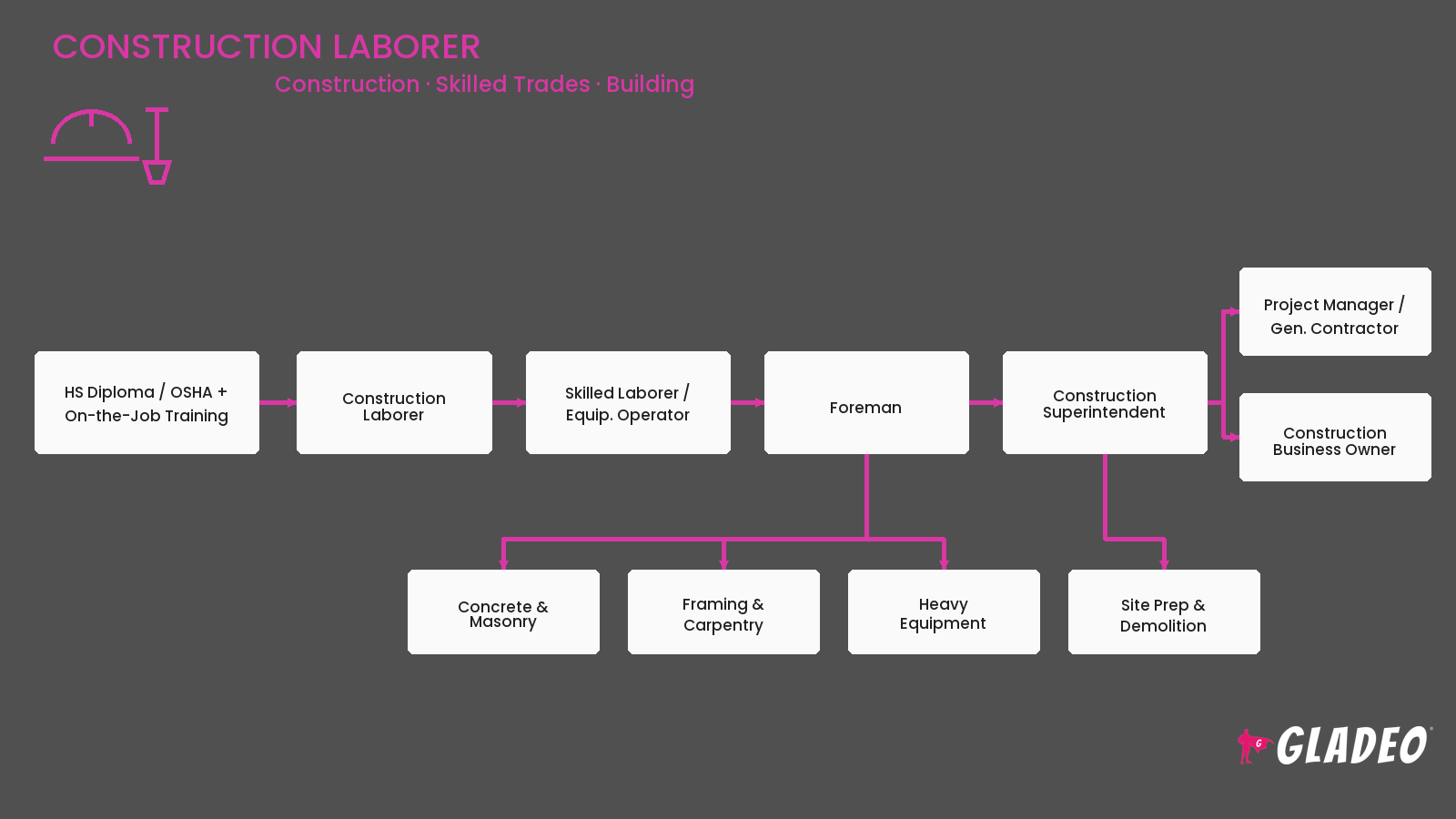
- Earn an OSHA 10 safety card before applying to jobs
- Apply directly to general contractors, subcontractors, and staffing agencies
- Look into union labor halls in your area for apprenticeship-track positions
- Highlight any physical work experience, sports, or hands-on hobbies on your resume
- Show up on time and ready to work hard from day one
- Be willing to start with basic tasks like cleanup and material hauling
- Network with people already working in construction, including family and neighbors
- Attend local job fairs focused on trades and construction
- Consider a pre-apprenticeship program for a faster, more structured path in
- Bring your own basic tools and boots if the job requires them
- Demonstrate reliability and a willingness to learn on your first few jobs
- Ask questions and pay close attention to safety instructions
- Specialize in a high-demand skill like concrete finishing or equipment operation
- Enter a formal apprenticeship for a skilled trade like electrical, plumbing, or carpentry
- Earn additional safety certifications such as OSHA 30 or CPR/First Aid
- Get licensed to operate heavy equipment like excavators or forklifts
- Build a reputation for reliability, hard work, and safety awareness
- Move into a crew leader or foreman role
- Pursue a construction health and safety credential like CHST
- Work toward a superintendent or project management position over time
Websites:
- Associated General Contractors of America - agc.org
- Laborers' International Union of North America - liuna.org
- NCCER - nccer.org
- OSHA - osha.gov
- Home Builders Institute - hbi.org
- Associated Builders and Contractors - abc.org
- SkillsUSA - skillsusa.org
- National Association of Home Builders - nahb.org
- Build Your Future - byf.org
- mikeroweWORKS Foundation - mikeroweworks.org
- ConstructionJobs.com - constructionjobs.com
- ConstructConnect - constructconnect.com
- Engineering News-Record - enr.com
- Habitat for Humanity - habitat.org
Books:
- NCCER Core Curriculum: Introductory Craft Skills by NCCER
- Print Reading for Construction by Todd A. Wyatt
- Building Construction: Principles, Materials, and Systems by Madan Mehta, Walter Scarborough, and Diane Armpriest
- Construction Jobsite Management by William R. Mincks and Hal Johnston
- Means Illustrated Construction Dictionary by RSMeans
If you find that being a Construction Laborer isn't the right fit, your hands-on skills and site experience transfer directly into many related trades.
- Carpenter
- Electrician Apprentice
- Plumber Apprentice
- Mason
- Heavy Equipment Operator
- Concrete Finisher
- HVAC Technician
- Landscaper
- Warehouse Worker
- Roofer
Click here to download the infographic
Newsfeed

Featured Jobs
Online Courses and Tools