






Spotlights
Color Grading Artist, Colorist, Digital Color Correction Specialist, Color Correction Technician, Color Editor, Color Enhancement Artist, Post-Production Colorist, Image Color Corrector, Video Colorist, Color Correction Operator
Every film, commercial, photograph, and digital production you see has been carefully refined to create the right mood, tone, and visual impact. Behind these polished visuals is the expertise of Color Correction Artists!
Color Correction Artists are responsible for adjusting and enhancing the color, lighting, and overall visual consistency of video footage or images. They work closely with directors, editors, photographers, and post-production teams to ensure that every frame looks visually balanced and emotionally aligned with the story being told. From correcting exposure issues to matching tones across multiple shots, they make sure the final product looks professional and visually cohesive.
They use advanced editing and color grading software to fine-tune shadows, highlights, contrast, and color tones. Whether working on films, advertisements, music videos, or digital content, their goal is to enhance storytelling through visual mood and atmosphere. Color Correction Artists play a vital role in transforming raw footage into a polished, cinematic final product.
- Bringing stories to life through mood, tone, and visual color enhancement
- Seeing raw footage transform into a polished, cinematic final product
- Collaborating with filmmakers, photographers, and creative teams on high-impact projects
- Using creativity and technical skill to shape the emotional feel of visual media
Working Schedule
Color Correction Artists typically work full-time, often in studio environments or post-production houses. The schedule can include long hours, especially when meeting tight film, television, or advertising deadlines. Depending on the project, work may also extend into nights or weekends during final editing and delivery stages. Freelancers may have more flexible schedules but often balance multiple projects at once.
Typical Duties
- Adjust and correct color, contrast, exposure, and lighting in raw video or image footage
- Ensure visual consistency across all scenes or shots in a project
- Work closely with directors, editors, cinematographers, and post-production teams
- Use professional color grading software to enhance mood, tone, and storytelling
- Match colors between different cameras, lighting setups, and shooting environments
- Repair or improve poorly lit or unbalanced footage
- Create visual looks that support the creative vision of the project
- Prepare final graded footage for delivery across film, TV, advertising, or digital platforms
- Maintain color accuracy standards for different screens and media formats
- Organize and manage media files throughout the post-production workflow
Additional Responsibilities
- Stay updated on color grading software, tools, and industry trends
- Collaborate with visual effects teams for seamless integration of CGI and live footage
- Attend post-production reviews and client feedback sessions
- Develop custom color styles or “looks” for specific projects or brands
- Ensure consistency across multiple deliverables such as trailers, ads, and full films
- Maintain technical knowledge of cameras, codecs, and display standards
- Support creative teams in achieving the intended emotional impact of visuals
A Color Correction Artist’s day often begins by reviewing footage from ongoing projects, checking for color consistency, exposure issues, and overall visual quality. Mornings may include meetings with directors, editors, or post-production teams to understand the creative vision and confirm the intended mood and style for each scene.
By midday, they are usually deep in color grading software, carefully adjusting shadows, highlights, contrast, and tones to achieve a consistent and cinematic look. They may also compare multiple shots to ensure continuity across different scenes, cameras, or lighting conditions.
Afternoons often involve client reviews, revisions, and collaboration with editors or VFX teams to refine the final look of the project. Evenings may be spent finalizing color grades, rendering footage, and preparing files for delivery under tight production deadlines, especially in film, advertising, or digital media projects.
Soft Skills
- Strong visual creativity and artistic vision
- Attention to detail
- Strong communication skills
- Ability to follow and interpret creative direction
- Problem-solving under pressure
- Time management
- Patience and focus
- Collaboration and teamwork
- Adaptability
- Critical thinking
- Stress management
- Openness to feedback and revisions
Technical Skills
- Color grading and color correction techniques
- Proficiency in software such as DaVinci Resolve, Adobe Premiere Pro, or similar tools
- Understanding of color theory, contrast, exposure, and lighting
- Shot matching and visual continuity across scenes
- Knowledge of camera formats, codecs, and digital workflows
- Image processing and digital media optimization
- LUT creation and application for consistent visual styles
- Basic understanding of cinematography and lighting principles
- File management and organization for post-production pipelines
- Exporting and rendering for film, television, and digital platforms
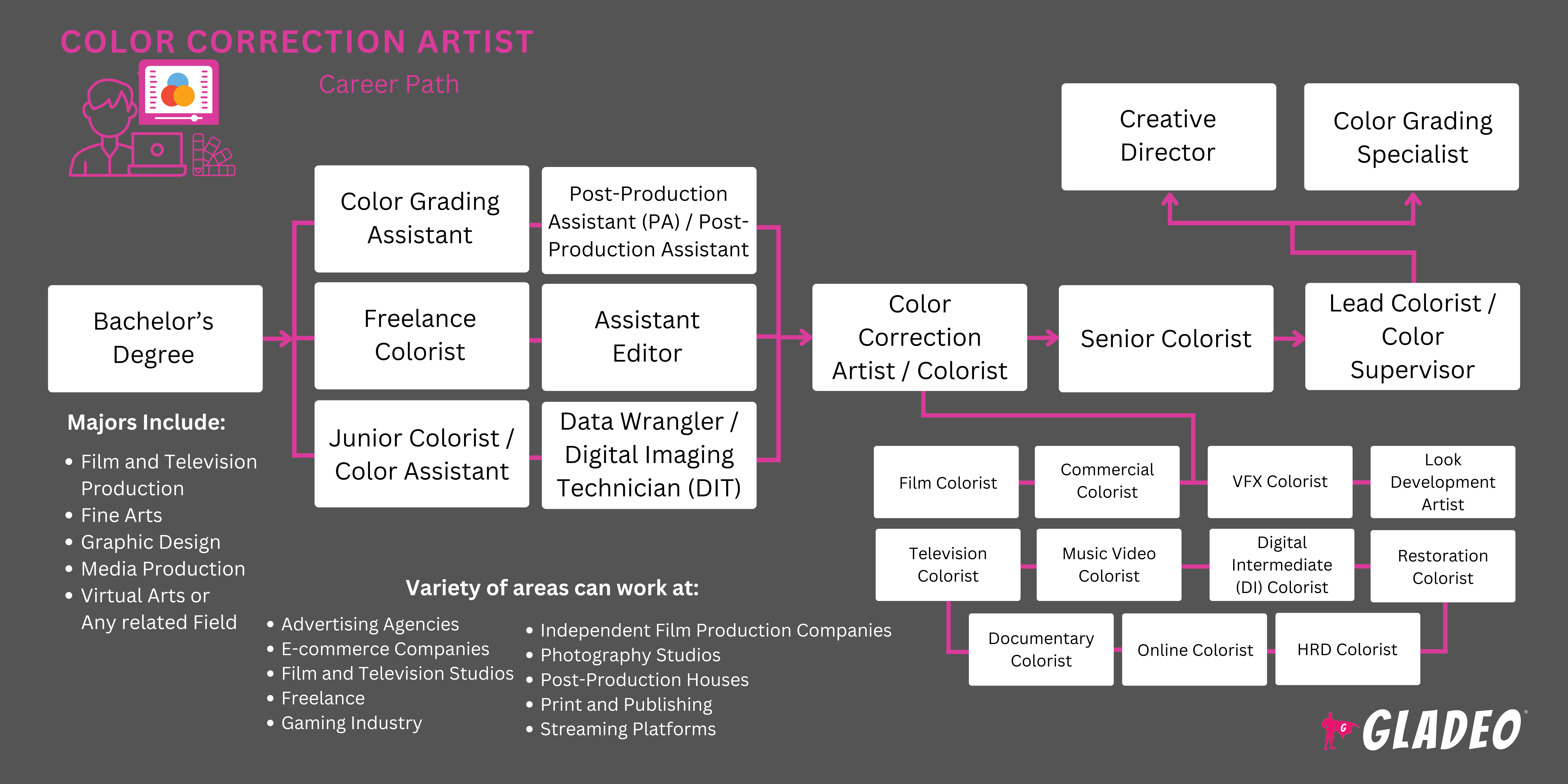
- Film Colorists: Work on feature films to create cinematic looks, mood, and visual storytelling consistency
- Television Colorists: Adjust and balance color for TV shows, series, and broadcast content
- Commercial Colorists: Enhance visuals for advertisements, product promos, and marketing campaigns
- Music Video Colorists: Develop stylized, creative color grades to match artistic and musical themes
- Documentary Colorists: Maintain natural, realistic tones while improving clarity and visual consistency
- Freelance Colorists: Work independently with multiple clients across film, media, and digital projects
- Studio/Post-Production Colorists: Work in production houses handling high-volume professional projects
- Digital Content Colorists: Color-correct online content for social media, streaming platforms, and web videos
- Film production companies
- Television networks and broadcast studios
- Post-production houses
- Advertising agencies (video and commercial production teams)
- Media and entertainment companies
- Streaming platforms and digital content studios
- Creative agencies and branding studios
- Photography studios and production teams
- Corporate marketing and communications departments
- Gaming and animation studios
- Freelance marketplaces and creative platforms
- VFX and motion graphics studios
Color Correction Artists often work in fast-paced post-production environments where deadlines are tight and revisions are frequent. They must maintain extreme attention to detail while adjusting colors across hours of footage, ensuring visual consistency under pressure.
The work can involve long hours in front of a computer screen, especially during final edits for films, commercials, or digital content. Artists may need to work nights, weekends, or overtime to meet release deadlines.
They also collaborate with multiple creative professionals and must be ready to adjust their work based on client or director feedback, even when it requires repeated revisions. The role demands patience, focus, and the ability to stay creative while handling technical and time-sensitive challenges.
- Cinematic color grading styles for films, ads, and streaming content
- HDR (High Dynamic Range) color workflows for more realistic visuals
- AI-assisted color correction tools that speed up editing and matching processes
- Consistent color pipelines across multiple platforms (film, TV, and digital streaming)
- Stylized color grading for storytelling, mood, and emotional impact
- Real-time color grading for faster previews during editing
- Increased use of LUTs (Look-Up Tables) for standardized visual styles
- Remote collaboration in cloud-based post-production workflows
- Cross-platform color consistency for mobile, cinema, and broadcast screens
- Integration of VFX and color grading for seamless final visuals
Individuals drawn to this career are often highly visual and detail-oriented, with a strong interest in art, film, and photography from an early age. In their youth, they may have enjoyed editing photos or videos, experimenting with filters, or paying close attention to colors and lighting in movies and media.
Many were naturally curious about how visuals affect mood and storytelling, often spending time creating digital art, watching behind-the-scenes content, or learning editing software on their own. They may have also enjoyed creative hobbies like drawing, filmmaking, or content creation, and were often the ones focused on making everything look “just right” in group projects or school media work.
Color Correction Artists typically need a bachelor’s degree in film production, media arts, photography, visual effects, or a related field. Some professionals also enter the field through specialized training programs or strong self-taught experience supported by a portfolio.
Students can take courses in relevant subjects such as:
- Film and video production
- Digital cinematography
- Color theory and visual design
- Post-production editing
- Motion graphics and visual effects
- Media technology and digital imaging
- Photography and lighting techniques
- Editing software and workflow systems (e.g., DaVinci Resolve, Adobe Premiere Pro)
- Visual storytelling and film analysis
- Digital media file management and workflows
Hands-on experience is essential and can be gained through internships, student film projects, freelance editing work, or assisting in post-production studios. A strong portfolio showcasing before-and-after color grading work is highly important for job opportunities.
Most employers provide on-the-job training for specific workflows, studio standards, and client expectations. Some positions may also require knowledge of broadcast standards, cinema delivery formats, or streaming platform requirements.
- Take film, media arts, photography, or ICT classes
- Practice photo editing, video editing, and basic color correction projects
- Learn industry software such as DaVinci Resolve, Adobe Premiere Pro, and After Effects
- Join media clubs, film clubs, yearbook teams, or school production groups
- Experiment with color grading styles using personal photo and video projects
- Build a strong portfolio showcasing before-and-after color correction work
- Study films, commercials, and music videos to analyze color, lighting, and mood
- Participate in media contests, film competitions, or creative challenges
- Intern with post-production studios, media companies, or production teams
- Learn basics of cinematography, lighting, and visual storytelling
- Volunteer for school events, video projects, or content creation teams
- Explore personal projects like short films, vlogs, or digital content editing
- Look for programs with internships at post-production studios, film companies, or media production houses
- Choose schools with hands-on training in professional color grading software like DaVinci Resolve and Adobe Premiere Pro
- Seek out programs with strong film, media arts, or digital production industry connections
- Look for courses that include real-world video editing, color correction, and post-production projects
- Prefer schools with access to professional editing labs, color suites, and media production equipment
- Choose programs taught by instructors with industry experience in film, television, or digital media
- Look for opportunities to work on student films, commercials, or collaborative media projects
- Seek schools that offer internships or apprenticeships in production companies or broadcast studios
- Choose programs that emphasize both technical editing skills and visual storytelling
- Look for networking opportunities with filmmakers, editors, and creative professionals
- Prefer institutions that support portfolio development and demo reel creation
- Choose programs located near film studios, media hubs, or entertainment industry centers
- Search on job sites like DaVinci Resolve, Adobe jobs boards, LinkedIn, Indeed, and production company websites
- Entry-level roles to look for: junior colorist, post-production assistant, video editor, media assistant, or editing intern
- Build a strong demo reel showcasing before-and-after color correction work
- Gain experience through student films, freelance video editing, or assisting in small production projects
- Learn the language of post-production—understanding color grading terms, workflows, and client feedback
- Build relationships with editors, filmmakers, and post-production supervisors for future opportunities
- Stay updated with industry software, tools, and color grading techniques
- Maintain a professional online portfolio or showreel on platforms like Vimeo or Behance
- Practice interview skills and be ready to explain your color choices and creative process
- Develop strong attention to detail and consistency in your editing work
- Be open to entry-level assistant roles in post-production studios to gain experience
- Prepare references from teachers, mentors, or project supervisors who can vouch for your skills
- Master core post-production skills such as color grading, shot matching, and visual consistency before moving into advanced roles
- Take professional development courses in cinematography, color theory, editing workflows, and post-production management
- Get noticed by improving workflow efficiency, color accuracy, or overall visual storytelling in projects
- Build strong relationships with directors, editors, cinematographers, and post-production supervisors
- Volunteer for complex projects such as feature films, commercials, or high-end visual campaigns
- Move from assistant roles to junior colorist, then to senior colorist positions
- Develop expertise in advanced grading techniques, including HDR workflows and cinematic color styles
- Always maintain accuracy, consistency, and professionalism—your reputation is critical in the industry
Websites:
- DaVinci Resolve Training Resources
- Adobe Creative Cloud (Premiere Pro & After Effects)
- Blackmagic Design Learning Hub
- Frame.io Blog (post-production workflow insights)
- No Film School
- StudioBinder Blog
- PremiumBeat Blog
- Creative COW (color grading and post-production community)
- Motion Array Blog
- Vimeo Video School
- Art of the Title
- American Cinema Editors (ACE)
- International Colorist Academy (ICA)
- Post Production World
Books:
- Color Correction Handbook by Alexis Van Hurkman
- The Filmmaker’s Guide to Digital Imaging by Blain Brown
- Color Grading for Filmmakers by Denver Riddle
- In the Blink of an Eye by Walter Murch
- The Visual Story by Bruce Block
If the Color Correction Artist role isn’t exactly what you’re looking for, you might find your strengths and interests align with other exciting career paths in film, media, or post-production, including:
- Video Editor
- Motion Graphics Designer
- Visual Effects (VFX) Artist
- Cinematographer
- Film Editor
- Post-Production Supervisor
- Multimedia Artist
- Digital Imaging Technician (DIT)
- Creative Director (Film & Media)
- Broadcast Technician
Newsfeed

Featured Jobs
Online Courses and Tools