







Spotlights
Bus Driver, Motorcoach Operator, Intercity Bus Driver, Transit Coach Operator, Charter Bus Driver, Shuttle Bus Driver, Passenger Bus Driver, Coach Bus Driver, Tour Bus Driver, Long-Distance Bus Driver, School Coach Driver, Executive Coach Operator
When you step onto a coach bus, whether traveling cross-country or joining a tour, the smooth, safe journey you experience is thanks to the skill and care of the Coach Operator behind the wheel. These drivers navigate traffic, weather, and schedules to deliver passengers safely and comfortably to their destinations.
Coach Operators drive long-distance and charter buses, transporting groups of passengers between cities, tourist sites, and events. They plan routes, manage schedules, and ensure passenger safety and comfort throughout the trip. Their day might involve coordinating with dispatchers, assisting passengers with boarding, and handling unexpected road conditions or delays.
Using specialized vehicles equipped with advanced controls and safety features, Coach Operators rely on GPS navigation, communication radios, and safety protocols to perform their duties. Their role is essential to connecting communities, supporting tourism, and providing a reliable transportation option that many people depend on for work, leisure, and life’s daily activities.
- Being the steady, responsible presence that passengers trust on long journeys.
- Enjoying the independence of driving and managing your own route and schedule.
- Meeting diverse groups of people and often exploring new places through your work.
- Knowing your role supports important travel needs for education, tourism, and communities.
Working Schedule
Coach Operators often work irregular hours, including early mornings, late nights, weekends, and holidays, depending on route schedules and passenger demand. Many are employed full-time with shifts that can last several hours or even overnight trips. The work environment is mostly inside the bus cab, requiring attention to safety, comfort, and customer service. Some operators work for transportation companies, while others may be self-employed or contract drivers for charter services.
Typical Duties
- Inspect the coach bus before trips to ensure safety and maintenance standards are met.
- Plan and follow routes using maps and GPS devices to reach destinations efficiently.
- Operate the bus safely while obeying traffic laws and adjusting to road and weather conditions.
- Assist passengers with boarding, seating, and luggage handling when necessary.
- Communicate with dispatchers to report delays, incidents, or schedule changes.
- Manage passenger safety by enforcing rules and handling emergencies calmly.
- Collect fares or verify tickets on certain services.
- Maintain cleanliness and order in the bus cab and passenger areas.
- Keep detailed records of mileage, fuel use, and trip logs.
- Provide information and courteous service to passengers throughout the journey.
- Coordinate with event organizers or tour guides when applicable.
- Report mechanical issues or accidents promptly to supervisors.
Additional Responsibilities
- Attend safety and driver training sessions regularly.
- Handle customer complaints or concerns professionally.
- Perform minor mechanical checks and basic bus maintenance tasks.
- Stay updated on traffic regulations and route changes.
- Support emergency procedures and first aid if needed.
- Assist in scheduling and coordinating with other drivers for large events.
- Maintain professional appearance and communication standards.
- Participate in company meetings or briefings as required.
A Coach Operator’s morning begins by inspecting their bus thoroughly, checking tire pressure, brakes, and fuel levels. They review the day’s schedule, confirm passenger lists, and communicate with dispatch to ensure the route plan is clear and any special instructions are noted.
Midday involves the core driving responsibilities: navigating highways, rest stops, and city streets while maintaining passenger comfort and safety. The operator manages timing carefully to stay on schedule, communicates updates when delays occur, and assists passengers as needed during breaks or boarding.
By afternoon or evening, the Coach Operator focuses on completing the final legs of the route, handling paperwork such as trip logs and maintenance reports, and preparing the coach for the next trip. They often debrief with supervisors or coordinate handoffs with other drivers, ensuring a smooth transition for ongoing services.
Soft Skills
- Strong communication skills
- Patience and calmness under pressure
- Customer service orientation
- Attention to detail
- Problem-solving ability
- Good judgment and decision-making
- Time management
- Dependability and responsibility
- Physical stamina
- Adaptability to changing schedules
- Teamwork and cooperation
- Conflict resolution
Technical Skills
- Safe vehicle operation
- Route planning and navigation
- Basic vehicle maintenance knowledge
- Use of GPS and communication radios
- Record keeping and reporting
- Emergency response procedures
- Ticket and fare handling
- Understanding of traffic laws
- Passenger assistance techniques
- Use of electronic logging devices
- Intercity Coach Operator: Drives passengers between cities over long distances, often with overnight trips.
- Charter Bus Driver: Operates buses rented for private groups, tours, or events with customized routes.
- Tour Bus Driver: Specializes in transporting tourists to destinations, often providing local information during the trip.
- Shuttle Bus Driver: Transports passengers on shorter, often repetitive routes such as airports, hotels, or campuses.
- School Coach Driver: Drives students on longer school bus routes or field trips using larger coach buses.
- Executive Coach Operator: Transports VIPs or business groups, often requiring higher service levels and discretion.
- Transit Coach Operator: Drives scheduled routes within urban or regional transit systems using coach-style vehicles.
- Long-Distance Bus Driver: Focuses on extended routes, sometimes crossing state or national borders, ensuring passenger comfort on lengthy journeys.
- Intercity bus companies
- Tour and charter bus operators
- Airport shuttle services
- School districts and universities
- Public transit agencies
- Travel and tourism companies
- Private transportation firms
- Event transportation coordinators
- Government transportation departments
- Corporate shuttle services
- Cruise and resort transportation providers
- Bus rental agencies
Coach Operators face the pressure of maintaining passenger safety while adhering to strict schedules, which can be challenging during heavy traffic or adverse weather conditions. They must remain alert and focused during long hours behind the wheel, balancing comfort with caution.
Work hours can be variable and sometimes unpredictable, including early mornings, late nights, weekends, and holidays. Operators must be prepared for extended shifts, overnight trips, and occasional overtime to meet passenger demand and route requirements.
This career demands physical stamina and mental resilience, as operators sit for prolonged periods and must respond quickly to emergencies or mechanical issues. There can be emotional strain from dealing with difficult passengers or stressful traffic situations, requiring strong patience and problem-solving skills.
- Increased use of GPS and real-time traffic data for efficient routing.
- Growing adoption of electronic logging devices for compliance and record keeping.
- Expansion of eco-friendly bus fleets using electric or hybrid vehicles.
- Improved passenger amenities such as Wi-Fi and comfortable seating.
- Greater focus on driver safety training and certification programs.
- Integration of mobile ticketing and contactless payment options.
- Use of surveillance and monitoring systems for security.
- Development of automated and semi-autonomous driving technologies.
- Rising demand for charter and tour bus services linked to tourism growth.
- Emphasis on accessibility features for passengers with disabilities.
Many future Coach Operators enjoyed playing with toy cars and buses, fascinated by vehicles and driving from a young age. They often showed interest in maps, travel, and exploring new places, dreaming of steering big vehicles on open roads.
They tended to be responsible and patient children, enjoying roles that involved helping others or leading groups, such as organizing school trips or guiding peers. Early experiences with driving lessons or family road trips often sparked their passion for transportation careers.
Becoming a Coach Operator typically involves completing a high school diploma or equivalent, followed by specialized training and licensing. Many employers require a Commercial Driver’s License (CDL) with passenger endorsements, along with safety and skills certifications.
Students can take courses in relevant subjects such as:
- Driver safety and defensive driving
- Basic vehicle maintenance
- Geography and map reading
- Customer service and communication
- First aid and emergency response
- Traffic laws and regulations
- Time management and scheduling
- Public speaking and interpersonal skills
- Physical education for stamina
- Tourism and local history
Hands-on experience through training programs, apprenticeships, or supervised driving practice is crucial. Building a strong driving record and developing customer service skills help prepare candidates for entry-level positions. Many operators continue learning on the job to advance their expertise and certifications.
- Enroll in driver education and safety courses in high school.
- Participate in school or community clubs related to transportation or travel.
- Volunteer for roles that involve responsibility and leadership.
- Take courses in geography, communication, and customer service.
- Practice basic vehicle maintenance and care.
- Research commercial driver licensing requirements in your state.
- Attend career fairs focused on transportation and logistics.
- Consider community college programs offering commercial driving training.
- Seek internships or job shadowing with local bus companies.
- Develop a good driving record and learn defensive driving techniques.
- Choose programs with CDL training and passenger endorsements.
- Look for hands-on driving practice opportunities.
- Verify program accreditation and instructor experience.
- Check if the program offers job placement assistance.
- Select courses that include customer service training.
- Seek programs that cover emergency and first aid training.
- Find opportunities for learning vehicle maintenance basics.
- Consider flexible scheduling for part-time or evening classes.
- Look for programs with good safety track records.
- Ensure the program teaches current traffic laws and regulations.
- Find locations offering real-world road experience.
- Choose programs emphasizing communication and professionalism.
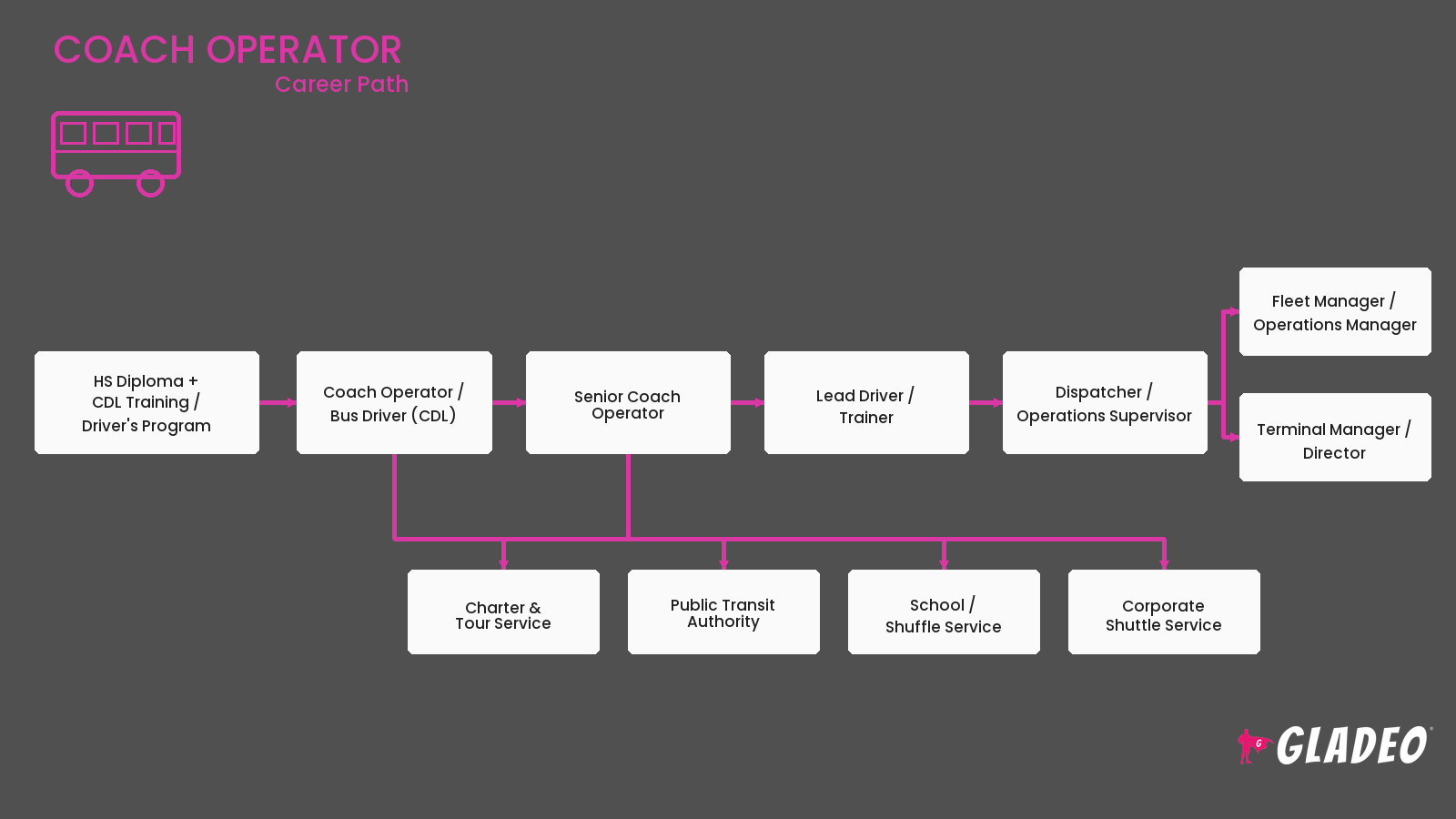
- Apply for entry-level bus driver positions with local transit or charter companies.
- Obtain a Commercial Driver’s License with passenger endorsement.
- Build a clean driving record with no violations.
- Create a resume highlighting any driving, safety, or customer service experience.
- Prepare for interviews by practicing communication and safety scenario questions.
- Network with professionals in transportation or through local unions.
- Gain experience driving different types of buses and coaches.
- Complete company orientation and training programs thoroughly.
- Ask for feedback and learn from experienced drivers.
- Maintain professionalism and reliability to earn recommendations.
- Volunteer for additional shifts or routes to gain experience.
- Stay current on licensing and certification requirements.
- Earn advanced certifications in passenger transport and safety.
- Develop expertise in long-distance or specialized route driving.
- Build strong relationships with dispatchers and managers.
- Gain experience leading or training new drivers.
- Explore opportunities in fleet management or scheduling.
- Pursue roles in transportation planning or logistics.
- Consider becoming a safety instructor or compliance officer.
- Aim for positions with higher pay and responsibility, such as lead driver or supervisor.
Websites:
- National Limousine Association (limo.org)
- American Bus Association (buses.org)
- Bus and Motorcoach News (busandmotorcoachnews.com)
- Federal Motor Carrier Safety Administration (fmcsa.dot.gov)
- National Safety Council (nsc.org)
- National School Transportation Association (schoolbus.org)
- Commercial Vehicle Safety Alliance (cvsa.org)
- International Motorcoach Group (imgonline.com)
- Transportation Safety Institute (tsi.dot.gov)
- Occupational Safety and Health Administration (osha.gov)
- Coach USA (coachusa.com)
- Greyhound Lines (greyhound.com)
- Bus Industry Safety Council (bisc.ca)
- National Transit Institute (transit.dot.gov)
Books:
- Bus Driver's Handbook by Frank Lewis
- The Complete Guide to Commercial Driving by Dave Wilson
- Safe Driving Techniques for Bus Operators by Linda Martinez
- Motorcoach Operations and Safety by Robert Johnson
- Customer Service for Bus Drivers by Karen Smith
If the life of a Coach Operator isn’t the perfect fit, there are many related careers that use similar skills in driving, customer service, and transportation management.
- Transit Bus Driver
- School Bus Driver
- Truck Driver
- Delivery Driver
- Taxi or Ride-Share Driver
- Transportation Dispatcher
- Fleet Manager
- Logistics Coordinator
- Tour Guide
- Vehicle Maintenance Technician
Newsfeed

Featured Jobs
Online Courses and Tools