






Spotlights
Child and Youth Behavioral Health Specialist, Adolescent Mental Health Counselor, Youth Mental Health Worker, School Behavioral Specialist, Child Development Specialist, School Counselor (Behavioral Focus), Youth Outreach Counselor, Family Support Specialist, Case Manager (Youth Services), Behavioral Intervention Specialist, Child Psychosocial Support Worker, Mental Health Youth Advocate
Growing up is not always easy. Children and teenagers face many pressures—school stress, family changes, peer relationships, social media influence, trauma, and emotional struggles that they may not fully understand or know how to express. When these challenges begin to affect their behavior, learning, or daily life, Child and Adolescent Behavioral Health Specialists step in to help!
These professionals work closely with young people to understand what they are going through and guide them toward healthier emotional and behavioral development. They create safe, supportive spaces where children and teens can talk about their feelings, learn coping skills, and slowly build confidence in managing life’s challenges. Depending on the setting, they may work in schools, hospitals, mental health clinics, community programs, or residential treatment centers.
A major part of their role is identifying early signs of behavioral or emotional concerns—such as anxiety, depression, attention difficulties, or trauma responses—and helping connect young clients to the right support services. They also work with parents, teachers, and caregivers to build consistent support systems that reinforce positive behavior and emotional stability at home and in school. Through structured activities, counseling sessions, and behavior plans, they help children develop communication skills, self-control, and healthy coping strategies.
- Helping children and teens overcome emotional and behavioral challenges
- Watching young clients grow in confidence, stability, and self-awareness
- Supporting families in building stronger communication and relationships
- Making a lasting impact during a critical stage of development
- Creating safer, more supportive environments in schools and communities
Working Schedule
Child and Adolescent Behavioral Health Specialists typically work full-time schedules, though evenings, weekends, or school hours may be required depending on the setting. Those working in crisis centers, hospitals, or residential facilities may also be assigned rotating shifts or on-call duties. Some travel may be needed to visit schools, homes, or community programs.
Typical Duties
- Conduct behavioral and emotional assessments to understand the needs of children and adolescents
- Observe and evaluate behavior patterns in school, home, or clinical settings
- Develop individualized behavior intervention and treatment plans
- Provide one-on-one counseling sessions to help children express emotions and build coping skills
- Facilitate group therapy or social skills development activities for youth
- Collaborate with parents, teachers, and caregivers to support consistent behavior strategies
- Identify early signs of mental health concerns such as anxiety, depression, ADHD, or trauma-related behaviors
- Implement behavior modification techniques and track progress over time
- Support students in developing communication, self-regulation, and problem-solving skills
- Coordinate referrals to psychologists, psychiatrists, or additional support services when needed
- Maintain detailed documentation of client behavior, progress, and treatment plans
- Participate in school meetings, case conferences, and multidisciplinary care discussions
- Provide crisis intervention and emotional support during behavioral emergencies
Additional Responsibilities
- Work closely with schools, community organizations, and healthcare providers to ensure coordinated care
- Educate parents and guardians on behavioral health strategies and child development needs
- Assist in developing school-based or community behavioral health programs
- Stay updated on best practices in child psychology, behavioral therapy, and trauma-informed care
- Participate in professional development training and certification programs
- Support prevention programs that promote positive mental health and early intervention
- Contribute to program evaluation and improvement of youth mental health services
A Child and Adolescent Behavioral Health Specialist usually begins the day by reviewing case notes, behavior reports, and updates from teachers, parents, or other members of the care team. Each child they work with has a different story—some may be dealing with anxiety that affects their school performance, while others may be struggling with anger, trauma, or difficulty interacting with peers. Before sessions begin, the specialist prepares strategies tailored to each child’s emotional and behavioral needs for the day.
Throughout the day, they may move between one-on-one counseling sessions, classroom observations, and group activities that help children practice social skills and emotional regulation. In a school setting, they might step into a classroom to support a student having a behavioral challenge, while in a clinic or center, they may guide children through structured therapy activities like role-playing, emotional expression exercises, or coping skill practice. They also spend time meeting with parents, teachers, or caregivers to share progress and adjust behavior plans, making sure the child has consistent support in every environment they are part of.
Soft Skills
- Active listening
- Empathy
- Patience
- Good communication skills
- Cultural awareness
- Adaptability
- Problem-solving
- Attention to detail
- Emotional control
- Ability to stay calm under pressure
- Teamwork
- Flexibility
- Integrity
- Organization
- Observational skills
Technical Skills
- Behavior observation and assessment
- Basic counseling skills
- Knowledge of child development
- Writing case notes and reports
- Behavior intervention planning
- Crisis handling and de-escalation
- Record-keeping systems
- Simple data tracking
- Working with school or clinic tools
- Referral coordination
- Progress monitoring
- Basic program evaluation
- School Behavioral Specialist
- Child and Adolescent Counselor
- Youth Mental Health Counselor
- Behavioral Intervention Specialist
- School Counselor (Behavioral Focus)
- Child Psychologist Assistant
- Developmental Behavior Specialist
- Autism Support Specialist
- Trauma-Informed Youth Counselor
- Family Support Specialist
- Juvenile Behavioral Health Case Manager
- Youth Crisis Intervention Specialist
- Schools and school districts
- Hospitals and medical centers
- Mental health clinics
- Community health centers
- Government child welfare agencies
- Juvenile justice and correctional facilities
- Nonprofit youth organizations
- Residential treatment centers
- Autism and developmental support centers
- Private counseling practices
- Crisis intervention centers
- Early childhood development programs
Child and Adolescent Behavioral Health Specialists are expected to understand the emotional, social, and developmental needs of children and teens. This requires a high level of patience, empathy, and the ability to stay calm when working with young clients who may struggle to express what they feel. They must also manage different cases at the same time while working closely with families, teachers, and other professionals.
The job can be emotionally challenging because specialists often support children dealing with trauma, anxiety, behavioral issues, or difficult home situations. It may also involve long or irregular hours, especially in schools, clinics, or crisis settings where support is needed immediately. Despite these demands, many professionals find the work deeply meaningful because they help shape a child’s growth, confidence, and emotional well-being during some of the most important years of their life.
- Increased awareness of children’s mental health, leading to earlier diagnosis and intervention
- Growing demand for school-based mental health services and behavioral support programs
- Expansion of telehealth and online counseling sessions for children and teens
- Stronger focus on trauma-informed care in schools, clinics, and community programs
- Greater attention to anxiety, depression, and stress linked to social media use
- More collaboration between schools, parents, and mental health professionals
- Rising use of individualized behavior intervention plans in educational settings
- Increased inclusion of special education and neurodiversity support services
- Emphasis on early intervention to prevent long-term behavioral and emotional issues
- Growth of community programs that promote youth mental wellness and resilience
Child and Adolescent Behavioral Health Specialists often enjoyed activities that involved helping, understanding, or supporting others. They may have been the friend who listened when someone had a problem, volunteered with children, participated in peer mentoring programs, or enjoyed being involved in clubs and community activities. Many were naturally curious about human behavior and emotions and liked learning about how people think, feel, and interact.
Some may have enjoyed subjects such as psychology, health, social studies, or biology, while others were drawn to activities involving teamwork, leadership, caregiving, or working with children. These early experiences often helped develop the empathy, communication skills, patience, and compassion that are essential for a career supporting the mental and behavioral health of young people.
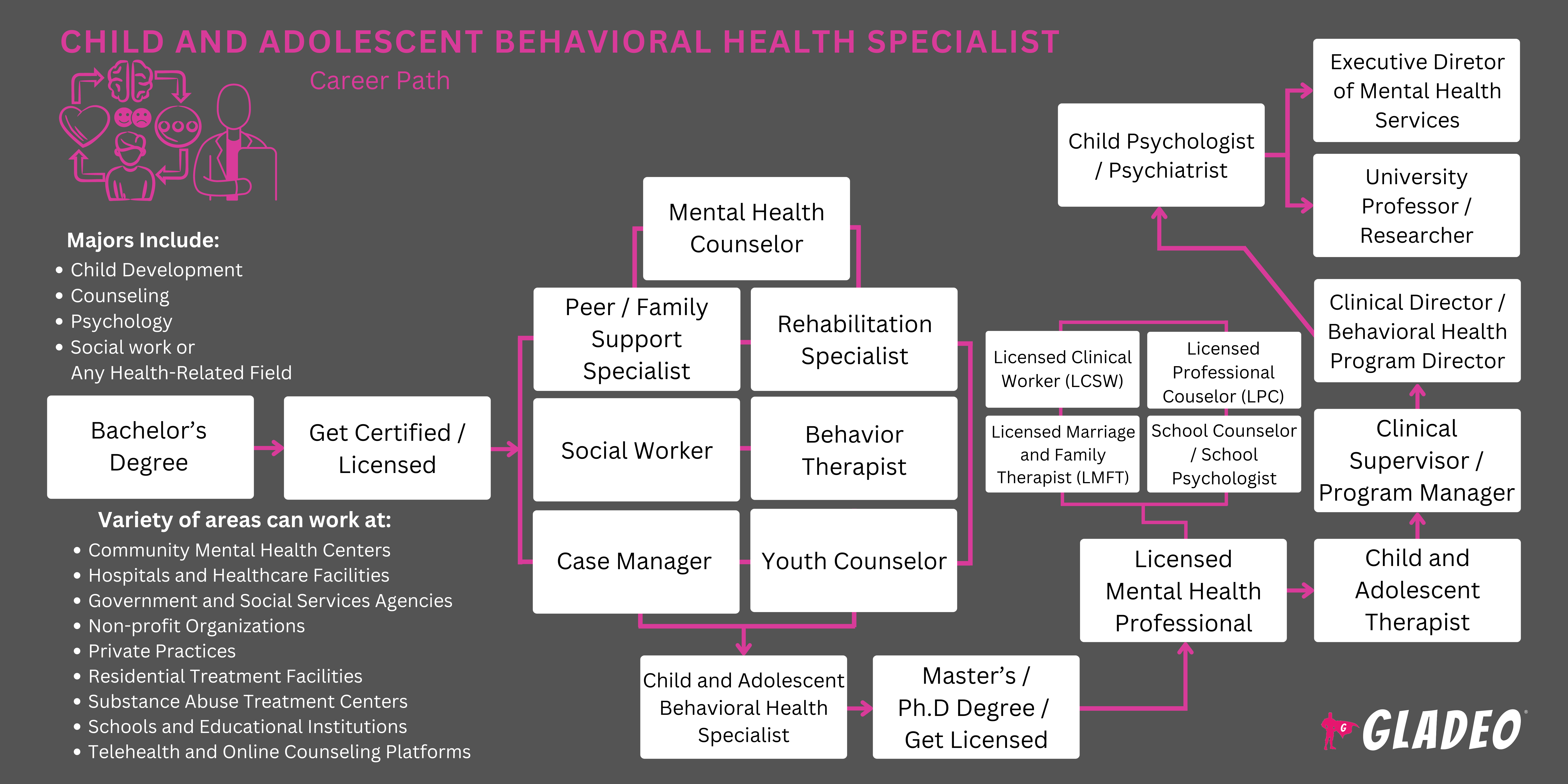
- Child and Adolescent Behavioral Health Specialist positions typically require a bachelor’s degree in psychology, counseling, social work, child development, behavioral science, education, or a related field
- Some employers prefer or require a master’s degree, especially for advanced counseling or clinical positions
- Many professionals begin in entry-level roles such as behavioral health technician, youth counselor, case aide, or mental health support worker before advancing into specialist positions
- Internships, practicum experiences, and volunteer work with children and adolescents are excellent ways to gain hands-on experience
- Education and training requirements often depend on the setting and population being served
- For example, school-based positions may require knowledge of educational systems, special education, or student support services
- Mental health clinics and treatment centers may seek candidates with training in counseling techniques, crisis intervention, or behavioral therapy
- Employers often provide On-the-Job training related to behavior management, documentation procedures, and organizational policies
- State licensure or certification may be required for some counseling, social work, or behavioral health positions
- Specialized training in areas such as trauma-informed care, autism support, ADHD, anxiety disorders, or family counseling can be beneficial
- Certifications related to behavioral health, youth mental health, crisis intervention, or child development may strengthen job qualifications
- Many positions working with children require background checks and child safety clearances
- Take classethins in psychology, health, biology, sociology, English, and communication.
- Build strong listening and communication skills through clubs, debate, peer mentoring, or student leadership activities.
- Volunteer with youth programs, schools, camps, community centers, or organizations that work with children and teens.
- Participate in activities that involve teamwork, problem-solving, and helping others.
- Explore introductory courses in psychology, counseling, child development, or social work during college.
- Apply for internships or practicum opportunities in schools, clinics, hospitals, or community mental health programs.
- Read books, articles, and research about child development, mental health, trauma, and behavioral health.
- Take online courses in psychology, counseling skills, youth development, or mental health topics.
- Seek informational interviews or job-shadowing opportunities with school counselors, therapists, social workers, or behavioral health professionals.
- Learn about local and national programs that support children’s mental health, special education, and youth services.
- Courses in child psychology, adolescent development, counseling, social work, behavioral health, and mental health disorders
- Training in evidence-based approaches such as cognitive behavioral therapy (CBT), behavior intervention strategies, and trauma-informed care
- Hands-on practicum or clinical experiences working with children and adolescents in schools, clinics, hospitals, or community programs
- Internship opportunities in youth mental health centers, schools, behavioral health agencies, or family support organizations
- Exposure to real-life case studies and supervised interactions with children, teens, and families
- Instructors with professional backgrounds in psychology, counseling, social work, behavioral health, or child development
- Strong focus on ethics, confidentiality, child protection, and professional standards
- Training in crisis intervention, conflict resolution, and behavior management techniques
- Access to modern case management systems, assessment tools, and behavioral tracking software
- Programs that emphasize communication skills, empathy, relationship-building, and family engagement
- Opportunities to network with counselors, psychologists, social workers, educators, and healthcare professionals
- Curriculum that combines classroom learning with practical experience supporting children's emotional, behavioral, and social development
- Make a profile on LinkedIn and other professional networking platforms
- Search job portals such as Indeed, Glassdoor, ZipRecruiter, LinkedIn Jobs, and local healthcare or education job boards
- Review job advertisements and look for keywords to include on your resume, such as:
- Behavioral health
- Child development
- Mental health support
- Case management
- Behavior intervention
- Crisis intervention
- Family support
- Counseling skills
- Youth services
- Trauma-informed care
- Highlight volunteer work, internships, mentoring experiences, tutoring, childcare roles, and leadership activities on your resume
- If you have limited experience, apply for internships, practicum placements, or entry-level behavioral health positions
- Gain experience working with children through schools, camps, youth organizations, after-school programs, or community centers
- Network with counselors, social workers, psychologists, teachers, and behavioral health professionals in your community
- Attend career fairs and mental health or healthcare networking events, and bring copies of your resume
- Ask professors, internship supervisors, volunteer coordinators, or employers for recommendation letters or permission to use them as references
- Research potential employers and learn about their programs, services, and populations they serve
- Stay informed about current trends in youth mental health, behavioral intervention, and child development
- Review Child and Adolescent Behavioral Health Specialist resume examples and sample interview questions
- Practice mock interviews with friends, mentors, or your school’s career center
- Be prepared to discuss your experience working with children, families, and diverse populations
- Dress professionally and demonstrate empathy, patience, and enthusiasm for helping young people succeed
- Let your supervisor know you are interested in career growth and ask about advanced roles or specialization paths
- Pursue higher education such as a master’s degree in counseling, psychology, social work, or child development
- Earn additional certifications in areas like trauma-informed care, behavioral therapy, autism support, or crisis intervention
- Take initiative in improving behavior plans and treatment strategies based on client progress and feedback
- Lead or co-lead group sessions, school programs, or youth mental health initiatives when opportunities arise
- Build strong relationships with children, families, teachers, and team members through consistent communication and respect
- Become skilled in identifying patterns in behavior and suggesting practical, evidence-based solutions
- Stay updated on trends in child psychology, adolescent mental health, and behavioral intervention strategies
- Attend workshops, training sessions, and continuing education courses to improve professional skills
- Take on extra responsibilities such as mentoring new staff or supporting program development
- Participate in professional organizations related to child psychology and behavioral health
- Stay flexible and adaptable when working with different children, families, and changing behavioral needs
- Maintain strong professionalism by practicing empathy, patience, and ethical decision-making in all situations
Websites
- American Psychological Association (APA)
- National Institute of Mental Health (NIMH)
- Substance Abuse and Mental Health Services Administration (SAMHSA)
- National Association of Social Workers (NASW)
- American Counseling Association (ACA)
- Child Mind Institute
- National Child Traumatic Stress Network (NCTSN)
- Centers for Disease Control and Prevention (CDC) – Child Development & Mental Health
- World Health Organization (WHO) – Mental Health
- National Alliance on Mental Illness (NAMI)
- Zero to Three
- American Academy of Child and Adolescent Psychiatry (AACAP)
Books
- The Whole-Brain Child by Daniel J. Siegel & Tina Payne Bryson
- The Explosive Child by Ross W. Greene
- No-Drama Discipline by Daniel J. Siegel & Tina Payne Bryson
- Treating Traumatic Stress in Children and Adolescents by Margaret E. Blaustein & Kristin Kinniburgh
- Child and Adolescent Psychiatry: The Essentials by David Skuse et al.
Being a Child and Adolescent Behavioral Health Specialist can be a rewarding but emotionally demanding profession. Working with children and teens who are experiencing anxiety, trauma, behavioral challenges, or family difficulties requires patience, emotional strength, and a strong commitment to helping others. The job may not be the right fit for everyone due to the emotional intensity, responsibility, and need for consistency in supporting young clients and their families.
If you’re interested in exploring some related occupations, check out the suggestions below:
- School Counselor
- Clinical Social Worker
- Mental Health Counselor
- Rehabilitation Counselor
- Behavioral Health Technician
- Child Psychologist
- School Psychologist
- Family Therapist
- Case Manager (Youth Services)
- Special Education Teacher
- Youth Outreach Worker
- Child Life Specialist
Newsfeed

Featured Jobs
Online Courses and Tools
Annual Salary Expectations
New workers start around $47K. Median pay is $62K per year. Highly experienced workers can earn around $91K.
Annual Salary Expectations
New workers start around $53K. Median pay is $73K per year. Highly experienced workers can earn around $96K.
Annual Salary Expectations
New workers start around $46K. Median pay is $59K per year. Highly experienced workers can earn around $82K.
Annual Salary Expectations
New workers start around $48K. Median pay is $60K per year. Highly experienced workers can earn around $88K.
Annual Salary Expectations
New workers start around $49K. Median pay is $61K per year. Highly experienced workers can earn around $82K.