






Spotlights
Casting Executive, Casting Associate, Casting Assistant, Casting Producer, Talent Scout, Talent Director, Extras Casting Director, Background Casting Director, Voice Casting Director, Commercial Casting Director, Theatrical Casting Director, Head of Casting
Think about the last character in a movie or show who made you gasp, laugh, or cry, and then think about how different it would have felt with a different actor in that role. Every unforgettable performance began with a Casting Director who read hundreds of names, watched hundreds of auditions, and had the instinct to say, "This is the one." They discover the faces, voices, and talents that audiences fall in love with, and sometimes they launch the careers of future stars.
Casting Directors find, audition, and recommend the actors who bring a story to life. They begin by reading the script and talking with the director and producers about what each character needs: age, look, energy, accent, and chemistry with the rest of the cast. Then they put out a casting call, search through agents, managers, theater companies, and online talent databases, and invite the best candidates to audition. They run the sessions, give actors direction, record the auditions, and narrow the choices into a shortlist for the director and producers to make the final call. They also negotiate with agents and handle details like availability, contracts, and fair pay.
Casting Directors work with casting software and platforms like Breakdown Services, Casting Networks, and Actors Access, along with video tools for self-tape auditions, scheduling apps, and databases of thousands of actors. What truly sets them apart is a strong eye for talent, a good ear for performance, and the ability to put people at ease, so actors can do their best work in a high-pressure moment. A great Casting Director makes a film or show feel real, because the right actors are in the right roles, and it all starts with that spark.
- Discovering new talent and watching actors you championed become stars
- Seeing a character come alive exactly the way you imagined when the right actor finally walks into the room
- Working with directors, writers, producers, agents, and actors on stories that reach audiences around the world
- Having a creative voice in a project without being in front of the camera, and earning industry recognition such as the Artios Awards from the Casting Society of America
“When you truly get to feel like you’re making an actor’s dream come true, that’s amazing. When you see your name at the end of a movie in the credits, that’s always exciting too” - Jen Rudin
Working Schedule
Casting Directors usually work long and flexible hours, especially during the busy phases of casting when auditions, callbacks, and director meetings stack up. A typical week might include office hours in a casting studio, audition days that run from morning to evening, and nights and weekends spent watching self-tape submissions. Most Casting Directors are self-employed and run their own casting offices, hiring associates and assistants to help, though some work in-house at studios, networks, or streaming platforms. Projects can range from a few days for a commercial to many months for a big series or feature. Work comes in waves, so there are busy seasons and quieter ones, especially for freelancers.
Typical Duties
- Reading scripts and breaking down every role to understand what each character needs
- Meeting with directors, producers, and writers to talk about the vision and the type of actors they want
- Creating casting breakdowns, which are short descriptions of each role, and sending them to agents and talent databases
- Searching for actors through agents, managers, theater productions, showcases, social media, and online talent platforms
- Scheduling and running audition sessions, including in-person auditions, video calls, and self-tape reviews
- Giving actors direction during auditions so they can show their range
- Recording auditions and creating shortlists to present to the director and producers
- Organizing callbacks, chemistry reads, and screen tests where actors perform with each other
- Negotiating deals and availability with agents, managers, and actors
- Casting supporting and smaller roles, known as day players and guest stars
- Working with the production team to make sure cast members fit the schedule and budget
- Keeping detailed records of every actor who auditions, so they can be considered for future projects
Additional Responsibilities
- Attending theater, comedy shows, film festivals, and showcases to find fresh talent
- Mentoring casting assistants and associates who want to build their own careers
- Building long-term relationships with agents, managers, acting coaches, and casting peers
- Working with children's casting rules, including permits, chaperones, and schooling requirements
- Following union rules for actors from SAG-AFTRA and Actors' Equity
- Helping with inclusive and diverse casting that reflects the real world
- Staying up to date on up-and-coming actors, new training programs, and industry trends
- Coordinating with extras casting companies and background coordinators for large crowd scenes
A Casting Director's morning often begins with email and calls. They check messages from agents who have submitted actors for open roles, confirm the day's audition schedule, and review notes from the director on what they liked from yesterday's sessions. They may also read through a new script or a fresh round of self-tape submissions with coffee in hand, flagging promising performances and making notes. Casting assistants might be setting up the audition room, checking cameras and lights, and greeting the first actors of the day.
Midday is audition time. The Casting Director welcomes each actor, puts them at ease, and gives a quick description of the scene. They read opposite the actor or have a casting associate do it, give a note or two to see if the actor can adjust, and watch for the spark that makes a performance feel real. Between sessions they discuss each actor with the director, producers, or associates, and make notes. If the director or producer is watching, they may talk through who should be called back, who might fit another role, and who just is not right for this project.
Afternoons and evenings are for follow-up and decisions. The Casting Director sends callback invitations, talks with agents about availability and offers, and puts together a reel or shortlist for the producers. They answer questions from the studio or network and start planning tomorrow's auditions. Later at night, they might be watching self-tapes from actors across the country, or even the world, and looking for the next face that could change a character forever.
“A day in the life of a successful casting director often involves getting ready for a casting session, sometimes a casting session will be scheduled with actors for me from 10 a.m. to 1 p.m. and then I’ll schedule lunch from 1 p.m. to 2 p.m., then I will have a casting session from 2 p.m. to 6 p.m. That’s really a marathon day of casting.
Some days are spent prepping and some days are spent casting, so if you’re prepping for a casting session you’re working from the office, scheduling the actors and getting everything organized. Or you’re on the phone with the director choosing the audition scene, all of that is prep work.
Then when you finally have this beautiful audition date scheduled, you print out the schedule and go run the auditions. I tend to schedule two actors every 15 minutes, that way it’s ongoing. There’s always an actor waiting to come into the room, there’s never any downtime.
It takes a village to run a casting session, so it’s not just me. Sometimes I have audition readers that read with the actors in the audition room, sometimes I have people that are just designated to be in the waiting area helping the actors sign in. Sometimes I have the writer or the director in the room with me for the audition, in which case I have to create a team. Sometimes it’s just me and my casting associate and maybe she’s on the computer scheduling the appointments for the next day, I’m running the cameras and directing the actors and then there’s an actress who’s reading with the actors who are coming in to audition. So there’s a lot of people in the room.
Oftentimes my casting associate is uploading to the website that we use, uploading the auditions so that she can send them to our colleagues. We’re really multitasking as much as possible. I also always have to have my phone on because sometimes the client calls and there’s a change. Sometimes the gender will change on the character we’re casting and we’ll have to cancel actors… It’s really, really busy.” - Jen Rudin
Soft Skills
- A sharp eye and ear for talent and a gut feeling for what makes a performance feel true
- Empathy and the ability to make nervous actors feel comfortable and respected
- Strong communication and listening skills
- Persuasiveness, because you often have to convince directors, producers, and agents to take a chance on an actor
- Diplomacy, since you are balancing the wishes of many people at once
- Relationship building and networking
- Organization and the ability to juggle many actors, schedules, and roles
- Decisiveness and good judgment under pressure
- Creativity and the ability to see an actor in a role they have never played
- Cultural awareness and openness to different backgrounds and voices
- Discretion and professionalism, since casting details are often confidential
- Persistence and a thick skin when your first choice says no
Technical Skills
- Script analysis and character breakdown
- Using casting platforms such as Breakdown Services, Casting Networks, Actors Access, and IMDbPro
- Running auditions, including in-person, video call, and self-tape formats
- Basic video recording and editing for audition tapes
- Scheduling and database software to manage hundreds of actors
- Understanding acting techniques, genres, and styles
- Knowledge of union rules, including SAG-AFTRA, Actors' Equity, and the Teamsters locals that represent casting directors
- Negotiating contracts and understanding deal terms with agents and managers
- Familiarity with child labor laws and casting minors
- Researching and tracking talent through agencies, social media, theater and film credits
- Feature Film Casting Director: Casts leads and supporting roles for movies, from big studio blockbusters to indie films
- Television Casting Director: Casts regular series, guest stars, and recurring roles, often on tight weekly schedules
- Theatrical Casting Director: Casts Broadway, regional theater, and national tours
- Commercial Casting Director: Finds the faces and voices for advertising campaigns
- Voice and Animation Casting Director: Casts voice actors for cartoons, video games, and audiobooks
- Extras and Background Casting Director: Finds the crowds, passers-by, and atmosphere that make scenes feel real
- Reality and Unscripted Casting Producer: Finds real people with big personalities for reality shows and competitions
- Casting Associate or Assistant: Supports the lead Casting Director by managing sessions, searches, and paperwork
- Independent casting offices run by Casting Directors
- Major film studios such as Disney, Warner Bros., Universal, and Paramount
- Streaming platforms including Netflix, Amazon, Apple TV, and HBO Max
- Television networks and production companies
- Advertising agencies and commercial production houses
- Broadway and regional theater companies
- Video game and animation studios
- Reality TV production companies
- Talent agencies and management firms
- Voice-over and audiobook production companies
- Theme parks and live entertainment companies
- Film schools, community theaters, and nonprofit arts organizations
Casting Directors carry a lot of pressure because the success of a project can depend on a few key casting decisions. You will be juggling the opinions of directors, producers, writers, studio executives, and agents, and sometimes everyone has a different idea about who should play a role. Part of the job is listening carefully, advocating for your favorite choices, and being gracious when the final decision goes another way.
The work also involves a lot of rejection, not just for actors but for you. Your top pick might be unavailable, too expensive, or not what the director wanted after all. You must say no to many talented people, and you need to do so with kindness, since those same actors may be perfect for a future project. The hours can be long, with early-morning auditions and late-night self-tape reviews, and freelance schedules can be unpredictable between projects.
The trade-off is a career where your taste and instincts shape the stories millions of people watch. Building a strong reputation takes years of showing up, being fair to actors, and making great choices, but those who stick with it join a respected community where relationships and reputation are everything. If you love people, stories, and the thrill of discovery, few jobs are more exciting.
- Self-tape auditions have become standard, which lets Casting Directors see actors from anywhere in the world
- Online casting platforms and databases are making it easier to discover talent from many backgrounds
- Increasing focus on inclusive casting that reflects the diversity of real audiences
- Social media is now a talent-discovery tool, with creators and short-form video stars being cast in major roles
- Growing demand for casting in streaming and international productions
- Virtual callbacks and remote chemistry reads are saving time and expanding the talent pool
- AI-assisted tools for organizing submissions and scheduling, while the creative judgment remains human
- More attention to authentic casting, such as casting actors who share the identities and experiences of their characters
- Greater emphasis on actor safety, fair pay, and protecting young performers
- New categories of casting, including voice for games, immersive experiences, and interactive storytelling
Many Casting Directors were the kids who loved the school play, whether they were on stage, behind the scenes, or in the audience. They were obsessed with movies and TV, noticed supporting actors that nobody else noticed, and could tell you the name of the actor who played a small part in their favorite show. They were often the friend who always said, "You would be perfect for that role!" and loved matching people to opportunities.
Others were performers themselves who discovered that they enjoyed helping other people shine even more than being on stage. They loved people-watching, reading plays and scripts, and talking about characters and stories with friends. They were curious about what makes someone interesting to watch, and they usually had a natural talent for making others feel comfortable and confident.
There is no single required degree to become a Casting Director, but many have a bachelor's degree in theater, film, communications, drama, or a related field. A background in acting, directing, or theater is common, since it helps you understand an actor's process. Some Casting Directors came from talent agencies or production offices and learned on the job. What matters most is deep knowledge of storytelling and performance, strong relationships, and a track record of good judgment.
Students can take courses in relevant subjects such as:
- Acting and Performance Techniques
- Theater History and Dramatic Literature
- Script Analysis and Screenwriting
- Directing for Stage and Screen
- Film and Television Studies
- Communications and Interpersonal Skills
- Psychology and Human Behavior
- Public Speaking and Presentation
- Business and Entertainment Law
- Video Production and Editing
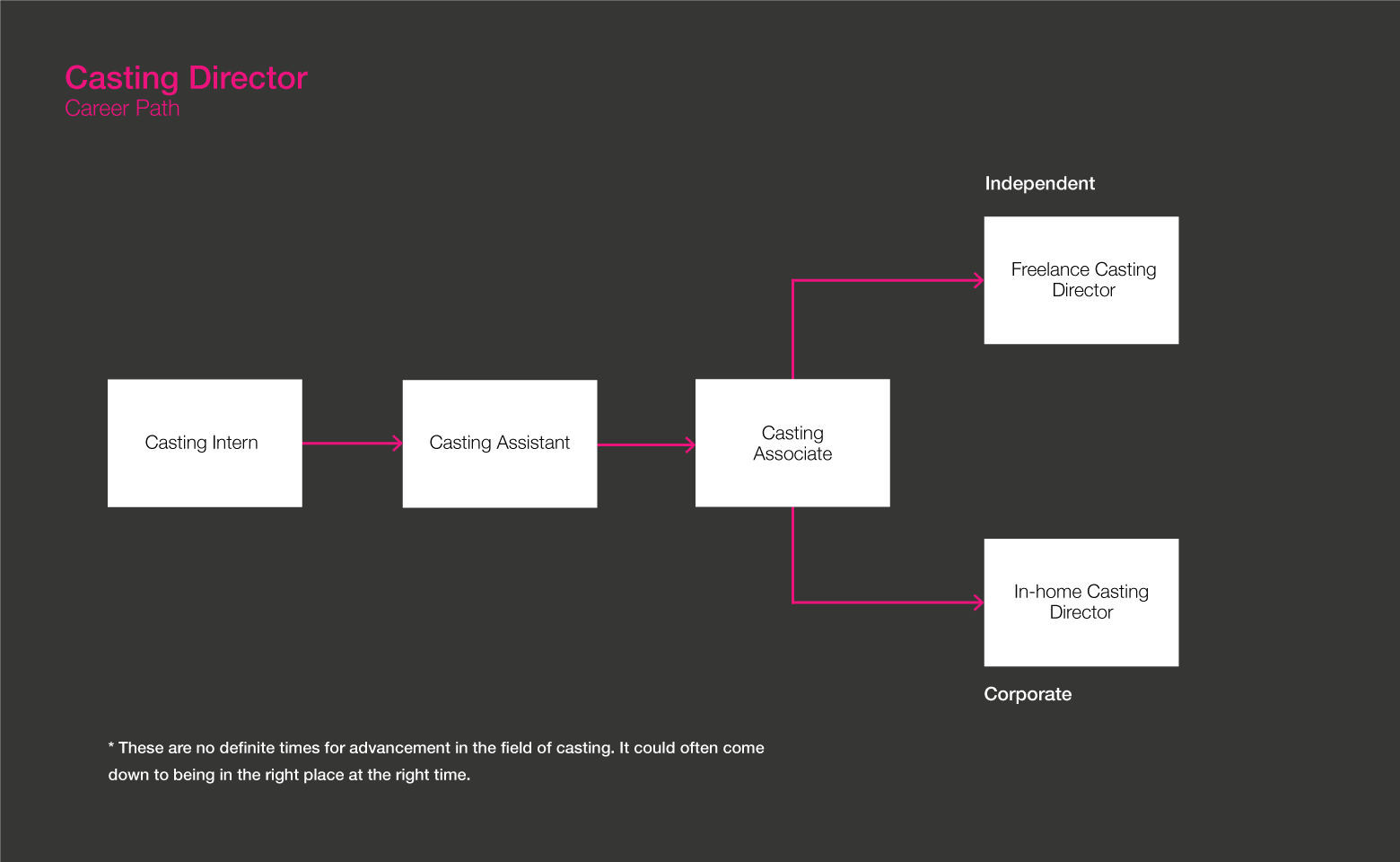
Most Casting Directors begin as interns or assistants in casting offices, where they learn the daily workflow and start building a network. Many spend several years as an assistant and then an associate before taking on projects as the lead. Organizations such as the Casting Society of America offer events, networking, and mentorship for people who are earning their way in.
Hands-on experience is the best teacher. Reading actors in auditions, running sessions, organizing schedules, and watching how experienced Casting Directors give notes will teach you more than any textbook. A strong list of contacts, a keen eye for emerging talent, and a track record of reliable work are what turn assistants into professionals.
- Join the school drama club, whether on stage, backstage, or as part of the production team
- Audition for plays yourself so you know what it feels like to be an actor in the room
- Watch lots of movies, TV shows, and plays, and notice how performances and casting choices shape the story
- Read plays and scripts and practice breaking down characters, including their age, background, and personality
- Help cast a school production or a student film and learn how to run auditions and give feedback
- Make a casting call for a friend's short film and organize sign-ups and callbacks
- Volunteer or intern at a local theater, talent agency, or casting office
- Study acting techniques with books by Stanislavski, Uta Hagen, and Michael Shurtleff
- Take communications, psychology, and speech classes to understand people and how to talk with them
- Attend film festivals, theater showcases, and talks with industry professionals
- Build a talent database of your own, such as a list of actors, voices, and skills in your community
- Reach out to local casting directors for informational interviews and ask what a typical day looks like
- Strong theater, film, or performing arts departments with real productions and many roles to cast
- Faculty with professional experience in acting, directing, or casting
- Opportunities to take casting workshops or internship placements in casting offices
- Programs located near entertainment hubs such as Los Angeles, New York, Atlanta, Chicago, or London
- Courses in directing, acting, and script analysis so you understand the full creative process
- Alumni networks that include agents, producers, directors, and casting professionals
- Access to audition rooms, cameras, and editing labs where you can practice self-tape and video skills
- Guest lecturers and masterclasses with working Casting Directors and talent agents
- Connections to professional organizations such as the Casting Society of America
- Career services that help place students in internships and entry-level jobs
- A supportive culture that values respect, fairness, and diverse voices
- Reasonable tuition, scholarships, and financial aid for arts students
- Apply for internships and assistant roles at casting offices, which are the most common way in
- Search job boards such as Backstage, Mandy, ProductionHub, Indeed, and LinkedIn for casting assistant roles
- Aim for entry-level titles such as Casting Assistant, Casting Intern, Casting Coordinator, Office PA, or Talent Agency Assistant
- Consider starting in a talent agency mailroom or as an assistant to an agent, since many Casting Directors started there
- Offer to read lines opposite actors or run the camera during auditions to show you are useful
- Build a network by attending theater shows, student film festivals, and Casting Society of America events
- Learn the casting platforms, including Breakdown Services, Casting Networks, and Actors Access, and be able to talk about how they work
- Keep a notebook or spreadsheet of actors you admire and why, since your taste is your calling card
- Become known as someone who is organized, kind, and discreet, because those qualities earn trust
- Prepare to explain in interviews what makes a good audition and how you would give notes to a nervous actor
- Work on student films and local productions to build real casting credits
- Follow up with thank-you notes and keep in touch with people you meet in the industry
- Move step by step from assistant to associate to Casting Director, taking on more responsibility with each project
- Earn membership in the Casting Society of America once you meet the requirements, to join a respected professional community
- Build deep relationships with agents, managers, directors, and producers who will call you with their next project
- Develop a signature eye for talent and a reputation for discovering actors before they become famous
- Work across different formats, such as film, TV, theater, commercials, and voice, to broaden your skills and your network
- Take on more complex projects, such as big series and ensemble casts, to prove you can handle the pressure
- Consider opening your own casting office or becoming head of casting at a studio or streaming platform
- Mentor assistants and interns, since the people you train today will be your colleagues tomorrow
Websites:
- Casting Society of America (CSA) - castingsociety.com
- SAG-AFTRA - sagaftra.org
- Actors' Equity Association - actorsequity.org
- Directors Guild of America - dga.org
- Backstage - backstage.com
- Breakdown Services - breakdownservices.com
- Casting Networks - castingnetworks.com
- Actors Access - actorsaccess.com
- IMDbPro - pro.imdb.com
- Variety - variety.com
- Deadline - deadline.com
- The Hollywood Reporter - hollywoodreporter.com
- Mandy - mandy.com
- Playbill - playbill.com
Books:
- Casting Revealed: A Guide for Film Directors by Hester Schell
- You Got the Part: A Casting Director Guides Actors to Successful Auditions for Film and TV by Marsha Chesley
- Casting Qs by Bonnie Gillespie
- The Casting Handbook by Suzy Catliff
- Directing Actors: Creating Memorable Performances for Film and Television by Judith Weston
If you find that being a Casting Director isn't the right path, your skills in spotting talent, working with people, and managing complex schedules can shine in many related careers.
- Talent Agent
- Talent Manager
- Film or TV Producer
- Production Coordinator
- Acting Coach
- Theater Director
- Public Relations Specialist
- Human Resources Recruiter
- Entertainment Publicist
- Talent Scout
”Watch a lot of TV, start your rolodex of actors in your mind who you are inspired by, go to the movies, go to the theatre, go on IMDB and start looking up cast lists. It should really just be a passion for knowing who’s playing what role in what project.” - Jen Rudin
Newsfeed

Featured Jobs
Online Courses and Tools
Annual Salary Expectations
New workers start around $62K. Median pay is $86K per year. Highly experienced workers can earn around $124K.
Annual Salary Expectations
New workers start around $97K. Median pay is $137K per year. Highly experienced workers can earn around $181K.
Annual Salary Expectations
New workers start around $73K. Median pay is $94K per year. Highly experienced workers can earn around $131K.
Annual Salary Expectations
New workers start around $56K. Median pay is $73K per year. Highly experienced workers can earn around $109K.
Annual Salary Expectations
New workers start around $55K. Median pay is $78K per year. Highly experienced workers can earn around $105K.