





Spotlights
Baker, Cake Decorator, Dough Mixer, Mixer, Pastry Chef, Scaler
Fresh bread, flaky croissants, birthday cakes, and warm cookies—some of life's best moments start in a bakery! Bakers transform simple ingredients into the treats and staples that families, restaurants, and communities rely on every day!
Bakers mix, shape, proof, and bake dough and batter to produce breads, rolls, cookies, cakes, pies, pastries, and specialty items. They follow recipes and production schedules, monitor oven temperatures, check quality, and keep work areas sanitary. They may work in retail bakeries, supermarket in-store bakeries, restaurants, hotels, wholesale production kitchens, or specialty pastry shops—often alongside pastry chefs, cake decorators, and kitchen managers.
They use commercial mixers, proofers, deck ovens, convection ovens, scales, and decorating tools while applying food safety standards. Whether crafting artisan loaves by hand or running high-volume production lines, skilled Bakers combine precision, creativity, and timing to deliver consistent results customers can taste.
- Creating products people genuinely love—from daily bread to celebration cakes
- Seeing tangible results of your work every shift
- Blending creativity with science in recipes, flavors, and presentation
- Building a portable skill set valued across restaurants, hotels, and retail bakeries
Working Schedule
Bakers often work early mornings—many shifts start before sunrise so fresh products are ready when doors open. Hours may include evenings, weekends, and holidays during peak seasons (Thanksgiving pies, wedding seasons, holiday cookie orders). Retail bakeries and supermarket bakeries typically offer full-time and part-time roles; wholesale production may run overnight shifts.
Typical Duties
- Check products for quality and identify damaged or expired goods
- Measure, scale, and combine ingredients according to recipes and formulas
- Mix dough and batter using commercial mixers, blenders, or steam kettles
- Shape, mold, and portion dough into loaves, rolls, pans, or sheets
- Set oven temperatures and bake items in deck, convection, or rotary ovens
- Decorate cakes, pastries, and specialty items when assigned
- Monitor proofing times, fermentation, and product consistency
- Clean and sanitize work surfaces, tools, and equipment per
health codes - Rotate stock, label products, and prepare items for display or packaging
- Follow HACCP, allergen labeling, and food safety procedures
- Record production counts, waste, and inventory as required
- Coordinate with managers on daily production lists and special orders
Additional Responsibilities
- Train new team members on recipes, sanitation, and equipment use
- Adjust recipes for altitude, humidity, or ingredient substitutions when approved
- Maintain mixers, ovens, proofers, and small wares in working order
- Fulfill custom orders—wedding tiers, sheet cakes, or seasonal promotions
- Receive and store deliveries of flour, dairy, and perishable ingredients
- Support catering or banquet production during large events
- Develop new seasonal items or test recipes in some artisan or retail roles
A Baker's day often starts in the quiet predawn hours. After clocking in, they review the production sheet—how many baguettes, dinner rolls, and sheet cakes are needed—then pull ingredients, start preferments or sponges, and preheat ovens.
Mid-morning is a rhythm of mixing, shaping, proofing, and loading racks into ovens. In a retail bakery, Bakers may also glaze danishes, pipe frosting, and stock display cases while customers begin to arrive. Timing matters: every batch has a window.
Afternoon duties include finishing bakes, breaking down stations, sanitizing equipment, and prepping dough for the next day. During holidays or weekends, the pace picks up with special orders and higher volume. By closing, shelves are full and the kitchen is clean for tomorrow's early start.
Soft Skills
- Attention to detail for measurements, timing, and presentation
- Time management to juggle multiple products in the oven
- Teamwork with decorators, managers, and front-of-house staff
- Calm under pressure during rushes and holiday crunches
- Reliability—early mornings depend on people showing up on time
- Adaptability when recipes change or equipment needs adjustment
- Customer service when interacting with clients on custom orders
- Patience during long proofing and repetitive production tasks
- Communication about shortages, delays, or quality issues
- Work ethic and pride in consistent, safe food production
Technical Skills
- Dough mixing, fermentation, and proofing techniques
- Scaling ingredients accurately by weight and volume
- Oven operation—deck, rack, convection, and rotary ovens
- Shaping loaves, rolls, bagels, and laminated dough basics
- Food safety, sanitation, and allergen awareness (ServSafe or equivalent)
- Cake assembly, icing, and basic decorating techniques
- Reading production schedules, recipes, and batch formulas
- Temperature monitoring for baked internal doneness
- Equipment cleaning and preventive maintenance routines
- Inventory rotation and FIFO storage practices
- Retail Bakers: In-store supermarket or neighborhood bakery counters
- Artisan Bakers: Hand-crafted sourdough and specialty breads
- Production/Wholesale Bakers: High-volume commercial baking facilities
- Pastry Bakers: Croissants, danishes, éclairs, and laminated goods
- Cake Bakers and Decorators: Custom celebration and wedding cakes
- Hotel and Banquet Bakers: Large-scale production for events and buffets
- Restaurant Bakers: Bread programs for dining rooms and tasting menus
- Independent retail bakeries and patisseries
- Supermarket and grocery in-store bakeries
- Wholesale and commercial baking plants
- Hotels, resorts, and casino food operations
- Restaurants and café bakery programs
- Catering companies and banquet halls
- Schools, hospitals, and institutional food service
- Specialty donut, cookie, or pie shops
- Cruise lines and airline catering kitchens
- Food manufacturing companies with baked product lines
Baking is physical work—standing for long shifts, lifting heavy bags of flour, and working in hot kitchens around ovens. Early hours are the norm, which can make social plans and sleep schedules challenging, especially when starting out.
Precision matters: a few degrees or minutes can ruin a batch. During holidays and weekends, demand spikes and mistakes are costly. Entry wages vary by market; advancement often comes through speed, consistency, and specialized decorating or pastry skills.
Despite the heat and hours, many Bakers love the craft—the smell of fresh bread, the satisfaction of a perfect rise, and the joy customers show when they pick up a custom cake.
- Growing demand for artisan and sourdough bread programs
- Gluten-free, vegan, and allergen-friendly baked product lines
- Clean-label ingredients and locally sourced flours and grains
- In-store bakery expansion at grocery and club retailers
- Instagram-worthy cake and cookie decorating trends
- Automation in wholesale production with skilled hand-finish roles
- Sustainability focus—reducing food waste and composting scraps
- Hybrid roles combining baking with café barista or retail service
- Online ordering and delivery for custom cakes and pastry boxes
Many Bakers grew up helping in the kitchen—measuring flour for cookies, decorating cupcakes for family birthdays, or experimenting with boxed mixes until they wanted to make recipes from scratch.
They often enjoyed hands-on projects, science fair baking experiments, or FFA and family and consumer sciences classes. A love of food, creativity, and seeing (and tasting) immediate results from their effort drew them toward the bakery.
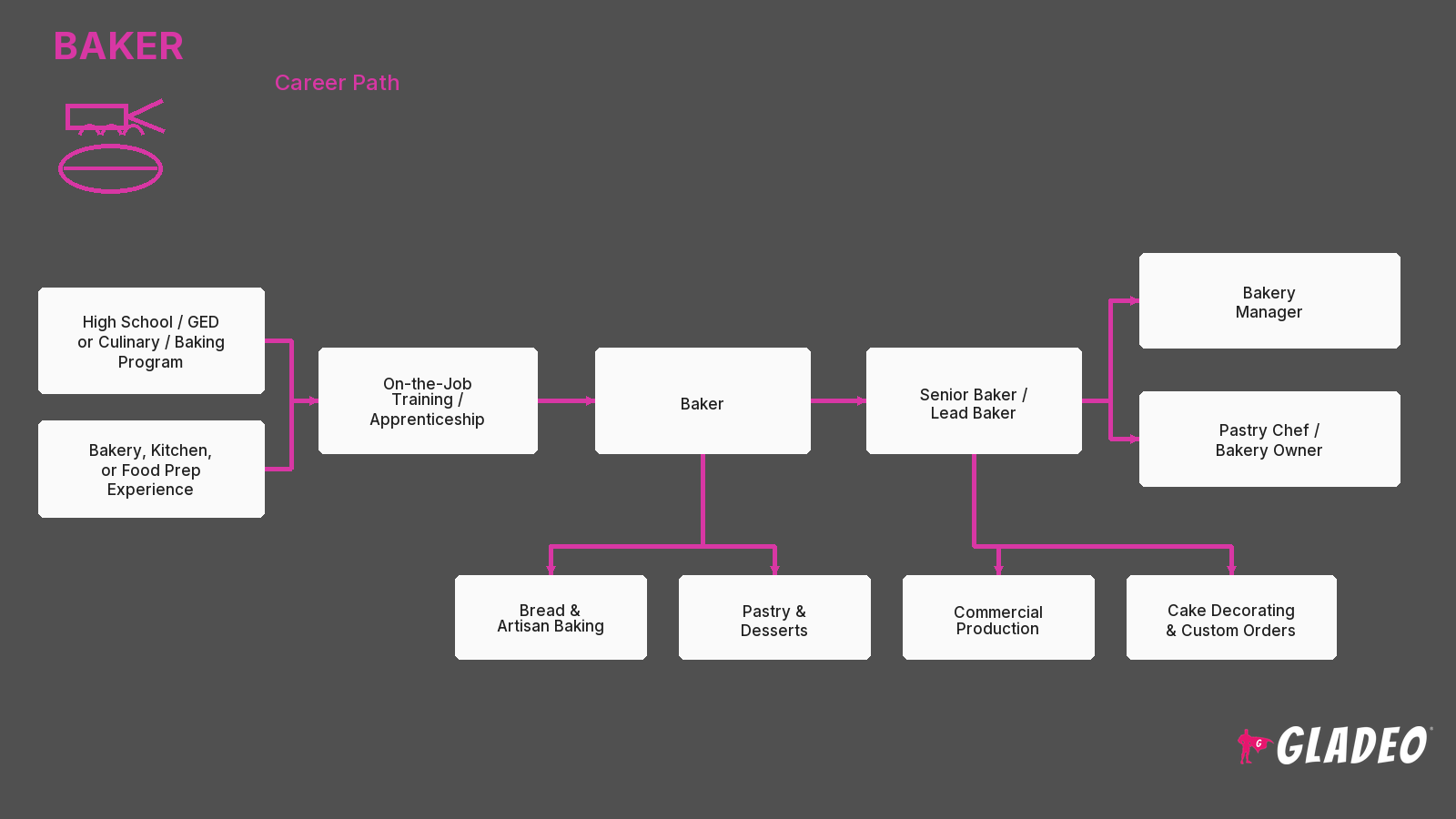
Bakers typically need a high school diploma or equivalent and on-the-job training. Many employers prefer candidates who complete culinary school certificates, community college baking and pastry programs, or apprenticeships. Formal training speeds up advancement into pastry, cake decorating, or lead baker roles.
Students can take courses in relevant subjects such as:
- Baking and pastry fundamentals
- Food safety and sanitation (ServSafe)
- Nutrition and menu planning
- Chemistry and math for recipe scaling
- Culinary arts and garde manger basics
- Business and entrepreneurship for bakery ownership
- Art and design for cake decoration
- Family and consumer sciences (home economics) courses
Hands-on practice through part-time bakery jobs, internships, or culinary competitions is essential. A portfolio of decorated cakes, bread photos, or competition entries helps candidates stand out when applying for first roles.
ON-THE-JOB TRAINING
Most Bakers learn production standards, company recipes, and equipment on the job. New hires may start as bench hands or production assistants—scaling ingredients, loading ovens, and cleaning stations—before advancing to mixing and decorating. Training periods range from a few weeks in high-volume plants to months in artisan shops where fermentation and hand skills take longer to master.
OPTIONAL CERTIFICATIONS
- ServSafe Food Handler or Manager Certification
- Retail Bakers of America (RBA) Certified Journey Baker, Baker, or Decorator
- American Culinary Federation (ACF) Certified Pastry Culinarian
- State or local food handler cards where required
- Allergen awareness and HACCP training certificates
- Take family and consumer sciences, culinary, or ProStart courses if offered
- Work part-time at a bakery, grocery in-store bakery, or restaurant
- Practice bread, cookie, and cake recipes at home to build fundamentals
- Enter SkillsUSA, ProStart, or local baking competitions
- Earn ServSafe Food Handler certification before applying for jobs
- Job-shadow a baker or pastry chef during a production shift
- Learn to scale recipes by weight using a kitchen scale
- Build a photo portfolio of your best bakes for interviews
- Research community college baking and pastry certificate programs
- Volunteer to bake for school fundraisers, clubs, or community events
- Study basic food science—how yeast, gluten, and temperature affect results
- Save for culinary school tools: scale, piping tips, and thermometer
- Hands-on kitchen hours with commercial mixers and deck ovens
- Instructors with working bakery or pastry chef experience
- Food safety and ServSafe preparation included in curriculum
- Internship or co-op placement with retail or wholesale bakeries
- Courses in bread, cake, pastry, and decoration—not just one specialty
- Small class sizes with frequent instructor feedback on technique
- Job placement support and alumni working in local bakeries
- Affordable certificate options if a full degree is not required
- Competition teams or showcase events to build your portfolio
- Facilities that mirror real production environments
- Apply to supermarket in-store bakeries—they often hire entry-level workers
- Search Indeed, Snagajob, and company career sites (Panera, Costco, regional grocers)
- Target entry-level titles: Bench Hand, Production Baker, Bakery Clerk, Cake Decorator Trainee
- Bring a portfolio of photos showing consistent products and clean presentation
- Highlight ServSafe certification and early morning availability on your resume
- Network through culinary instructors, SkillsUSA advisors, and bakery managers
- Be willing to start with dishwashing, scaling, or packaging before decorating
- Prepare for practical trials—some employers ask you to mix dough or decorate a cookie
- Apply to wholesale bakeries for steady hours and production-line experience
- Follow up in person at local bakeries with a resume and sample photos
- Master every station—mixing, oven, finishing, and sanitation—before seeking promotion
- Pursue RBA or ACF certifications to qualify for lead and pastry roles
- Specialize in cake decorating, artisan bread, or pastry for higher pay
- Move from retail to hotel, country club, or wholesale production for broader skills
- Become shift lead, head baker, or pastry chef with consistent quality and reliability
- Open an independent bakery or cottage food business after gaining experience
Websites:
- American Culinary Federation (ACF)
- Retail Bakers of America (RBA)
- American Society of Baking (ASB)
- Bread Bakers Guild of America
- ServSafe (National Restaurant Association)
- King Arthur Baking School and recipe resources
- Serious Eats and King Arthur baking guides
- Local community college culinary program listings
- Indeed and Snagajob hospitality job boards
- International Association of Culinary Professionals (IACP)
Books:
- The Bread Baker's Apprentice by Peter Reinhart
- Flour Water Salt Yeast by Ken Forkish
- Professional Baking by Wayne Gisslen
- The Cake Bible by Rose Levy Beranbaum
- How Baking Works by Paula Figoni
Related food service and hospitality careers include:
- Pastry Chef
- Cake Decorator
- Chef or Cook
- Food Service Worker
- Catering Manager
- Restaurant Manager
- Food Scientist
- Food Safety Inspector
- Barista
- Butcher
Newsfeed

Featured Jobs
Online Courses and Tools