





Spotlights
Arts Program Manager, Arts Director, Cultural Affairs Manager, Non-Profit Arts Coordinator, Arts Operations Manager, Arts Development Officer, Arts Program Coordinator, Non-Profit Arts Executive, Arts Engagement Manager, Arts Administration Specialist
Art Non-Profit Administrators play a vital role in shaping cultural experiences that inspire communities and promote creative expression. Through their work, they help make art accessible to diverse audiences, ensuring that museums, galleries, and community arts programs thrive and enrich lives.
On a daily basis, these administrators manage the operations of art-focused nonprofit organizations. They collaborate with artists, educators, donors, board members, and community leaders to develop programs, secure funding, and organize events that bring art to the public. Their work involves balancing creative vision with practical management to keep the organization sustainable and impactful.
Using tools like fundraising software, grant databases, event management platforms, and budgeting applications, Art Non-Profit Administrators ensure smooth operations and financial health. Their role is critical because without their leadership, many art programs would lack the resources and structure needed to reach and engage audiences effectively.
- Working with artists and art lovers to forward organizational and community goals
- Opportunities to work with vibrant cultural and artistic exhibitions, events, and projects
- Contributing to the public good and society’s appreciation of the arts
- Ability to polish skills related to project management, financial management, and fundraising
- Opportunities to make your organizational vision into a reality
Working Schedule
- Work hours are full-time but flexible, with irregular hours common. Arts-related events are often held in the evening or on weekends.
Typical Duties
- Plan and organize artists, events, logistics, buildings, and other personnel
- Create and manage budgets
- Keep abreast of government policy related to grants and other funding
- Orchestrate fundraising activities and specific fundraising events for organizations
- Network and build connections with arts patrons, community partners and donors
- Develop in-house capabilities to broaden public outreach
- Work with directors and program coordinator on program designs
- Manage staffing and performance schedules
- Oversee curriculum development for school performances and workshops
- Work on grant applications, proposals, and reports
- Meet with artists, stakeholders, and clients
- Liaison with media or other public relations outlets
Additional Responsibilities
- Establish a creative, welcoming, and inclusive environment for artists and patrons
- Oversee social media management and all marketing efforts
- Manage invoices and timesheets
- Maintain art spaces and general decor
- Active participation in community-organized events
Soft Skills
- Ability to work independently, on teams, and with third-parties
- Desire and aptitude to help artists succeed
- Energetic and enthusiastic
- Friendly and welcoming manner
- Honesty
- Informed social and cultural awareness
- Keen organizational skills
- Patience
- Resilience and composure
- Resourcefulness and leadership
- Skills for coordinating events
- Strong communication skills, including active listening
- Time management
Technical Skills
- General familiarity with computers (PC or Apple)
- Knowledge of visual presentation equipment (such as video magnifiers, televisions, etc.)
- Knowledge of File Maker Pro and Constant Contact
- Familiarity with social media, networking, and video platforms such as Instagram, Facebook, YouTube, TikTok, Twitch, Vine, and LinkedIn
- Knowledge of printers, scanners, and photocopy equipment
- Microsoft Office, Google apps, Macintosh software
- May need driver’s license to commute to sites
In the morning, an Art Non-Profit Administrator might review emails and reports from staff, check on grant deadlines, and plan the day’s meetings with artists or community leaders. They often prioritize urgent fundraising tasks or upcoming event logistics.
By midday, they are likely coordinating with marketing teams to finalize promotional materials, meeting with local officials to discuss partnerships, or reviewing program budgets. They may also conduct site visits to community centers or galleries where programs are active.
Later in the afternoon and evening, they might attend board meetings, host donor receptions, or oversee art workshops. Wrapping up the day often involves updating project plans, responding to stakeholder inquiries, and preparing materials for upcoming events or grant reports.
- Arts councils
- Community-based organizations
- Cultural centers
- Educational institutes
- Museums
- Orchestras
- Performing art studios
- Theaters and Dance Centers
- Community Arts Administrator: Focuses on delivering arts programs directly within underserved communities.
- Museum or Gallery Administrator: Manages operations of visual art institutions and exhibitions.
- Arts Education Program Manager: Oversees educational initiatives linking art with schools and youth.
- Cultural Affairs Coordinator: Works with government or civic groups to promote arts and culture.
- Fundraising Manager for Arts: Specializes in securing financial support for arts organizations.
- Volunteer Coordinator in Arts Nonprofits: Organizes and trains volunteers supporting arts events and programs.
- Public Arts Administrator: Manages projects involving art installations and public spaces.
- Grant Manager in Arts Nonprofits: Focuses on identifying and managing grant opportunities.
Art Non-Profit Administrators bear enormous responsibility to ensure organizations have sufficient incoming funding via donations and grants. Government belt-tightening and tough economic conditions make it a challenge to meet financial needs and keep up with expenses at times. Careful research and relationship building skills make the difference in securing multi-year, long term funding that can be counted on for stability.
- Growing use of digital platforms for virtual art exhibitions and programming.
- Increased emphasis on diversity, equity, and inclusion in arts programming.
- Greater reliance on data to measure program impact and inform funding decisions.
- Expansion of community-based art projects to engage underserved populations.
- Use of social media for marketing and donor engagement.
- Collaboration with schools for integrated arts education.
- Development of hybrid events combining in-person and online experiences.
- Focus on sustainable funding models beyond traditional grants and donations.
- Incorporation of technology in creative programming, such as augmented reality.
- Stronger advocacy efforts for public arts funding and policy support.
Art Non-Profit Administrators were likely always inclined towards art and fun activities and events related to music, art, and culture. They may have been born with a special knack for understanding and appreciating abstract and philosophical works. Or perhaps they one day found themselves smitten by a particular painter or singer and ended up diving into the broader world of arts. They might have drawn inspiration from visiting art galleries, theaters, or museums during school or family trips in their younger days. Some might even have experienced a transformative event that kindled their passion for the arts. Regardless of how they came to love the arts, most future administrators were also active in extracurricular activities, loving to be right in the middle of things!
“When I was younger, I enjoyed volunteering and giving back to my community. In high school, I volunteered at the local hospital, food banks, and supported community events. I also enjoyed the arts and was part of several dance groups growing up!” Elida Ledesma, Executive Director of Arts for Healing and Justice Network.
Most Art Non-Profit Administrators earn a bachelor’s degree in fields like arts administration, nonprofit management, public administration, or arts management. Some pursue advanced degrees to deepen expertise in leadership and fundraising.
Students can take courses in relevant subjects such as:
- Arts Management
- Nonprofit Organization Management
- Grant Writing and Fundraising
- Event Planning and Coordination
- Financial Management for Nonprofits
- Marketing and Communications
- Community Engagement Strategies
- Cultural Policy and Advocacy
- Project Management
- Public Speaking and Presentation
Hands-on experience through internships, volunteer work, or part-time roles in arts organizations is crucial. Building a strong portfolio of program planning and fundraising achievements helps candidates stand out. On-the-job training often continues as administrators learn to navigate complex nonprofit environments and community relationships.
- Participate in art clubs, theater groups, or music ensembles to build artistic understanding.
- Volunteer with local nonprofits or community service projects.
- Take courses in business, communication, and social studies to build relevant skills.
- Develop leadership skills through student government or club officer roles.
- Learn basics of budgeting and event planning through school projects.
- Explore internship opportunities at museums, galleries, or nonprofit organizations.
- Build public speaking and writing skills for advocacy and fundraising.
- Attend community arts events to understand cultural programming.
- Research nonprofits and how they serve communities.
- Connect with mentors working in arts or nonprofit sectors.
- Consider dual enrollment or college prep classes in arts administration.
- Practice teamwork and project management through group activities.
- Look for programs with strong ties to local arts organizations for internships.
- Choose schools offering courses in both arts and nonprofit management.
- Seek programs that provide hands-on learning through real-world projects.
- Verify the availability of grant writing and fundraising workshops.
- Consider programs with active alumni networks in arts administration.
- Check if programs offer leadership development and communication training.
- Find schools with flexible course options to combine arts and business classes.
- Look for opportunities to engage in community arts initiatives during studies.
- Evaluate faculty experience and connections in the nonprofit arts sector.
- Prioritize schools with career services that support nonprofit job placement.
- Confirm availability of digital marketing and social media courses.
- Select programs that emphasize diversity and cultural competency in the arts.
“Student’s should be identifying fields that they are interested in and/or have a passion for. Students should then seek volunteer or internship opportunities within those fields to see if it is indeed a good match. By participating in volunteer and internship opportunities you’ll be able to network and get a better sense of the job overall.” Elida Ledesma, Executive Director of Arts for Healing and Justice Network.
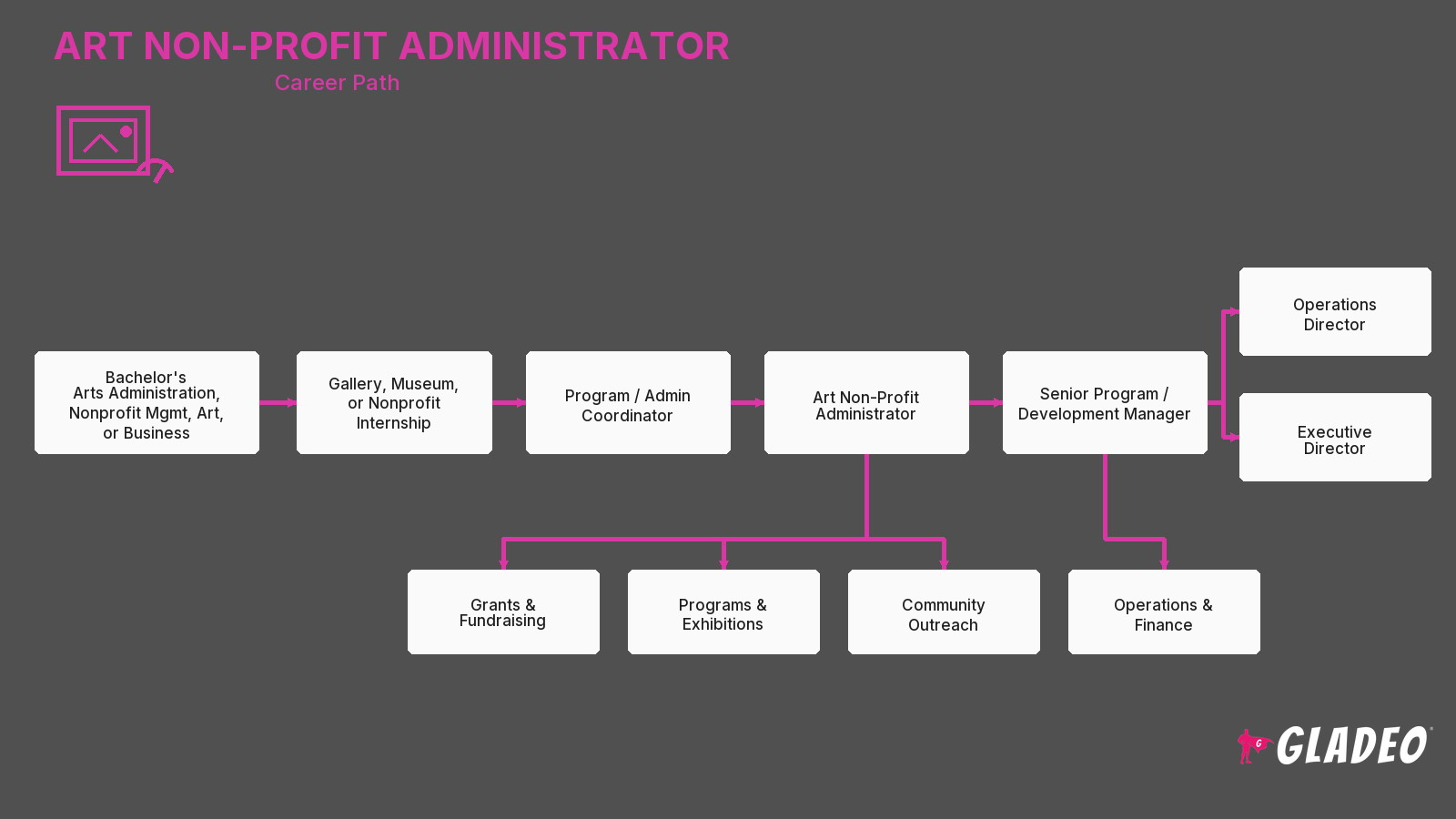
- Complete all of your academic requirements, doing as well as you can scholastically
- Earning a place on the Dean’s List demonstrates your commitment to learning. Employers might not all look at your GPA, but if it is strong you should reference that on your resume, along with any awards!
- List details of all of your prior work and extracurricular activities on your resume
- Include hard stats on any applicable financial figures (value of assets, dollars raised, profit increases under your watch, any analytical or statistical data to prove how you added value)
- Keep connected with past professors and supervisors so that you can request a reference or letter of recommendation
- Sign up for notification alerts for relevant job postings on Work for Good, Indeed.com and other employment portals.
- If there’s a specific organization you want to work for, go directly to their website and review their careers page. Reach out to them if you want to ask about upcoming openings
- Print out job posts and highlight keywords and phrases. Use those same words and phrases in your resume, if you can do so in an honest and relevant manner
- Be well-prepared for interviews! Review sample interview questions, practice by doing mock interviews (ask your school if their career center offers these), and let your passion and knowledge come through when the time comes
- Volunteer to advocate for arts and arts education with your state's advocacy organization for arts and culture
- Demonstrate your daily commitment to the arts by staying informed on trends and new developments
- Explore opportunities with other organizations or institutions if your current employer doesn’t have opportunities for career growth
- Build strong ties to local artists, venues, communities, and donors. Establish your reputation as a nonprofit arts leader
- Serve on high-visibility committees where you can expand your reach and influence
- Offer to mentor others, if your employer features internship opportunities
- Stay heavily involved in pertinent professional organizations (see our list of websites below), both locally and nationally
- Be an advocate for young artists developing their careers. They’ll remember your kind assistance when they’re climbing up their own ladders!
- Keep patrons and donors excited by offering bold new event ideas that stoke interest, invite discussion, and encourage maximum participation
Websites:
- Americans for the Arts (americansforthearts.org)
- National Council of Nonprofits (councilofnonprofits.org)
- Grant Professionals Association (grantprofessionals.org)
- Association of Arts Administration Educators
(artsadministration.org) - National Endowment for the Arts (arts.gov)
- Arts Management Network (artsmanagement.net)
- VolunteerMatch (volunteermatch.org)
- Idealist (idealist.org)
- Foundation Center by Candid (candid.org)
- Nonprofit Hub (nonprofithub.org)
- Museum Association websites (vary by region)
- Arts Journal (artsjournal.com)
- Chronicle of Philanthropy (philanthropy.com)
- Local arts councils' websites
Books:
- Nonprofit Management 101 by Darian Rodriguez Heyman
- The Art of Fundraising by Steven A. Columbus
- Cultural Policy and Arts Management by Toby Miller
- Managing Nonprofit Organizations by Mary Tschirhart and Wolfgang Bielefeld
- Fundraising for Social Change by Kim Klein
If you're passionate about arts and community but want to explore other paths, many related careers share similar skills and interests.
- Arts Educator or Teacher
- Community Organizer
- Event Planner
- Museum Curator
- Public Relations Specialist
- Grant Writer
- Cultural Affairs Specialist
- Social Services Administrator
- Marketing Coordinator
- Volunteer Coordinator
Newsfeed

Featured Jobs
Online Courses and Tools
Annual Salary Expectations
New workers start around $46K. Median pay is $64K per year. Highly experienced workers can earn around $87K.
Annual Salary Expectations
New workers start around $58K. Median pay is $87K per year. Highly experienced workers can earn around $135K.
Annual Salary Expectations
New workers start around $46K. Median pay is $64K per year. Highly experienced workers can earn around $94K.
Annual Salary Expectations
New workers start around $43K. Median pay is $63K per year. Highly experienced workers can earn around $89K.
Annual Salary Expectations
New workers start around $47K. Median pay is $62K per year. Highly experienced workers can earn around $82K.