






Spotlights
Field Archaeologist, Archaeological Technician, Shovel Bum, Cultural Resource Management (CRM) Archaeologist, Excavation Supervisor, Field Director, Project Archaeologist, Principal Investigator, Site Director, Archaeological Surveyor, Staff Archaeologist, Crew Chief
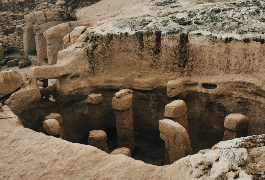
Long before a highway gets built, a pipeline gets laid, or a shopping center breaks ground, someone has to answer a critical question: what is buried in this soil, and does it matter? Archaeological Field Technicians and Directors are the ones who find out, carefully uncovering pottery shards, tools, foundations, and traces of everyday life that connect us to the people who lived on this land generations, or centuries, before us.
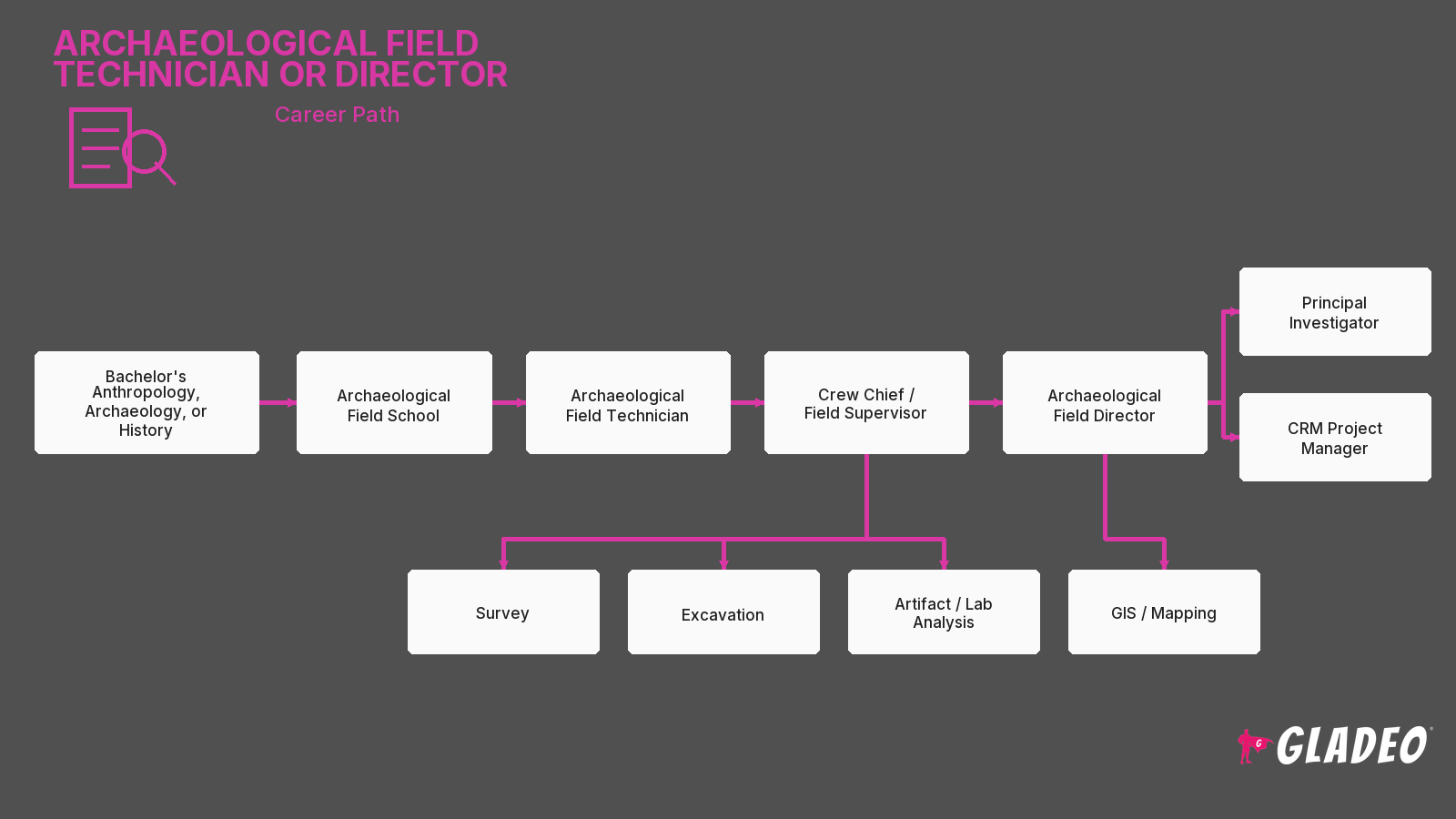
Archaeological Field Technicians spend their early careers on excavation sites, digging test units, screening soil for artifacts, mapping features, and carefully documenting everything they find, often working ahead of construction projects in a field known as cultural resource management, as well as on academic research digs. As they gain experience, many move up to crew chief, field director, or eventually project director roles, taking on responsibility for research design, securing permits, managing a team of technicians, and writing up findings for publication or regulatory review. Throughout a project, they work closely with construction companies, government agencies, Indigenous nations and descendant communities, geologists, and lab specialists, balancing scientific rigor with real deadlines and real stakeholders.
Using tools ranging from trowels, brushes, and screens to GPS mapping units, ground-penetrating radar, and artifact databases, archaeologists piece together stories from fragments most people would walk right past. Their work matters because it protects irreplaceable history from being lost forever, and because every artifact carefully recovered and documented adds another piece to our understanding of human history.
- Holding an object that no one has touched in hundreds or thousands of years
- Piecing together the daily lives of people from the past through physical evidence
- Working outdoors on a genuine mystery that unfolds a little more every day
- Protecting cultural heritage and giving descendant communities a voice in how their history is handled
Working Schedule
Field seasons are intense and physical, often meaning full days outdoors in all kinds of weather, sometimes six days a week while a project is active, followed by stretches of lab work, report writing, or downtime between contracts. Entry-level Field Technicians frequently travel to wherever the work is, taking short-term contracts across different regions or even countries, while Field Directors and Project Directors tend to have steadier, though still demanding, schedules balancing field time with office-based planning, permitting, and report writing. Most archaeologists in the cultural resource management field work for private CRM firms, while others are employed by government agencies, universities, or museums.
Typical Duties
- Excavating test units and larger excavation blocks by hand
- Screening excavated soil to recover artifacts
- Recording and mapping the location of features and artifacts
- Photographing and documenting excavation units and site conditions
- Cataloging, labeling, and preliminarily processing recovered artifacts
- Conducting pedestrian surveys to identify surface artifacts and sites
- Operating GPS units and basic mapping or ground-penetrating radar equipment
- Writing daily field notes and excavation unit summaries
- Following state and federal historic preservation regulations during fieldwork
- Coordinating with construction crews to keep projects on schedule
- Preparing artifacts and records for lab analysis and curation
- Assisting with public outreach and site tours when appropriate
Additional Responsibilities (Field Director / Project Director level)
- Designing research questions and excavation strategies for a project
- Securing archaeological permits and regulatory approvals
- Managing crew schedules, safety, and day-to-day site logistics
- Consulting with Indigenous nations and descendant communities on cultural sensitivity
- Writing technical reports summarizing findings for clients and regulatory agencies
- Managing project budgets and client relationships
- Publishing research findings in academic journals or presenting at conferences
- Training and mentoring field technicians and crew chiefs
A Field Technician's day typically starts early, often before the heat of the day sets in, with a briefing from the crew chief about which units to open or continue. Much of the morning is spent digging carefully with a trowel, troweling back thin layers of soil, watching for changes in color or texture that signal a feature or artifact, and screening every bucket of dirt through mesh screens.
Midday might bring a short break before returning to the same painstaking process, documenting anything found with photos, measurements, and detailed notes. If something significant turns up, like a hearth feature or a cluster of artifacts, the pace shifts to careful, methodical recording before anything is removed. Field Directors spend part of the day checking in with each unit, solving logistical problems, and making real-time decisions about where the excavation should expand or wrap up.
Afternoons often wind down with backfilling completed units, cleaning and bagging the day's artifacts, and updating field records before heading back to base housing or a hotel. Evenings might involve washing and cataloging finds in a makeshift lab, and for Field Directors, reviewing the day's paperwork, planning tomorrow's strategy, or fielding a call from the client about the project timeline.
Soft Skills
- Patience and meticulous attention to detail
- Physical stamina for demanding outdoor labor
- Teamwork and ability to work closely with a crew
- Clear written and verbal communication
- Problem solving in unpredictable field conditions
- Cultural sensitivity and respect for descendant communities
- Adaptability to weather, travel, and changing project scopes
- Time management to meet tight construction-driven deadlines
- Leadership and delegation for crew chief and director roles
- Comfort with a nontraditional, travel-heavy lifestyle
- Curiosity and genuine interest in history and material culture
- Composure when handling sensitive or significant discoveries
Technical Skills
- Excavation techniques, including proper use of trowels, shovels, and screens
- Stratigraphy and soil analysis
- Artifact identification and basic conservation handling
- GPS and mapping technology, including GIS software
- Ground-penetrating radar and other remote sensing tools
- Photography and archaeological illustration
- Technical report writing
- Knowledge of state and federal historic preservation law, including Section 106
- Database and artifact cataloging systems
- Research design and excavation planning for director-level roles
- CRM Field Technician: Works on compliance-driven digs ahead of construction projects
- Academic Field Archaeologist: Works on research-focused excavations tied to universities
- Field Director: Oversees day-to-day operations and staff on an active excavation
- Principal Investigator / Project Director: Leads research design, permitting, and reporting for a project
- Underwater or Maritime Archaeologist: Specializes in shipwrecks and submerged sites
- Historical Archaeologist: Focuses on sites from the recent past, often using written records alongside digging
- Bioarchaeologist: Specializes in analyzing human remains recovered from sites
- Geoarchaeologist: Focuses on soil, sediment, and landscape analysis to understand a site's formation
- Cultural resource management (CRM) consulting firms
- State and federal historic preservation offices
- Universities and academic research institutions
- Museums and cultural heritage organizations
- National Park Service and other government land management agencies
- Tribal historic preservation offices
- Nonprofit archaeological and heritage organizations
- Construction, engineering, and environmental consulting firms
- International archaeological research projects
- State departments of transportation
- Military installations with cultural resource programs
- Private archaeological survey and excavation companies
Fieldwork is physically demanding, often meaning long days of digging, kneeling, and carrying equipment in extreme heat, cold, rain, or humidity. Entry-level technicians frequently work short-term contracts that require constant travel, sometimes living out of hotels or shared field housing for weeks or months at a stretch, which can make it difficult to maintain stability or a consistent home life.
Pay at the entry level is often modest relative to the physical demands and travel required, and job security can be inconsistent since CRM work depends on construction schedules and available contracts. Many technicians piece together a full year of work from multiple short seasons with different companies before finding steadier employment.
The work also carries real responsibility. Archaeologists are often the last line of protection for cultural heritage before it is destroyed by development, and the pressure to work accurately and thoroughly, especially when consulting with descendant communities about sensitive finds, is significant. Advancing to director-level roles brings more stability and pay but adds the weight of permitting, budgets, and client relationships on top of the fieldwork itself.
- Growing use of drones and remote sensing to survey sites before excavation
- Increased use of ground-penetrating radar and other non-invasive survey technology
- Greater emphasis on genuine consultation and partnership with Indigenous nations
- Rising demand for CRM archaeologists as infrastructure and renewable energy projects expand
- Expanding use of digital field recording and GIS mapping instead of paper forms
- Growth of public archaeology and community engagement in excavation projects
- Increased focus on repatriation of artifacts and human remains to descendant communities
- Use of 3D scanning and photogrammetry to document sites and artifacts digitally
- Greater attention to climate change threats to coastal and low-lying archaeological sites
- Expansion of certification and safety standards across CRM firms
Many Archaeological Field Technicians and Directors grew up fascinated by history, dinosaurs, ancient civilizations, or mysteries, spending hours reading about lost cities or watching documentaries about famous digs. They often enjoyed digging in the dirt, collecting rocks or fossils, or building elaborate backyard excavation projects just to see what they could find.
Others found their spark through travel, museum visits, or a memorable history or anthropology class that made the past feel real rather than distant. A love of puzzles, patience for detailed work, and comfort with physical, outdoor activity often marked this path well before they knew archaeology was a real career.
Entry-level Archaeological Field Technicians typically need a bachelor's degree in anthropology, archaeology, or a closely related field, along with completion of an archaeological field school, a hands-on training program that teaches excavation methods firsthand. Advancing to field director or project director roles generally requires a master's degree, and Principal Investigator positions in many states legally require a graduate degree along with substantial documented field experience.
Students can take courses in relevant subjects such as:
- Introduction to Archaeology
- Field Methods in Archaeology
- Human Osteology
- Geoarchaeology and Stratigraphy
- Material Culture and Artifact Analysis
- Cultural Resource Management and Historic Preservation Law
- GIS and Remote Sensing
- Museum Studies and Curation
- Anthropological Theory
- Regional Prehistory or History relevant to your area of interest
Completing at least one archaeological field school is essential and often required before any paid technician position will hire you. Many students attend multiple field schools or volunteer on academic digs to build varied experience across different site types and regions. Graduate programs typically require independent research experience, and continued fieldwork throughout a career keeps skills sharp and builds the reputation needed to move into leadership roles.
- Take anthropology, history, earth science, and geography courses when available
- Read about archaeology and follow ongoing excavation projects and discoveries
- Visit museums and historical sites to see artifacts and exhibits firsthand
- Volunteer at a local historical society, museum, or heritage organization
- Research and apply to accredited archaeological field schools
- Join an anthropology or archaeology club if your school offers one
- Build physical stamina through sports or outdoor activities, since fieldwork is physically demanding
- Practice careful, detailed documentation through journaling or lab notebooks in science classes
- Learn basic GIS or mapping software through free online tutorials
- Seek out summer programs or internships focused on archaeology or museum studies
- Talk to working archaeologists about field school experiences and career paths
- Be open to travel, since field school and early jobs often take you far from home
- Anthropology or archaeology programs with strong field school offerings
- Field schools with experienced instructors and safe, well-run excavation sites
- Programs that teach both excavation methods and lab analysis techniques
- Coursework covering cultural resource management law and regulations
- Opportunities to gain GIS, mapping, and remote sensing experience
- Strong connections to CRM firms, museums, or government agencies for internships
- Faculty with active research projects students can join
- Programs that emphasize ethical practice and community consultation
- Support for pursuing graduate school if you plan to become a Field Director
- Reasonable field school costs or available scholarships and grants
- Opportunities to specialize, such as bioarchaeology or maritime archaeology
- Career services that connect graduates with entry-level CRM positions
- Complete at least one accredited archaeological field school before applying to jobs
- Apply for entry-level titles like Field Technician, Archaeological Technician, or Shovel Bum
- Search specialized job boards like Shovelbums.org in addition to general job sites
- Be willing to travel and take short-term contracts to build experience across regions
- Network with field school instructors and classmates, since referrals are common in this field
- Build a resume highlighting excavation hours, site types, and any specialized equipment experience
- Join professional organizations to access job postings and networking events
- Say yes to a wide variety of site types and project scopes early on to build a broad skill set
- Bring proper field gear, since being prepared shows professionalism to a hiring crew chief
- Ask experienced technicians about firms known for good training and safety practices
- Keep detailed personal records of your field experience for future job applications
- Stay physically prepared for demanding outdoor labor before a field season begins
- Gain field hours across a range of site types, regions, and excavation methods
- Pursue a master's degree to qualify for field director or Principal Investigator roles
- Take on crew chief responsibilities to build leadership and supervisory experience
- Develop a specialty, such as historic sites, bioarchaeology, or geoarchaeology
- Learn permitting, budgeting, and client management skills for director-level work
- Publish or present research findings to build professional recognition
- Build strong relationships with regulatory agencies and Indigenous consultation partners
- Move into Field Director, Project Director, or Principal Investigator roles over time
Websites:
- Society for American Archaeology (SAA) - saa.org
- Register of Professional Archaeologists (RPA) - rpanet.org
- Shovelbums - shovelbums.org
- American Cultural Resources Association (ACRA) - acra-crm.org
- Archaeological Institute of America (AIA) - archaeological.org
- National Park Service Archaeology Program - nps.gov/archeology
- Society for Historical Archaeology (SHA) - sha.org
- Advisory Council on Historic Preservation - achp.gov
- World Archaeological Congress - worldarchaeologicalcongress.org
- Native American Rights Fund - narf.org
- Council for British Archaeology - archaeologyuk.org
- Archaeology Magazine - archaeology.org
Books:
- Archaeology: Down to Earth by David Hurst Thomas and Robert L. Kelly
- In the Beginning: An Introduction to Archaeology by Brian M. Fagan
- A Field Guide to American Archaeology by Kent V. Flannery
- The Archaeology of Time by Gavin Lucas
- Digging for the Truth by Jeremy Wade (field methods reference)
If you find that this career isn't the right fit, your fieldwork, research, and documentation skills transfer well to many related careers.
- Museum Curator or Collections Manager
- Historic Preservation Specialist
- Environmental Consultant
- GIS Analyst
- Anthropologist
- Park Ranger or Interpreter
- Cultural Resource Compliance Officer
- Geologist or Geoarchaeology Technician
- Archivist
- Heritage Tourism Coordinator
Newsfeed

Featured Jobs
Online Courses and Tools
Annual Salary Expectations
New workers start around $83K. Median pay is $105K per year. Highly experienced workers can earn around $110K.
Annual Salary Expectations
New workers start around $61K. Median pay is $88K per year. Highly experienced workers can earn around $89K.