





Spotlights
Fashion Patternmaker, Technical Pattern Designer, Garment Pattern Technician, CAD Patternmaker, Apparel Technical Designer, Sample Patternmaker
Before a clothing design becomes a finished garment in stores, someone has to figure out exactly how the fabric pieces will be cut, shaped, and assembled. That’s the job of an Apparel Patternmaker. These professionals transform fashion sketches and ideas into precise templates—called patterns—that manufacturers use to create clothing.
Apparel Patternmakers are the “architects” behind garments. They take a designer’s vision and make it functional, wearable, and production-ready. Using measurements, fabric knowledge, math, and specialized software, they create patterns that determine how every piece of a garment fits together.
A Patternmaker might work on anything from jeans and formalwear to athletic clothing, costumes, or luxury fashion collections. They test how garments fit on real bodies, adjust sizing, and solve design problems before mass production begins. Even a small mistake in a pattern can affect comfort, appearance, or manufacturing costs, so attention to detail is extremely important.
This career blends creativity with technical skill. It’s ideal for someone who enjoys fashion, design, precision, problem-solving, and hands-on work.
- Seeing clothing you helped create appear in stores, fashion shows, or online collections.
- Combining creativity with technical problem-solving.
- Playing a major role in how garments fit, move, and feel on the body.
- Working closely with designers and fashion teams to bring ideas to life.
- Using both traditional craftsmanship and modern technology in daily work.
- Having opportunities to specialize in areas like sportswear, luxury fashion, costumes, or sustainable apparel.
Working Schedule
Apparel Patternmakers usually work full-time in design studios, apparel manufacturing facilities, fashion companies, or product development offices. Schedules are generally regular business hours, but deadlines before fashion launches or production runs may require overtime.
Some patternmakers freelance or work contract jobs, especially in entertainment, costume production, or independent fashion design.
Typical Duties
- Create garment patterns based on designer sketches or technical specifications.
- Use measurements and grading techniques to create different clothing sizes.
- Test garment fit using samples or dress forms.
- Modify patterns to improve fit, comfort, or production efficiency.
- Use computer-aided design (CAD) software to develop digital patterns.
- Collaborate with designers, sewing teams, and manufacturers during production.
- Calculate fabric usage and cutting layouts to reduce waste.
Additional Responsibilities
- Attending fit sessions and making alterations based on feedback.
- Researching fabric behavior and garment construction techniques.
- Maintaining digital pattern libraries and technical records.
- Creating prototypes and sample garments.
- Ensuring patterns meet quality standards and manufacturing requirements.
- Training junior assistants or interns in patternmaking techniques.
- Communicating with overseas manufacturers or production facilities.
A typical day often starts with reviewing design sketches, emails, and production schedules. Patternmakers may spend the morning drafting or adjusting digital garment patterns using CAD software.
Later in the day, they may participate in fit sessions where models or mannequins wear sample garments so adjustments can be evaluated. A sleeve may need more flexibility, a waistline may need reshaping, or a fabric may drape differently than expected.
Afternoons are often spent revising patterns, preparing files for manufacturers, and discussing technical details with designers or production teams. During busy fashion seasons, deadlines can move quickly because collections must be completed before launch dates.
As one patternmaker described it: “We could be sketching, making tech packs, specing samples, or fitting garments.” — Kristen Anderson of KRSTN NDRSN
Soft Skills
- Creativity
- Attention to detail
- Patience
- Communication
- Problem-solving
- Adaptability
- Collaboration
- Organization
- Time management
- Visual thinking
Technical Skills
- Pattern drafting and grading
- Garment construction knowledge
- Fashion illustration interpretation
- Computer-aided design (CAD) software
- Measurement and sizing systems
- Fabric and textile knowledge
- Sewing techniques
- Technical specification sheets (tech packs)
- Quality control
- Mathematics and geometry
- Fashion Industry Patternmakers: Create patterns for everyday apparel, retail collections, or designer brands.
- Technical Sportswear Patternmakers: Specialize in activewear, athletic gear, and performance clothing.
- Costume Patternmakers: Work in theater, television, film, or entertainment, creating custom garments and costumes.
- Industrial Apparel Patternmakers: Develop work uniforms, safety clothing, or specialized industrial garments.
- Freelance or Independent Patternmakers: Work with multiple designers or fashion startups on a project basis.
- Fashion design companies
- Clothing manufacturers
- Luxury fashion houses
- Athletic apparel brands
- Costume and entertainment studios
- Textile and apparel production companies
- Independent fashion studios
- Uniform and industrial clothing companies
- E-commerce fashion brands
Patternmaking requires patience, precision, and the ability to handle repeated adjustments. A garment may go through multiple revisions before it fits properly or meets production standards.
Deadlines can become stressful during fashion launches or seasonal collections. Patternmakers may spend long hours sitting at computers, working with detailed measurements, or troubleshooting production issues.
The fashion industry can also be competitive and fast-paced. However, many professionals enjoy the satisfaction of transforming creative ideas into wearable products used by real people.
- 3D digital patternmaking and virtual garment simulation are becoming more common in fashion design.
- Sustainable fashion is increasing demand for waste-reducing cutting methods and eco-friendly production techniques.
- Athleisure and performance apparel continue to grow in popularity.
- Many companies now use advanced CAD systems and automated cutting technology.
- Inclusive sizing and adaptive clothing design are expanding opportunities for patternmakers with strong technical skills.
- Small independent fashion brands and online clothing businesses are creating more freelance opportunities.
People who become Apparel Patternmakers often enjoyed creative and hands-on activities when they were younger. Many loved drawing clothing designs, sewing, crafting, or customizing their own outfits. Some spent hours sketching fashion ideas in notebooks, making clothes for dolls, or learning how to sew from family members. Others enjoyed puzzles, building projects, or activities that required patience and attention to detail because patternmaking involves figuring out how separate pieces fit together perfectly.
Many were also fascinated by fashion trends, costumes, fabrics, and colors. They may have enjoyed watching fashion shows, participating in theater costume productions, or experimenting with thrifted clothing to create new looks. Some liked working quietly on detailed projects, while others enjoyed collaborating with friends on creative ideas. Looking back, they were often the kind of people who combined imagination with precision—turning ideas into something real, wearable, and functional!
- Apparel Patternmakers usually need a high school diploma or equivalent, although many employers prefer candidates with formal training in fashion design, apparel technology, or patternmaking.
- A certificate, associate degree, or bachelor’s degree in Fashion Design, Apparel Design, Technical Design, or Fashion Merchandising can improve job opportunities.
- Students often complete coursework in garment construction, flat pattern drafting, draping, textiles, fashion illustration, and apparel production.
- Training in computer-aided design (CAD) software used in the fashion industry is increasingly important because many companies now create digital patterns.
- Knowledge of sewing techniques, fabric behavior, grading, and clothing fit is highly valued by employers.
- Hands-on experience creating garments and patterns through school projects, internships, or apprenticeships is often expected.
- Internships with fashion companies, costume departments, apparel manufacturers, or product development teams can provide valuable industry experience.
- Some patternmakers begin as sewing assistants, sample makers, or alterations specialists before moving into patternmaking roles.
- Advanced training in 3D digital patternmaking and virtual garment simulation can help workers stay competitive in the modern fashion industry.
- Specialized courses in athletic wear, luxury apparel, costume design, or sustainable fashion may open additional career opportunities.
- Strong math and measurement skills are important because patternmakers regularly work with proportions, sizing systems, and garment calculations.
- Workers typically receive additional on-the-job training in company production standards, fit requirements, and manufacturing processes.
- Learn sewing and garment construction basics.
- Practice sketching clothing designs and technical drawings.
- Experiment with altering or creating clothing patterns.
- Build a fashion portfolio with sketches, sewing projects, or digital designs.
- Take computer design or CAD classes.
- Volunteer for theater costume departments or fashion events.
- Follow fashion industry trends and designers.
- Complete internships with apparel companies, costume studios, or fashion brands.
- Participate in fashion competitions or student runway shows.
- Strong fashion and apparel design curriculum that includes patternmaking, garment construction, and technical design fundamentals
- Opportunities to take specialized electives in draping, flat pattern drafting, fashion illustration, textile science, and apparel engineering
- Hands-on studio training with sewing machines, dress forms, cutting tables, and professional garment construction tools
Training in computer-aided design (CAD) software used in the fashion industry for digital patternmaking and technical design work - Access to 3D garment simulation and virtual prototyping tools to practice modern, industry-standard fashion production methods
- Internship or apprenticeship opportunities with fashion brands, apparel manufacturers, costume studios, or product development departments
- Portfolio development support to help students build professional-quality pattern samples, technical drawings, and finished garment projects
- Strong industry connections with clothing companies, fashion houses, or local apparel businesses for real-world experience and job placement
- Courses that integrate math, measurement systems, and garment engineering concepts to strengthen technical accuracy in pattern development
- Opportunities to study different garment categories such as activewear, luxury fashion, uniforms, or costume design for specialization
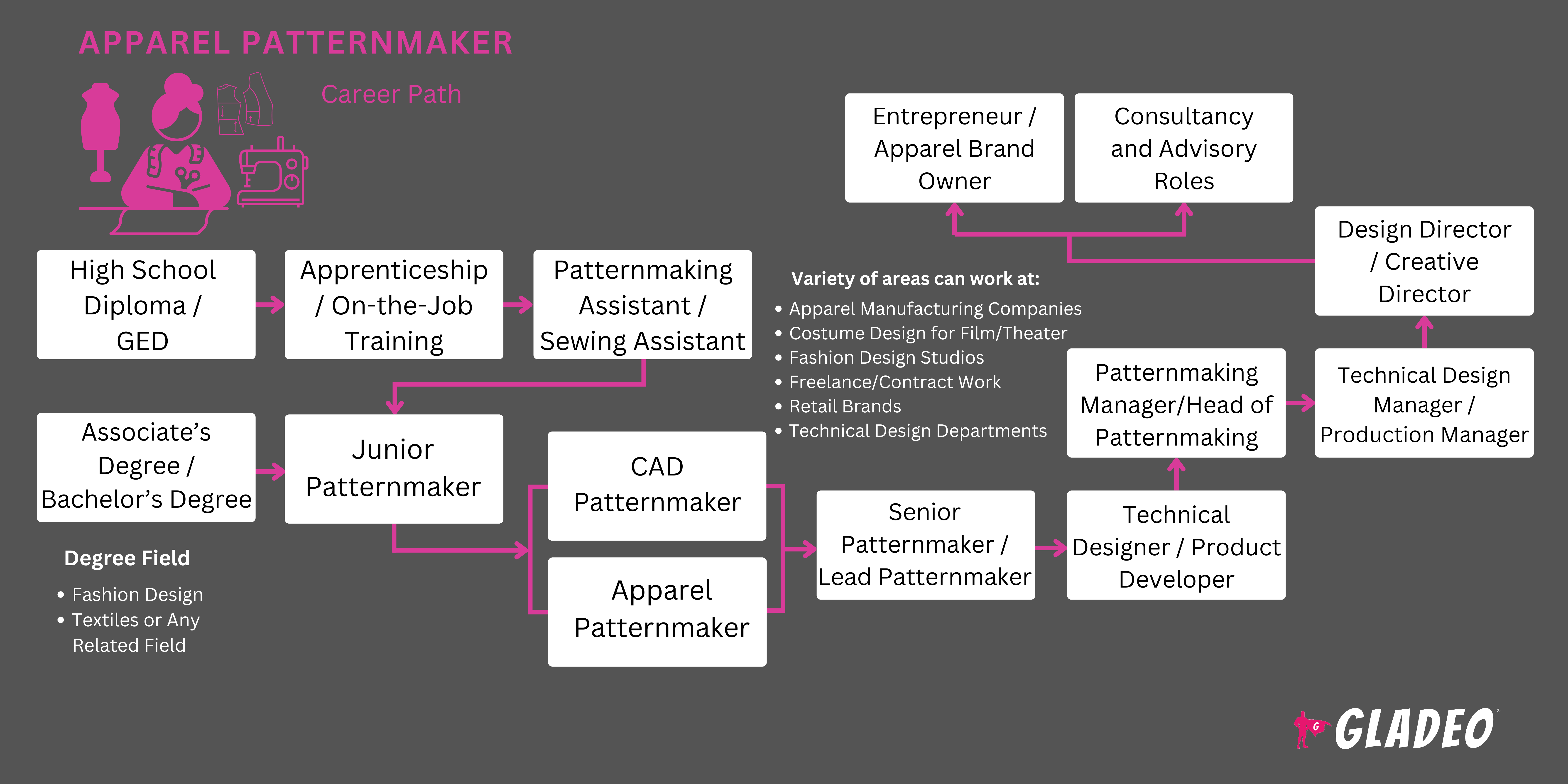
- Search job boards like LinkedIn, Indeed, FashionJobs, and company career pages of apparel brands, garment manufacturers, and fashion studios
- Apply for entry-level roles such as Patternmaking Assistant, Sample Maker, Technical Design Assistant, Sewing Technician, or Production Assistant
- Build a strong portfolio that shows garment patterns, technical drawings, sewing projects, and finished clothing samples
- Network through fashion events, school showcases, internships, and industry competitions to meet designers and production teams
- Ask professors, mentors, or internship supervisors for references and recommendations that highlight your technical and creative skills
- Volunteer or assist in theater costume departments, fashion shows, or local tailoring shops to gain hands-on experience
- Tailor your résumé and portfolio to emphasize technical skills like CAD software, garment construction, and attention to fit and detail
- Practice mock interviews with a mentor or career advisor to confidently explain your design process, patternmaking skills, and project experience
- Keep your portfolio organized and professional — clearly label each project with sketches, technical notes, and finished garment photos
- Be open to starting in assistant or production roles in order to gain real industry experience and grow into full patternmaking positions
- Continue practicing sewing, drafting, and digital patternmaking regularly to improve speed and accuracy while building confidence
- Stay updated on fashion trends, fabric innovations, and new CAD tools to remain competitive in the evolving apparel industry
- Specialize in a high-demand area such as luxury fashion, athletic wear, costume design, or sustainable/zero-waste patternmaking
- Master advanced CAD and 3D garment simulation software to improve efficiency and qualify for senior technical design roles
- Build a strong reputation for accuracy, consistency, and problem-solving in garment fit and construction
- Take on more complex projects such as full clothing collections, technical development for major brands, or high-end couture pieces
- Lead fit sessions and collaborate directly with designers, production managers, and manufacturers to refine final garment outcomes
- Get recognized by building a professional portfolio that showcases advanced patterns, grading systems, and completed production work
- Seek mentorship from senior patternmakers or technical designers to refine industry-level skills and decision-making
- Contribute to product development meetings and help improve production processes, materials, and garment quality standards
- Attend fashion industry conferences, trade shows, and workshops to stay updated on trends, technology, and manufacturing innovations
- Mentor junior patternmakers or assistants to build leadership experience and demonstrate readiness for senior roles
- Develop strong communication skills to effectively translate design ideas into technical, production-ready instructions
- Stay adaptable and continuously learn new tools, fabrics, and production methods to remain competitive in the evolving fashion industry
Websites:
- Fashion Institute of Technology (FIT)
- The Business of Fashion
- FashionUnited
- PatternReview.com
- Skillshare Fashion Design Courses
- Council of Fashion Designers of America (CFDA)
- Sewing.org
- Maker’s Row
- Textile World
- Lectra
- TUKAcad
- Sustainable Apparel Coalition
Books:
- Patternmaking for Fashion Design by Helen Joseph-Armstrong
- Metric Pattern Cutting for Women’s Wear by Winifred Aldrich
- The Fashion Designer Survival Guide by Mary Gehlhar
- Draping for Apparel Design by Helen Joseph-Armstrong
Newsfeed

Featured Jobs
Online Courses and Tools