





Spotlights
Vertical Farming Specialist, Controlled Environment Agriculture Technician, Urban Agriculture Expert, Hydroponics Technician, Agritech Specialist, Indoor Farming Manager, Sustainable Agriculture Consultant, Agronomy Specialist, Smart Farm Technician, Precision Agriculture Analyst, Agroecology Researcher, Horticulture Technologist
Imagine walking through a lush indoor farm where rows of vibrant greens and colorful vegetables grow in a climate perfectly controlled without soil or pesticides. The fresh produce you enjoy in your meals may have been nurtured by an Aeroculture Specialist, who helps transform farming into a high-tech, sustainable practice that can feed cities while conserving resources.
Aeroculture Specialists design, manage, and optimize innovative farming systems that grow plants using advanced techniques like aeroponics, hydroponics, and vertical farming. They work closely with botanists, engineers, environmental scientists, and technology experts to monitor plant health, adjust environmental controls, and ensure efficient production. Their daily work involves analyzing data on nutrient delivery, lighting, humidity, and air circulation to maximize crop yields and quality.
Using cutting-edge tools such as climate sensors, automated irrigation systems, and data analytics software, Aeroculture Specialists create environments where plants thrive without traditional soil. Their expertise helps reduce water usage, minimize land needs, and create fresh food closer to urban centers. This role is crucial for advancing sustainable agriculture and addressing global food security challenges.
- Seeing plants flourish in a controlled environment you helped create and knowing it contributes to sustainable food production.
- Being part of a high-tech field that combines biology, technology, and environmental science to innovate how we grow food.
- Collaborating with diverse experts to solve complex challenges that impact communities and ecosystems.
- Contributing to healthier food options accessible in cities, reducing transportation impacts and food waste.
Working Schedule
Aeroculture Specialists often work full-time in controlled environments like indoor farms or research facilities. Their schedules can include early mornings or late evenings to monitor systems during critical growth phases or maintenance needs. Deadlines may revolve around planting and harvesting cycles, requiring flexibility and attention to detail. Many roles are in research or commercial facilities, with some opportunities for remote monitoring and data analysis. While some specialists work as employees, others may consult or freelance for multiple projects.
Typical Duties
- Design and set up aeroponic and hydroponic growing systems tailored to specific crops.
- Monitor plant health through regular inspections and sensor data analysis.
- Adjust environmental factors such as light intensity, temperature, humidity, and nutrient delivery.
- Collaborate with engineers to troubleshoot and maintain automated climate control and irrigation systems.
- Collect and analyze data to optimize plant growth and resource efficiency.
- Develop protocols to prevent pests and diseases without using harmful chemicals.
- Train staff on system operations and safety standards.
- Research new technologies and methods to improve aeroculture practices.
- Document growth cycles and production outcomes for reporting and improvement.
- Coordinate with supply chain teams to align production schedules with market demand.
- Evaluate energy consumption and implement sustainable practices to reduce environmental impact.
- Participate in community outreach to educate about aeroculture benefits.
Additional Responsibilities
- Conduct experiments to test new plant varieties or growing techniques.
- Maintain detailed records for regulatory compliance and quality assurance.
- Assist in budgeting and resource management for aeroculture projects.
- Provide technical support to farmers transitioning to controlled environment agriculture.
- Contribute to academic papers or presentations on aeroculture advancements.
- Develop educational materials and training programs for interns or new hires.
- Support marketing efforts by demonstrating the benefits of aeroculture-produced crops.
- Stay updated on environmental regulations affecting indoor farming operations.
In the morning, an Aeroculture Specialist typically starts by reviewing sensor data and environmental logs from overnight to identify any issues with temperature, humidity, or nutrient delivery. They inspect plant growth areas to check for signs of stress, pests, or disease, making notes for adjustments.
By midday, they focus on fine-tuning system controls, collaborating with engineers to calibrate lighting and irrigation systems. They may meet with botanists or researchers to discuss experimental results or new crop trials, ensuring that all systems support optimal plant development.
Afternoons often involve data analysis and reporting, documenting plant progress and resource use. The specialist may conduct training sessions for new team members or work on proposals for upgrading equipment. Before the day ends, they perform routine maintenance checks and plan for upcoming planting or harvesting schedules.
Soft Skills
- Attention to detail
- Problem-solving mindset
- Strong communication
- Team collaboration
- Adaptability
- Analytical thinking
- Patience
- Creativity in problem solving
- Time management
- Curiosity for learning
- Environmental awareness
- Responsibility
Technical Skills
- Understanding of plant biology and physiology
- Knowledge of aeroponic and hydroponic systems
- Data analysis and interpretation
- Use of environmental sensors and controls
- Familiarity with climate control technologies
- Basic engineering troubleshooting
- Experience with agricultural software
- Ability to manage automated irrigation systems
- Knowledge of pest and disease management
- Proficiency in documenting and reporting
- Aeroponics Specialist: Focuses on growing plants in air or mist environments without soil or water tanks.
- Hydroponics Technician: Manages soilless farming systems where plants grow in nutrient-rich water solutions.
- Vertical Farming Manager: Oversees multi-layer indoor farming operations maximizing space efficiency.
- Urban Agriculture Expert: Develops farming solutions adapted for city environments, often integrating technology and sustainability.
- Sustainable Agriculture Consultant: Advises on eco-friendly farming methods including aeroculture techniques.
- Agritech Researcher: Conducts scientific studies to improve aeroculture technologies and crop performance.
- Climate Control Technician: Specializes in regulating temperature, humidity, and light within indoor farms.
- Crop Production Analyst: Uses data analytics to optimize yield and resource use in controlled environments.
- Indoor farming companies
- Agricultural research institutes
- Biotechnology firms focused on plant sciences
- Sustainable food startups
- University agricultural departments
- Environmental nonprofits
- Urban farming cooperatives
- Government agricultural agencies
- Agritech hardware manufacturers
- Vertical farming consultants
- Food supply chain companies
- Agricultural equipment suppliers
Aeroculture Specialists often work under pressure to maintain precise environmental conditions that affect delicate plant systems. Small errors can impact crop health and yield, so attention to detail and quick problem-solving are essential. Balancing multiple variables like humidity, light, and nutrients requires focus and adaptability.
The work hours are generally full-time and can include early mornings, evenings, or weekends to monitor critical growth phases or system maintenance. Seasonal cycles and production schedules influence workload intensity, and emergencies like equipment failures may demand immediate attention.
Professionals in this field may face challenges such as repetitive tasks, physical demands from moving equipment or plants, and the mental stress of managing complex systems. However, the opportunity to innovate and contribute to sustainable agriculture often outweighs these sacrifices.
- Increasing use of AI and machine learning to optimize growth conditions.
- Development of energy-efficient LED lighting tailored for plant needs.
- Integration of IoT devices for real-time monitoring of environmental variables.
- Expansion of vertical farming in urban areas to reduce food miles.
- Advances in automation reducing labor needs in indoor farms.
- Breeding plant varieties specifically adapted for aeroculture systems.
- Growing consumer demand for locally produced, pesticide-free foods.
- Use of renewable energy sources to power aeroculture facilities.
- Collaboration between agritech companies and environmental organizations.
- Improved data analytics for precision nutrient management.
Many Aeroculture Specialists showed an early interest in gardening, science experiments with plants, or technology projects involving sensors or computers. They enjoyed hands-on activities that combined biology and engineering, like building small greenhouses or experimenting with hydroponics kits.
These future specialists were curious about how plants grow and how technology can solve real-world problems like food shortages or environmental damage. They often excelled in science and math classes and enjoyed learning about sustainability and innovation.
Becoming an Aeroculture Specialist typically involves studying fields like agricultural science, horticulture, environmental science, or biotechnology. Degree programs at colleges and universities offer courses that cover plant biology, controlled environment agriculture, and technology applications in farming. Hands-on experience through internships or research projects is highly valuable.
Students can take courses in relevant subjects such as:
• Plant Biology and Physiology
• Soil Science and Alternative Growing Media
• Controlled Environment Agriculture
• Hydroponics and Aeroponics Systems
• Environmental Monitoring and Sensors
• Agricultural Engineering Basics
• Data Analysis and Statistics
• Sustainable Agriculture Practices
• Pest and Disease Management
• Agricultural Technology and Automation
Practical experience is key to success in this career. Students should seek internships at indoor farms, research labs, or agritech companies. Building a portfolio of projects and gaining familiarity with industry-standard equipment and software will help when applying for jobs. Continuous learning is important as technology and methods evolve rapidly in aeroculture.
- Take advanced science courses such as biology, chemistry, and environmental science.
- Join or start a school garden or STEM club focused on agriculture or technology.
- Learn computer skills including data analysis and basic programming.
- Volunteer or intern at local farms, greenhouses, or agricultural research centers.
- Participate in science fairs with projects related to plant growth or sustainability.
- Explore summer programs or camps focused on agriculture, robotics, or environmental studies.
- Read books and articles about sustainable farming and new agricultural technologies.
- Develop strong math skills, especially in statistics and measurement.
- Seek opportunities to work with sensors or electronics in school projects.
- Attend college fairs and speak with advisors about agricultural or environmental science programs.
- Look for programs offering hands-on labs in controlled environment agriculture.
- Choose schools with partnerships to local indoor farms or agritech companies for internships.
- Verify that courses cover both plant science and technology integration.
- Seek programs that teach data analysis and use of precision agriculture tools.
- Check if faculty have experience in aeroculture or related research.
- Consider programs with strong sustainability and environmental science components.
- Ensure access to modern farming labs with hydroponic or aeroponic systems.
- Look for opportunities to participate in research projects or industry collaborations.
- Find schools offering career services with connections to agritech employers.
- Evaluate program accreditation and graduate employment rates.
- Explore certificate programs focused on controlled environment agriculture if not pursuing a full degree.
- Check for availability of scholarships or financial aid for agricultural studies.
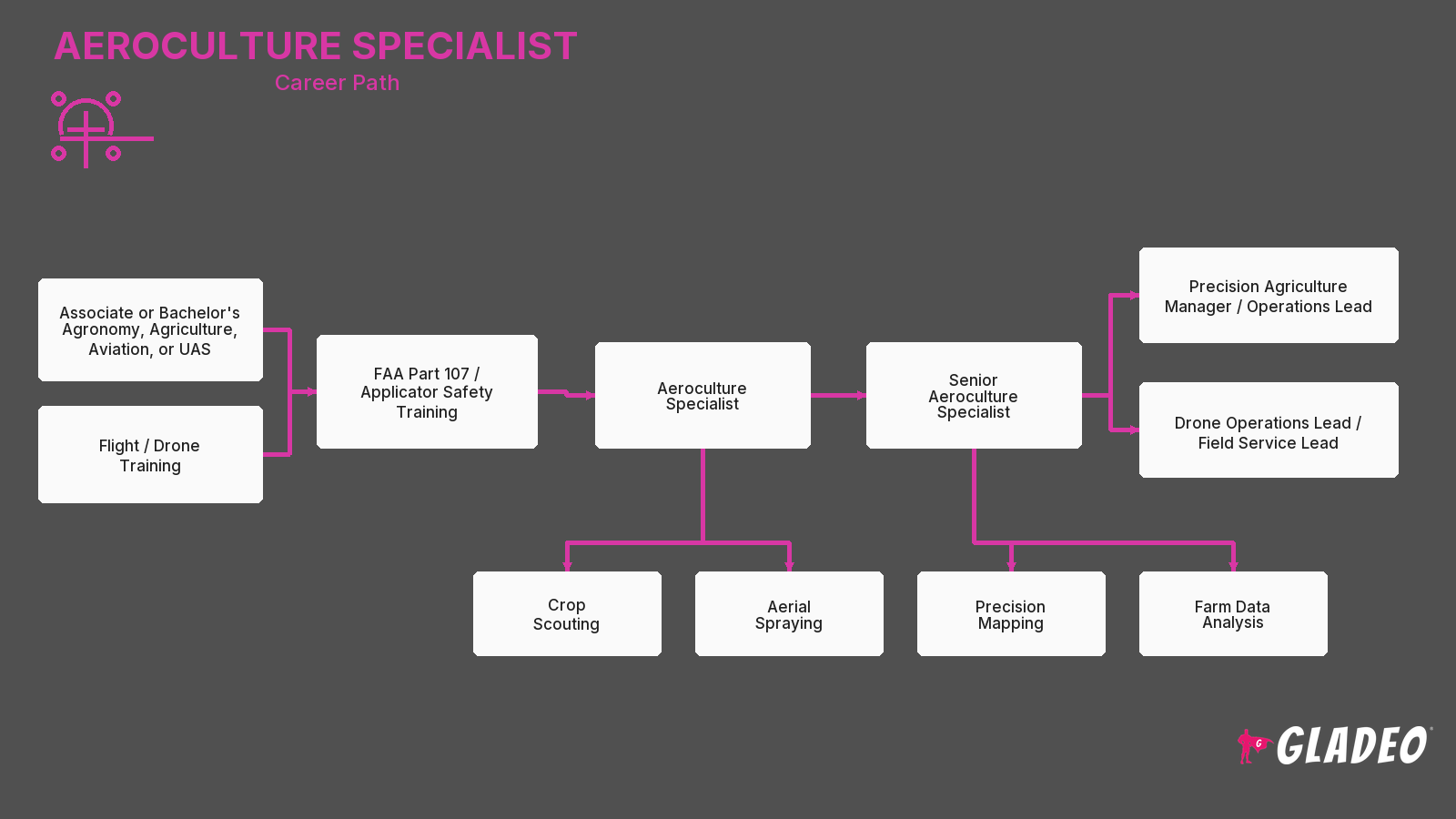
- Apply for internships at indoor farms, agricultural research institutes, or agritech startups.
- Build a portfolio showcasing projects related to plant growth, hydroponics, or data analysis.
- Volunteer at community gardens or urban farms to gain practical experience.
- Attend agricultural trade shows and network with industry professionals.
- Join online forums or social media groups focused on aeroculture and controlled environment agriculture.
- Develop proficiency with environmental monitoring tools and software.
- Seek entry-level positions like greenhouse technician, lab assistant, or farm technician.
- Prepare for interviews by understanding current trends and technologies in aeroculture.
- Request informational interviews with specialists working in the field.
- Stay updated on certifications or training programs to boost your resume.
- Offer to assist in research projects during college or community programs.
- Practice clear communication skills to explain technical information to diverse audiences.
- Gain advanced certifications or a master's degree in controlled environment agriculture or agritech.
- Build expertise in data analytics and automation technologies.
- Expand professional network through industry conferences and workshops.
- Take leadership roles in managing larger or more complex indoor farming operations.
- Collaborate on research projects to contribute to innovations in aeroculture.
- Develop skills in project management and business operations.
- Publish findings or case studies to establish yourself as a thought leader.
- Mentor interns or junior team members to build leadership experience.
Websites:
- Association for Vertical Farming (vertical-farming.net)
- Controlled Environment Agriculture Center at the University of Arizona (ceac.arizona.edu)
- Indoor Ag-Con (indoor.ag)
- Agronomy Society of America (agronomy.org)
- American Society for Horticultural Science (ashs.org)
- International Society for Horticultural Science (ishs.org)
- Agricultural Research Service (ars.usda.gov)
- Urban Agriculture Network (urbanagriculture.network)
- Hydroponic Society of America (hydroponicsociety.org)
- National Sustainable Agriculture Coalition
(sustainableagriculture.net) - Farmers’ Almanac Indoor Gardening section (farmersalmanac.com)
- PrecisionAg Alliance (precisionag.org)
- Food and Agriculture Organization of the UN (fao.org)
- AgFunder News (agfundernews.com)
Books:
- The Vertical Farm: Feeding the World in the 21st Century by Dr. Dickson Despommier
- Hydroponic Food Production by Howard M. Resh
- Plant Factory: An Indoor Vertical Farming System for Efficient Quality Food Production by Toyoki Kozai
- Controlled Environment Horticulture by Toyoki Kozai, Genhua Niu, Michiko Takagaki
- Urban Agriculture: Ideas and Designs for the New Food Revolution by David Tracey
If becoming an Aeroculture Specialist doesn't feel like the perfect fit or if you want to explore related fields, there are many other careers that blend agriculture, technology, and environmental science:
- Agricultural Engineer
- Horticulturist
- Environmental Scientist
- Agronomist
- Biotechnologist
- Sustainability Consultant
- Food Scientist
- Urban Planner
- Greenhouse Manager
- Data Analyst in Agriculture
Newsfeed

Featured Jobs
Online Courses and Tools