






Spotlights
Crop Duster, Agricultural Pilot, Pest Control Pilot, Aerial Crop Sprayer, Agricultural Aviation Technician, Herbicide Applicator Pilot, Fertilizer Applicator Pilot, Aerial Sprayer Operator, Agricultural Aerial Applicator, Ag Pilot, Crop Spraying Pilot, Agricultural Spray Pilot
Imagine soaring over vast fields, carefully releasing just the right amount of fertilizer or pesticide to protect crops and boost yields, helping to feed communities and support farmers’ livelihoods. That’s the power of an Aerial Applicator’s work — combining aviation skill with agricultural science to impact food production on a massive scale.
Aerial Applicators pilot specialized aircraft to spray crops, forests, or pasturelands with herbicides, pesticides, fertilizers, or seeds. They collaborate closely with farmers, agronomists, and environmental specialists to ensure applications are safe, efficient, and effective. Each day involves planning flight paths, checking weather conditions, calibrating spray systems, and flying low over fields to deliver precise treatments that help crops thrive.
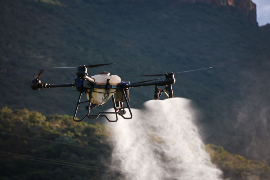
Using advanced agricultural aircraft equipped with spray booms and GPS-guided systems, Aerial Applicators rely on their knowledge of both flying and farming science to protect the environment while maximizing crop health. Their role is crucial in modern agriculture, making large-scale crop care faster and more precise than ground methods could achieve.
- Contributing directly to food security and sustainable farming practices by protecting crops from pests and disease.
- Combining passion for flying with environmental stewardship and agriculture.
- Experiencing the freedom and challenge of piloting specialized aircraft in diverse weather and terrain conditions.
- Building strong relationships with farmers and agronomists, knowing your work supports their success and the wider community.
Working Schedule
Aerial Applicators often work seasonally, with busy periods during planting and growing seasons. Hours can be long and start early in the day to take advantage of optimal weather conditions. Work environments vary from rural airstrips to remote field locations. Many Aerial Applicators are self-employed or work for small companies, requiring flexibility and readiness to respond quickly to farmers’ needs. Weather delays are common, and the job demands physical stamina and focus.
Typical Duties
- Inspect and maintain agricultural aircraft and spray equipment for safety and functionality.
- Plan flight paths and spray schedules based on crop type, field size, and weather conditions.
- Apply pesticides, herbicides, fertilizers, or seeds accurately over designated areas using aerial spraying techniques.
- Coordinate with farmers and agronomists to determine appropriate chemicals and application rates.
- Monitor weather and wind to ensure safe and effective spraying conditions.
- Calibrate spray systems to control droplet size and distribution.
- Maintain detailed records of chemicals used and areas treated for regulatory compliance.
- Comply with environmental and safety regulations during all flight and application operations.
- Perform pre-flight checks and ensure aircraft readiness.
- Educate clients on best practices for crop protection and environmental safety.
- Respond to emergency situations such as chemical spills or equipment malfunctions.
- Continuously update knowledge on agricultural chemicals and aviation regulations.
Additional Responsibilities
- Attend training and certification programs to stay current with industry standards.
- Work with environmental agencies to minimize impact on surrounding ecosystems.
- Manage business aspects if self-employed, including scheduling, billing, and client relations.
- Assist in emergency pest control efforts during outbreaks or infestations.
- Maintain communication with local authorities regarding airspace and flight permissions.
- Contribute to research or pilot projects for new agricultural spraying technologies.
- Participate in community outreach to educate about safe pesticide use.
- Ensure proper disposal of chemical containers and waste materials according to regulations.
Morning starts early with reviewing weather forecasts and consulting with farmers on field conditions and treatment priorities. The Aerial Applicator performs thorough inspections of the aircraft and spray equipment to ensure everything is in top condition for the day’s work.
Midday involves flying low over fields to deliver precise applications, carefully navigating terrain and adjusting spray patterns based on wind and crop type. Between flights, the applicator recalibrates equipment, refuels, and records data on sprays applied to each field.
Afternoons may include meetings with clients to discuss results, planning for upcoming jobs, and attending training sessions. When not flying, time is spent maintaining aircraft or updating compliance documentation to meet safety and environmental standards.
Soft Skills
- Attention to detail
- Strong communication
- Problem-solving
- Time management
- Adaptability
- Physical stamina
- Safety consciousness
- Decision-making under pressure
- Team collaboration
- Customer service orientation
- Environmental awareness
- Self-discipline
Technical Skills
- Aircraft piloting
- Spray system calibration
- Crop and pest knowledge
- Weather assessment
- GPS navigation
- Mechanical skills for equipment maintenance
- Chemical handling and safety
- Regulatory compliance
- Record keeping and reporting
- Emergency response procedures
- Fixed-Wing Aerial Applicator: Uses airplanes to cover large agricultural fields efficiently.
- Rotorcraft Aerial Applicator: Employs helicopters for more precise or difficult-to-reach areas.
- Seed Applicator: Specializes in aerial seeding operations for reforestation or pasture reseeding.
- Fertilizer Applicator: Focuses on distributing fertilizers to enhance soil and crop health.
- Pesticide Applicator: Applies chemicals to control insects, weeds, or diseases on crops.
- Custom Applicator: Operates independently or for service companies providing aerial applications to various clients.
- Emergency Response Applicator: Provides rapid aerial treatment during pest outbreaks or natural disasters affecting crops.
- Environmental Specialist Applicator: Works closely with ecological regulations to minimize environmental impact during spraying.
- Agricultural aviation companies
- Farm cooperatives
- Government agricultural agencies
- Forestry management organizations
- Environmental consulting firms
- Pest control service providers
- Seed and fertilizer manufacturers
- Agricultural research institutions
- Independent aerial application contractors
- Emergency pest control services
- Agricultural equipment manufacturers
- Pilot training and certification schools
Aerial Applicators face significant pressure to perform safely and accurately, as mistakes can harm crops, the environment, or people. Weather conditions and mechanical issues may cause delays or require quick problem-solving. The role demands constant vigilance to prevent accidents during low-altitude flights.
Work hours can be irregular, often starting before dawn and extending into evenings during peak seasons. Travel to remote fields and rural airstrips is common, requiring willingness to work in varied outdoor settings and sometimes in isolation. Seasonal employment means income can fluctuate throughout the year.
Physical and mental stamina are essential due to the demands of piloting aircraft in challenging conditions and handling chemicals safely. The job may involve long days, exposure to noise, vibration, and chemicals, and requires strict adherence to safety protocols to protect oneself and the environment.
- Increasing use of GPS and drone technology for precision spraying.
- Development of more environmentally friendly and biodegradable chemicals.
- Growing regulations on pesticide use and environmental protection.
- Integration of data analytics for improved crop management and application planning.
- Advancements in aircraft design to improve fuel efficiency and reduce emissions.
- Expansion of aerial seeding for reforestation and land restoration projects.
- Greater emphasis on pilot training and certification due to safety concerns.
- Use of automated spray systems to enhance accuracy and reduce chemical waste.
- Collaboration with agronomists for sustainable agriculture practices.
- Rising demand for aerial application in emerging agricultural markets
Many aerial applicators showed an early love for flying, often fascinated by airplanes, helicopters, or drones as kids. They enjoyed hands-on activities like building model aircraft, flying remote-controlled planes, or exploring nature and farming environments.
A natural curiosity about how things work, combined with an interest in agriculture and technology, often pointed them towards this career. They might have enjoyed outdoor chores on farms, learning about plants and pests, or participating in aviation clubs and agricultural programs during school.
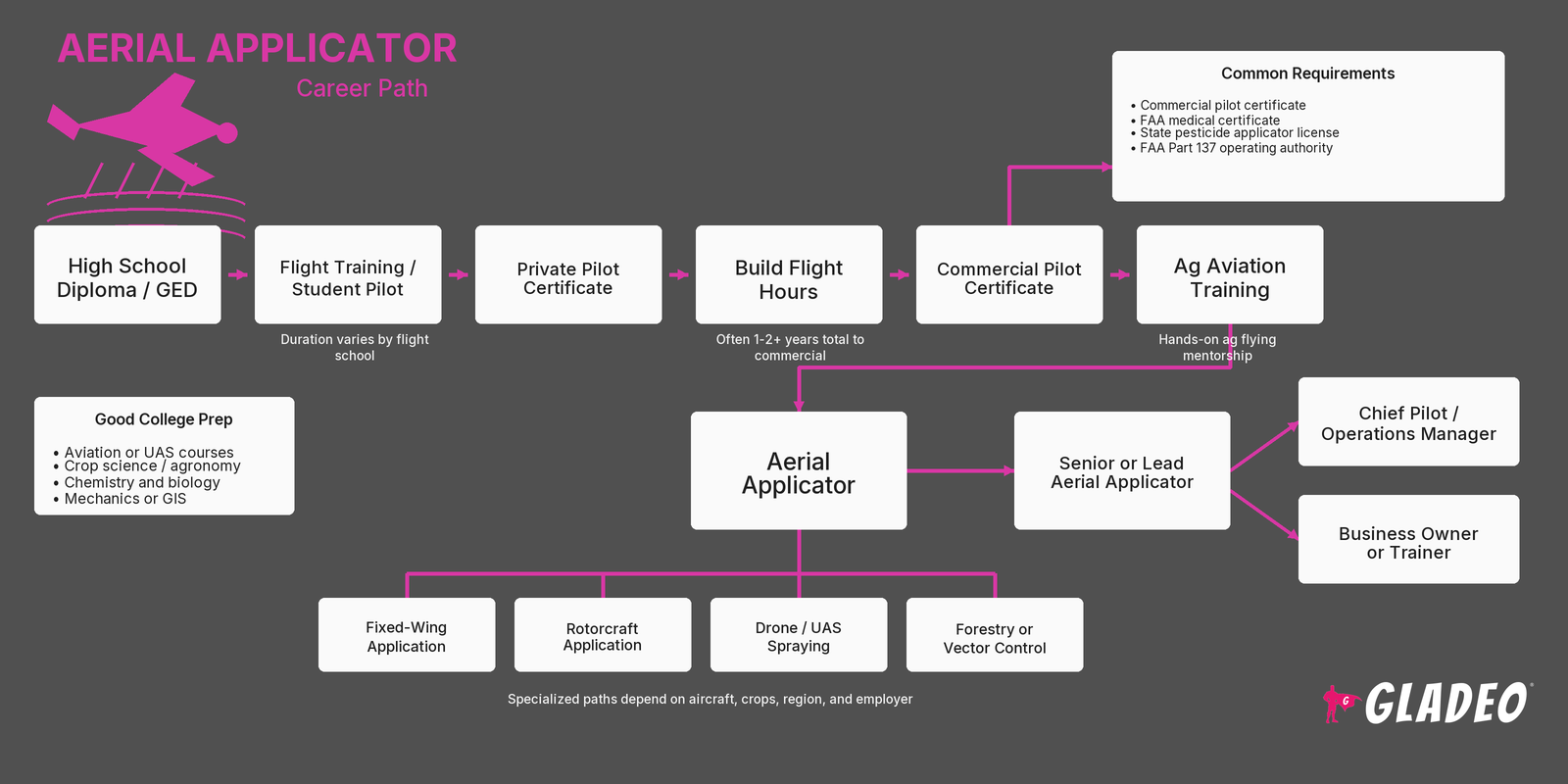
Becoming an Aerial Applicator typically requires a combination of pilot training, agricultural knowledge, and certification in pesticide application. Many start with a private pilot license and then pursue specialized training in agricultural aviation and chemical safety.
Students can take courses in relevant subjects such as:
- Aviation Principles
- Agricultural Science
- Entomology
- Pesticide Application and Safety
- Meteorology
- Aircraft Maintenance Basics
- GPS and Navigation Systems
- Environmental Science
- Chemistry
- Safety and Emergency Procedures
Hands-on flight experience and internships in agricultural aviation are invaluable for developing skills. Building a strong portfolio of flying hours, chemical handling certification, and knowledge of regulations will prepare students for this specialized career. Many states require specific licenses or permits to operate as an aerial applicator.
- Take classes in biology, chemistry, and environmental science to understand crops and pests.
- Enroll in aviation or flight training programs offered at local airports or technical schools.
- Join agricultural clubs like FFA (Future Farmers of America) to gain farming experience.
- Participate in drone pilot workshops or model airplane clubs to develop flight skills.
- Get certified in pesticide safety programs if available in high school.
- Volunteer or intern at farms or agricultural aviation companies.
- Develop strong math and physics skills to assist with flight and chemical calculations.
- Attend workshops on environmental safety and regulations.
- Explore summer programs focused on aviation or agriculture.
- Maintain a clean driving and disciplinary record to qualify for pilot licensing.
- Choose aviation programs that offer agricultural flight training or internships.
- Look for schools with FAA-certified flight instructors and access to agricultural aircraft.
- Ensure the program covers pesticide application laws and safety training.
- Select courses that combine agriculture and aviation knowledge.
- Check for opportunities to gain hands-on experience with spray equipment.
- Look for programs with strong alumni networks in agricultural aviation.
- Prioritize schools that help students prepare for pilot licensing exams.
- Seek out environmental science courses to understand ecological impacts.
- Choose programs offering GPS and navigation system training.
- Verify that the program includes emergency response and safety protocols.
- Consider schools that support obtaining commercial pilot licenses.
- Look for internship or apprenticeship opportunities within agricultural aviation companies.
- Apply for entry-level pilot assistant or ground crew positions at agricultural aviation companies.
- Build flight hours through flight schools and logging time in small aircraft.
- Obtain pesticide applicator certification from relevant state agencies.
- Network with local farmers and agricultural organizations to find opportunities.
- Prepare a pilot resume highlighting flight experience and safety training.
- Volunteer for spray equipment maintenance and calibration tasks.
- Attend agricultural and aviation trade shows to meet industry professionals.
- Shadow experienced aerial applicators to learn field procedures.
- Stay updated on weather patterns affecting agricultural spraying.
- Practice communication skills for coordination with farmers and agronomists.
- Join aviation clubs and agricultural associations for mentorship.
- Develop a portfolio of logged flight hours and certifications.
- Enhance flying skills to qualify for more complex aircraft and larger-scale operations.
- Gain certifications in advanced pesticide application and environmental compliance.
- Build a reputation for safety and precision to attract high-profile clients.
- Expand knowledge of agronomy and crop science for better application decisions.
- Pursue leadership roles such as flight instructor or operations manager.
- Start your own aerial application business or consultancy.
- Stay current with emerging technologies like drones and automated systems.
- Participate in industry associations to influence regulations and standards.
Websites:
• National Agricultural Aviation Association (agaviation.org)
• Pesticide Applicator Certification Board (pacb.org)
• Federal Aviation Administration (faa.gov)
• CropLife America (croplifeamerica.org)
• Agricultural Aviation Magazine (agaviationmagazine.com)
• Environmental Protection Agency - Pesticide Programs
(epa.gov/pesticides)
• Aerial Applicator Network (aerialapplicatornet.com)
• Agri Aviation Association (agripilot.org)
• Farm Progress (farmprogress.com)
• Association of Field Crop Agriculturalists (afca.org)
• National Institute for Aviation Research (niar.wichita.edu)
• American Society of Agronomy (agronomy.org)
• DroneDeploy (dronedeploy.com)
• AOPA - Aircraft Owners and Pilots Association (aopa.org)
Books:
• Agricultural Aviation Safety by Michael J. Hager
• Pesticide Application Equipment and Techniques by John Hardin
• The Complete Guide to Agricultural Aviation by Robert E. Baird
• Aerial Application Technology and Practices by Edward F. Heffron
• Flying the Agricultural Aircraft by Jim H. Taylor
If becoming an Aerial Applicator isn’t the right fit, there are many related careers that combine interests in aviation, agriculture, and environmental science.
- Agricultural Pilot: Focuses on flying aircraft for crop dusting and other farming support.
- Ground Crop Technician: Works on the ground applying treatments and monitoring fields.
- Environmental Scientist: Studies ecosystems to protect natural resources and inform sustainable farming.
- Pesticide Safety Specialist: Ensures safe handling and application of agricultural chemicals.
- Drone Operator for Agriculture: Uses drones to monitor crop health and apply treatments.
- Farm Equipment Mechanic: Maintains and repairs agricultural machinery.
- Forestry Technician: Manages forest health and assists with aerial seeding or spraying.
- Agronomist: Advises farmers on crop management and soil health.
- Commercial Pilot: Flies various types of aircraft, possibly including agricultural planes.
- Agricultural Sales Representative: Sells farming products like seeds, chemicals, or equipment.
Newsfeed

Featured Jobs
Online Courses and Tools